
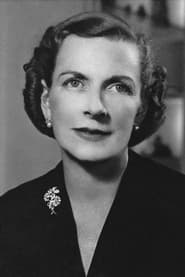
Edwina Mountbatten
Actor
- Born
- November 28, 1901, Belgravia, London, England, United Kingdom
- Died
- February 21, 1960
- Active
- 1922-1922
- Birth name
- Edwina Cynthia Annette Ashley
Films 1
About Edwina Mountbatten
Edwina Cynthia Annette Mountbatten was an English aristocrat and society figure best known in public life as the wife of Louis Mountbatten, 1st Earl Mountbatten of Burma, rather than as a career actor. The identification of Edwina Mountbatten as a film performer appears to stem from a likely crediting or database error associated with the 1922 title Nice and Friendly; no reliable filmography or surviving evidence supports a genuine acting career under her name. She was born into the prominent Ashley-Cooper family and grew up in the rarefied world of British high society, where her name became widely recognized long before any supposed screen appearance. Her life was marked by high-profile marriage, philanthropy, wartime service, and international social visibility, especially through her work with humanitarian causes in Britain and Asia. During and after the Second World War, she accompanied and supported Mountbatten in diplomatic and administrative roles, and she became known for public service rather than cinema. Because no verified acting career can be established, she should be treated in film databases with extreme caution and cross-checked against the title record for Nice and Friendly before attributing screen credits. In historical terms, Edwina Mountbatten belongs to political, social, and charitable history, not to the established canon of silent-era performers.
More about Edwina Mountbatten
In film history
Edwina Mountbatten's cultural impact lies overwhelmingly outside cinema, in the realm of aristocratic public life, philanthropy, and wartime service. She became a widely recognized figure in British and international society, especially because of her marriage to Lord Mountbatten and her visibility during his military and administrative career. If her name appears in connection with early film history, that association is best understood as a database anomaly rather than evidence of an acting career. For historians and archivists, she is important as an example of how prominent non-film figures can become entangled with cinema metadata, especially in silent-era records where documentation is often uneven. Her enduring public image is that of a glamorous, independent, and highly visible public woman in mid-20th-century Britain.
Later reputation
Her legacy is primarily social and historical rather than cinematic. She is remembered as one of the most prominent aristocratic women of her generation, associated with service, philanthropy, and the public life of the British Empire in its final decades. In film history, her name is chiefly notable as a cautionary example of the need for rigorous source verification when dealing with early film credits and archival databases. If Nice and Friendly (1922) is associated with her in some listings, that attribution remains insufficiently substantiated and should not be treated as confirmed without primary documentation. Her historical importance is therefore best preserved in biographical, social, and political contexts rather than in filmography discussions.
Influence
Any influence she exerted was on society, public service, and elite cultural life rather than on acting or filmmaking. Through her visibility, philanthropy, and wartime associations, she helped shape public perceptions of aristocratic women as active participants in national and imperial affairs. In cinema-related terms, she influenced little directly, though her name may have circulated in the same cultural sphere as early film publicity and society reporting. Her presence in historical memory reflects the overlap between celebrity, aristocracy, and public service in the early-to-mid 20th century. For that reason, she is more relevant to social history than to performance history.
Off screen
Edwina Mountbatten was born Edwina Cynthia Annette Ashley into an aristocratic family with strong political and social connections. She married Louis Mountbatten in 1922, and their marriage became one of the most famous unions in British public life, both for its glamour and for the distance that developed between the spouses over time. She was widely admired for her independence, intelligence, and cosmopolitan social presence, and she maintained a public identity that extended beyond her role as a wife of a major statesman. Her later years were heavily associated with humanitarian work, travel, and public service, especially in the context of the British Empire and postwar diplomacy. She had two daughters, both of whom became well known in their own right.
Education
Educated privately in the manner customary for an English aristocratic daughter of her era; specific institutional records are not consistently documented in standard film references
Credits
- Became a prominent figure in British high society as a young woman through the influence of the Ashley-Cooper family and her own public visibility
- Married Louis Mountbatten, later 1st Earl Mountbatten of Burma, becoming one of the most recognizable women in British public life
- Supported wartime and postwar service efforts, especially in humanitarian and charitable work
- Played a highly visible role during Mountbatten's service in India and later public duties
- Was associated in some film databases with Nice and Friendly (1922), although this attribution is not securely verified as a true acting credit
Films
- Nice and Friendly (1922) - attribution is unverified and should be treated cautiously
Honors
- Recognized internationally for humanitarian and public service work
- Publicly honored as the Countess Mountbatten of Burma
Family
- Louis Mountbatten, 1st Earl Mountbatten of Burma (1922-1960)
Notes
- She was born into one of Britain's notable aristocratic families and was a granddaughter of the 9th Earl of Shaftesbury.
- Her marriage to Louis Mountbatten in 1922 made her one of the most talked-about women in British society.
- She was known for her charisma, beauty, and strong social presence, which made her a fixture in press coverage of elite life.
- Despite the occasional film-database reference, there is no widely accepted evidence that she had a true acting career.
- She was an important philanthropic figure and was involved in humanitarian work during and after the Second World War.
- She was the mother of Patricia Knatchbull and Lady Pamela Hicks, both of whom became notable public figures.
- Her husband, Lord Mountbatten, became one of the most prominent British military and political figures of the 20th century.
- She died in 1960, and her death was widely noted in British and international society circles.
Questions
Who was Edwina Mountbatten?
Edwina Mountbatten was a British aristocrat, socialite, and humanitarian best known as the wife of Louis Mountbatten, 1st Earl Mountbatten of Burma. She was a major public figure in mid-20th-century Britain and is remembered for philanthropy and wartime service rather than for a film career.
What films is Edwina Mountbatten best known for?
She is not reliably known for any film career. A database association with Nice and Friendly (1922) appears unverified, so it should not be treated as confirmed evidence of screen work.
When was Edwina Mountbatten born and when did she die?
She was born on November 28, 1901, in Belgravia, London, England. She died on February 21, 1960.
What awards did Edwina Mountbatten win?
No major film awards or nominations are associated with her, and she is not documented as an award-winning actor. Her recognition came from social prominence, public service, and humanitarian work.
What was Edwina Mountbatten's acting style?
There is no verified basis for describing an acting style, since her supposed film credit is unconfirmed and she is not established as an actor. She is better understood as a public figure and philanthropist than as a performer.
What was Edwina Mountbatten's legacy?
Her legacy is primarily historical and social, not cinematic. She remains a notable aristocratic figure associated with public service, philanthropy, and the British imperial and postwar eras.