Eddie Prinz
Actor
Born: August 10, 1902 in St. Joseph, Missouri, USA Died: November 15, 1980 Active: 1929-1955 Birth Name: Edward Prinz
Films
1 film
About Eddie Prinz
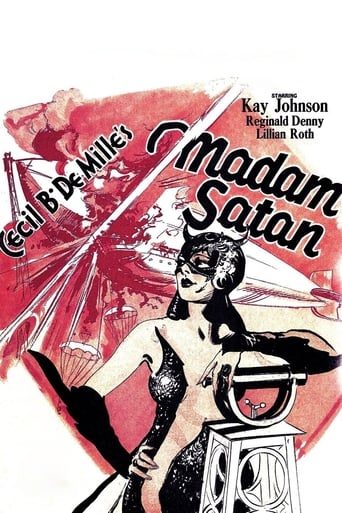
Prolific American choreographer and dance director who transitioned from a successful career in vaudeville to become sought-after movement specialists during the early sound era of Hollywood. Born into a family of performers, he established himself excelled in ensemble staging, particularly known for his ability to coordinate massive, intricate dance sequences in the pre-Busby Berkeley era. In 1930, he made a notable on-screen appearance as an actor/performer in Cecil B. DeMille's extravagant pre-Code musical 'Madam Satan,' where he contributed to the film's surreal and high-energy atmosphere. Throughout the 1930s and 1940s, Prinz worked extensively behind the scenes at major studios like MGM and Warner Bros., shaping the visual language of the Hollywood musical. His expertise extended beyond simple choreography into the realm of 'dance direction,' a role that required a deep understanding of camera angles and rhythmic editing. Despite his significant contributions to the aesthetics of the Golden Age, he often remained an unsung hero of the production staff, ensuring that stars like Al Jolson and James Cagney looked their best during musical numbers.
The Craft
On Screen
In his rare on-screen appearances, such as in 'Madam Satan,' Prinz exhibited a high-energy, athletic performance style rooted in his vaudeville background, focusing on rhythmic precision and expressive physical comedy.
Milestones
- Staged the elaborate 'Ballet Mechanique' and masquerade sequences in Cecil B. DeMille's 'Madam Satan' (1930).
- Served as the primary dance director for the Al Jolson vehicle 'Wonder Bar' (1934).
- Coordinated the musical sequences for the Academy Award-winning 'Yankee Doodle Dandy' (1942).
- Worked as a dance director on the influential early talkie 'The Desert Song' (1929).
- Contributed choreography to the classic 'The Big Broadcast of 1937'.
- Collaborated with his brother, LeRoy Prinz, on several high-profile Warner Bros. Musicals.
Best Known For
Iconic Roles
Must-See Films
Accolades
Won
- Academy Award Nomination for Best Dance Direction for 'All the King's Horses' (1935)
- Academy Award Nomination for Best Dance Direction for 'The Big Broadcast of 1936' (1935)
Nominated
- Oscar Nomination: Best Dance Direction (1935) - Category later discontinued
Special Recognition
- Recognized as a pioneer of the 'Dance Director' credit in early Hollywood
- Lifetime member of the Screen Directors Guild
Working Relationships
Worked Often With
Studios
Why They Matter
Impact on Culture
Eddie Prinz was instrumental in defining the 'look' of the early Hollywood musical during the critical transition from silent films to 'talkies.' By applying theatrical dance logic to the cinematic frame, he helped audiences accept the artifice of characters breaking into song and dance. His work on 'Madam Satan' remains a cult favorite for its bizarre, avant-garde masquerade sequences which pushed the boundaries of Pre-Code visual excess.
Lasting Legacy
Prinz's legacy lies in the technical foundation of the movie musical; he was one of the first to understand that the camera must be a participant in the dance rather than just a stationary observer. His two Academy Award nominations in the short-lived 'Best Dance Direction' category cement his status as a top-tier craftsman of the 1930s. He is remembered by film historians as a key figure who bridged the gap between Broadway traditions and Hollywood spectacle.
Who They Inspired
He influenced the way ensemble numbers were filmed, moving away from a 'proscenium arch' view to a more dynamic, multi-angle approach that influenced later masters like Busby Berkeley.
Off Screen
Eddie Prinz came from a prominent theatrical family; his father was a dance instructor and his brother, LeRoy Prinz, became. He maintained a relatively private life outside of the studios, focusing on the technical aspects of stagecraft and the transition of dance from stage to the silver screen.
Education
Trained in dance and stagecraft by his father in the family's dance academy; later honed his skills on the Vaudeville circuit.
Family
- Information regarding specific spouses is not publicly documented in standard historical records.
Did You Know?
- He was part of a 'dance dynasty'—the Prinz family taught dance to generations of performers.
- He worked on 'Madam Satan,' which features a famous scene involving a party on a giant dirigible.
- Prinz was often called upon to 'fix' musical numbers that weren't working during production.
- He was one of the few choreographers to successfully navigate the transition from the gritty style of early Warner Bros. Musicals to the polished MGM style.
- His work on 'Wonder Bar' involved managing over 250 dancers simultaneously.
- He often appeared without on-screen billing in films to fill out dance lines if a performer was injured.
In Their Own Words
The camera is the most important dancer on the set; if it doesn't move, the dance is dead.
In 'Madam Satan,' we weren't just making a movie; we were building a fever dream for Mr. DeMille.
Frequently Asked Questions
Who was Eddie Prinz?
Prominent American dance on YTB.my.
What films is Eddie Prinz best known for?
Titles linked here include Madam Satan (1930), Wonder Bar (1934).
When was Eddie Prinz active in Hollywood?
Born August 10, 1902; died November 15, 1980.
Did Eddie Prinz win any awards?
While he did not win, he received two Academy Award nominations for Best Dance Direction in 1935, a category that existed for only three years.
What was Eddie Prinz's contribution to 'Madam Satan'?
In 'Madam Satan,' Prinz served as both a performer and a key contributor to the staging of the film's elaborate and surreal masquerade ball sequences.