Harley Wood
Actor
Born: August 25, 1913 in Independence, Missouri, USA Died: April 2, 1995 Active: 1934-1953 Birth Name: Evelyn Merchant
Films
1 film
About Harley Wood
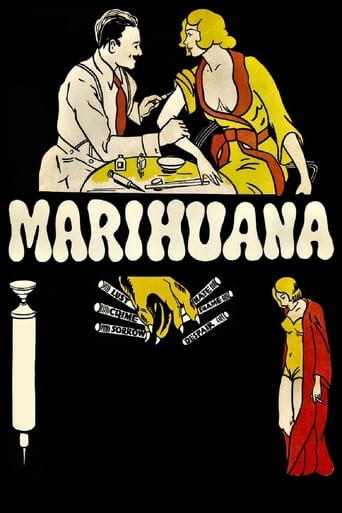
Harley Wood, born Evelyn Merchant, was a versatile performer of the 1930s who successfully transitioned from a career in radio to become a notable figure in B-movie Westerns and exploitation cinema. Born in Missouri and orphaned at a young age, she moved to Hollywood in the mid-1930s and resided at the famous Studio Club for aspiring actresses. Under the stage names Harley Wood and Harlene Wood, she became a frequent leading lady for Western star Bob Steele in films like 'The Law Rides' and 'Border Phantom.' Her most infamous role came in 1936 as Burma 'Blondie' Roberts in the cult exploitation film 'Marihuana,' where she portrayed a young girl's tragic descent into the drug underworld. In the late 1930s, she was rebranded as 'Jill Martin' by Republic Pictures, starring in the popular serial 'Hawk of the Wilderness.' She retired from acting in the early 1940s at the request of her first husband, screenwriter Felix Jackson, but later achieved global immortality as a songwriter under the name Jill Jackson-Miller, co-writing the world-renowned peace anthem 'Let There Be Peace on Earth.'
The Craft
On Screen
Wood was known for her naturalistic and earnest screen presence, which allowed her to play both the 'girl next door' in Westerns and more dramatic, high-stakes roles in exploitation films. Her background in radio provided her with excellent vocal control, making her a reliable performer during the early years of the sound era.
Milestones
- Starred as Burma 'Blondie' Roberts in the cult exploitation classic 'Marihuana' (1936)
- Leading lady in several Bob Steele Westerns for A.W. Hackel's Supreme Pictures
- Signed as a 'Term Player' by Republic Pictures in 1938 and rebranded as Jill Martin
- Starred as the heroine Beth Munro in the 12-chapter serial 'Hawk of the Wilderness' (1938)
- Appeared in several comedy shorts with The Three Stooges, including 'Dizzy Doctors' (1937)
- Co-wrote the internationally famous song 'Let There Be Peace on Earth' in 1955
Best Known For
Iconic Roles
Must-See Films
Accolades
Won
- George Washington Honor Medal from the Freedoms Foundation (for songwriting)
- Award from the National Council of Christians and Jews
Special Recognition
- Recognized as a 'New Republic Screen Find' by Republic Pictures in 1938
- Inducted into the legacy of the Hollywood Studio Club
Working Relationships
Worked Often With
Studios
Why They Matter
Impact on Culture
Harley Wood's impact is uniquely split between two eras. In the 1930s, she was a face of the 'exploitation' film movement, which bypassed the Hays Code to show the 'dangers' of drugs and vice, creating a historical record of early 20th-century moral panics. Her performance in 'Marihuana' remains a primary example of the genre. Culturally, her later work as Jill Jackson-Miller had a far wider reach; the song 'Let There Be Peace on Earth' became a global standard for peace movements, sung by millions in schools and churches worldwide.
Lasting Legacy
Her legacy is preserved in the annals of B-Western history and cult cinema. While many actresses of the era faded into obscurity, Wood's transition into a successful songwriter ensured her name lived on in a different medium. She is remembered by film historians as a versatile 'Poverty Row' leading lady who could carry a film despite low budgets and quick shooting schedules.
Who They Inspired
She influenced the archetype of the 'troubled youth' in early social-problem films. Her career path from actress to songwriter also served as an early example of creative reinvention for women in the entertainment industry.
Off Screen
Wood had a difficult childhood; her mother died when she was three, and she was later fostered. She was a second cousin to the aviation pioneers, the Wright brothers. She moved to Hawaii later in life where she spent her final years focused on her philosophy of peace.
Education
Northeast High School (Kansas City, Missouri); Kansas City Junior College
Family
- Felix Jackson (1940-1944)
- Sy Miller (1949-1971)
Did You Know?
- She used multiple stage names including Harley Wood, Harlene Wood, and Jill Martin.
- She was a resident of the Hollywood Studio Club, living alongside other future stars.
- Her second husband, Sy Miller, was her creative partner in songwriting.
- She appeared in the Three Stooges short 'Dizzy Doctors' as a nurse.
- She was a second cousin of Orville and Wilbur Wright.
- She attempted suicide in the 1940s, an event she later claimed led to a spiritual awakening that inspired her peace-focused songwriting.
- She was under a 'Term Players' contract at Republic Pictures, earning roughly $75 a week in 1938.
In Their Own Words
Let there be peace on earth, and let it begin with me. (Lyrics from her most famous song)
I knew unconditional love—which God is. (Describing her spiritual awakening)
Frequently Asked Questions
Who was Harley Wood?
American actress and songwriter active during the 1930s, best known for her roles in Westerns and the exploitation film 'Marihuana'.
What films is Harley Wood best known for?
Titles linked here include Marihuana (1936), Hawk of the Wilderness (1938).
Did Harley Wood have other stage names?
Yes, she also performed under the names Harlene Wood and Jill Martin, and later became famous as songwriter Jill Jackson-Miller.
What is Harley Wood's most famous contribution to culture?
While a notable actress, her most lasting contribution is co-writing the world-famous song 'Let There Be Peace on Earth'.
When did Harley Wood die?
She passed away on April 2, 1995, in Honoka'a, Hawaii, at the age of 81.