

Marihuana
"1936 exploitation film directed by Dwain Esper"
Keys: Space play/pause · ←/→ 10s · F fullscreen · M mute · </> speed
About this film
A young girl named Burma attends a beach party with her boyfriend and after she smokes marijuana with a bunch of other girls, she gets pregnant and another girl drowns while skinny dipping in the ocean. Burma and her boyfriend go to work for the pusher in order to make money so they can get married. However, during a drug deal her boyfriend is killed leaving Burma to fend for herself. Burma then becomes a major narcotics pusher in her own right after giving up her baby for adoption.
Cast & crew
More films like this
More Crime films
View all →


More from Dwain Esper
View all →
More about this film
About the production
Release dateMay 1936
Budget$100,000 (estimated)
Box officeUnknown; primarily earned through independent 'roadshow' exhibitions
ProductionRoadshow Attractions Inc.
Filmed inSan Pedro, Los Angeles, California, Santa Monica, California
The film was produced by the 'King of Exploitation,' Dwain Esper, and written by his wife, Hildegarde Stadie. It was made on a shoestring budget and designed to bypass the strict Motion Picture Production Code (Hays Code) by masquerading as an 'educational' film. Stadie herself appears in an uncredited cameo at the beginning of the movie. The production utilized many non-professional actors and relied on sensationalist marketing to draw crowds in rural areas.
Themes
Themes & topics
Historical background
Marihuana (1936) emerged during the studio-system peak and early sound decades, when exhibition habits and national film industries were still taking shape.
Why this film matters
Marihuana remains accessible through digital archives, giving modern viewers a direct link to 1936 screen culture.
Making of
Dwain Esper excelled in the 'roadshow' circuit, a distribution method where he would travel from town to town with his own prints, renting out independent theaters. This allowed him to avoid the major studio-controlled distribution networks and the Hays Office. During production, Esper was known for 'shuffling' footage—adding or removing more salacious scenes (like the skinny-dipping sequence) depending on how strict the local authorities were in the next town. The film was shot quickly, often using single takes and minimal sets, which contributed to its disjointed and surreal visual quality.
What critics said
Retrospective notes on Marihuana emphasize its value as a period production rather than blockbuster reception.
Did you know?
- The screenwriter, Hildegarde Stadie, was the daughter of a patent medicine salesman and claimed her knowledge of the 'drug underworld' came from her childhood experiences.
- To promote the film, Dwain Esper would often exhibit the mummified body of an outlaw named Elmer McCurdy in the theater lobby, claiming he was a victim of drug addiction.
- The film was frequently packaged with a short film titled 'How to Undress in Front of Your Husband' to increase its 'adult' appeal.
- The original trailer featured a scene of a girl being brutally attacked that does not actually appear in the final film.
- The 'high school' characters were famously played by actors who were clearly in their 30s and 40s.
- The film was often screened in tents or rented halls to stay one step ahead of local censorship boards.
- It is considered a 'Mondo' style precursor, focusing on shock value and 'forbidden' subjects.
- The film's title is spelled with an 'h' (Marihuana), which was a common variant spelling in the 1930s.
- The drowning scene was intended to be a shocking warning but is often cited by modern audiences as unintentionally comedic due to the poor editing.
- The film was released the same year as the more famous 'Reefer Madness' (1936).
Visual style
The cinematography by Roland Price is characterized by its 'Poverty Row' aesthetic—flat lighting, static camera placements, and grainy film stock. However, the film occasionally utilizes expressionistic shadows during the drug-den scenes to create a sense of dread. The infamous 'skinny-dipping' scene is shot from a great distance to avoid legal trouble while still providing the 'thrill' of nudity to 1930s viewers.
Innovations
The film's primary 'achievement' was its successful navigation of the legal loopholes of the 1930s. By framing the story as a 'medical warning,' Esper was able to show content that was strictly forbidden in mainstream Hollywood films. Technically, it is a standard example of early independent low-budget filmmaking.
Music
The film features a minimal, public-domain orchestral score that is often used haphazardly. The music is typically melodramatic and swells during the film's many 'moral lessons' or tragic realizations. There is no original composed score of note.
Famous quotes
Burma: 'What are they?' Tony: 'I don't know... let's try his giggle water, then let's try his giggle.'
Narrator: 'Marihuana... the weed with roots in Hell!'
Tony: 'You don't care about yourself, do you? But while I'm rotting in jail, what are you going to do about your baby?'
Burma: 'I'm enjoying the holes of high learning!'
Memorable scenes
- The Beach Party: The girls smoke 'giggle weed' for the first time, leading to hysterical laughter and a poorly-staged nude swimming sequence.
- The Drowning: A girl drowns in the ocean while the others are too intoxicated to help, serving as the film's first major 'moral' catastrophe.
- The Heroin Injection: A stark scene where Burma, now a hardened criminal, injects herself with 'harder' drugs, showing her final descent.
- The Final Realization: Burma discovers the girl she was planning to kidnap is her own daughter, leading to a dramatic collapse as marijuana joints literally rain down on her.
What audiences thought
1930s audiences were often lured in by sensationalist posters promising 'The Truth' about secret vices, though many left feeling cheated by the film's low quality. Today, it is a staple of midnight movie screenings and 'bad movie' nights, where audiences enjoy the over-the-top acting and the absurdly rapid 'downward spiral' of the protagonist.
Film connections
Influenced by
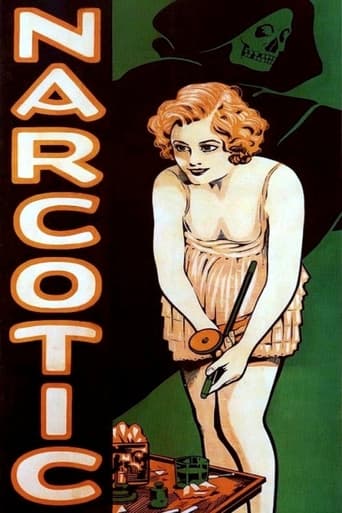
- Narcotic (1933)
- The Seventh Commandment (1932)
- The sensationalist journalism of the Hearst newspapers
This film influenced
- Reefer Madness (1936)
- Assassin of Youth (1937)
- The Pace That Kills (1935)
- Requiem for a Dream (2000) (thematic parallels)
Film restoration
The film is in the public domain. Several restored versions exist on DVD and Blu-ray, often as part of 'Exploitation' or 'Cult Classic' collections. The original negatives are lost, but high-quality 35mm prints have been used for modern digital transfers.
Where to watch
- YouTube (Public Domain)
- Internet Archive
- Amazon Prime Video
- Tubi
- Cult Cinema Classics