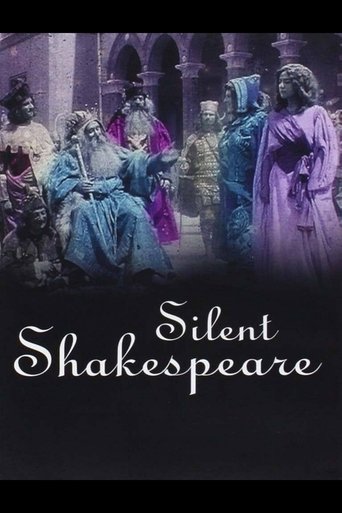
Films
1 film
About William Mollison
Made a brief but historically significant appearance in early cinema history. His only known film credit is in the 1899 British production of 'King John', which represents one of the earliest surviving film adaptations of Shakespeare's work. Like many actors of his era, Mollison was primarily a theatrical performer who was recruited for this experimental film project, which captured key scenes from Herbert Beerbohm Tree's stage production. The film was created during the infancy of motion pictures, when the medium was still seen as a novelty rather than a serious art form. Mollison's participation in this film places him among the first generation of actors to transition from stage to screen. Unfortunately, detailed records of his theatrical career or personal life from this period are scarce, as was common for many supporting actors of the Victorian era. His legacy is preserved primarily through his contribution to this early film that helped establish cinema as a viable medium for dramatic performance.
The Craft
Milestones
- Appeared in the 1899 film 'King John', one of the earliest Shakespeare adaptations
- Participated in the transition from Victorian stage to early cinema
- Worked with the British Mutoscope and Biograph Company
- Contributed to Herbert Beerbohm Tree's theatrical productions
Best Known For
Iconic Roles
Must-See Films
Working Relationships
Worked Often With
Studios
Why They Matter
Impact on Culture
William Mollison's contribution to early cinema, though brief, represents an important moment in film history. His appearance in the 1899 'King John' places him among the very first actors to perform Shakespeare on screen, helping to bridge the gap between legitimate theatre and the emerging medium of motion pictures. This film was groundbreaking as it demonstrated that cinema could handle complex dramatic material, not just simple vaudeville sketches or actualities. The participation of established stage actors like Mollison lent credibility to the new art form and helped convince both the public and other performers that film had artistic potential beyond mere novelty.
Lasting Legacy
William Mollison's legacy is preserved through his participation in one of cinema's most important early works. The 1899 'King John' survives as proof of the birth of narrative cinema and the first attempts to bring classical literature to the screen. While Mollison himself may not have achieved lasting fame, his contribution to this film makes him part of the foundation upon which the film industry was built. The film itself is studied by film historians as a crucial example of early British cinema and the first Shakespeare adaptation, ensuring that Mollison's name, though obscure, remains part of film history.
Who They Inspired
As one of the earliest actors to appear in a Shakespeare film, William Mollison helped pave the way for future generations of performers to transition between stage and screen. His work demonstrated that theatrical acting techniques could be adapted for the camera, influencing how subsequent actors approached film performance. The success of 'King John' in capturing dramatic moments on film encouraged other stage actors to consider film work, gradually breaking down the stigma that early cinema was merely a low-brow entertainment medium.
Off Screen
Very little is known about William Mollison's personal life, which was typical for supporting stage actors of the Victorian era. Like many performers of his time, detailed biographical records were not systematically preserved, especially for those who were not leading stars of the stage.
Did You Know?
- The 1899 'King John' is considered one of the earliest surviving film adaptations of Shakespeare
- Mollison's film career consisted of only this one known appearance
- The film was actually a series of four short scenes, each lasting about one minute
- The British Mutoscope and Biograph Company used a unique 68mm film format for this production
- Herbert Beerbohm Tree, who also appeared in the film, was
- The film was shot at the British Mutoscope studio in London
- Only fragments of this historically important film survive today
- The actors performed in full stage costumes and makeup, as was typical for early film adaptations
- This film predates the more famous 1900 'King John' by Georges Méliès
- The film was part of an experimental effort to test whether cinema could capture dramatic performances
Frequently Asked Questions
Who was William Mollison?
British stage with credits in this catalog. He is known for his role in the 1899 film 'King John', which represents one of the earliest surviving film adaptations of Shakespeare's work and a moment in the development of narrative cinema.
What films is William Mollison best known for?
Titles linked here include King John (1899).
When was William Mollison born and when did he die?
Specific birth and death dates for William Mollison are not available in historical records, which was common for supporting stage actors of the Victorian era. We only know he was active in 1899 when he appeared in 'King John'.
What awards did William Mollison win?
William Mollison did not receive any formal awards or recognition during his lifetime. The concept of film awards did not exist in 1899, and as a supporting stage actor, he would not have been eligible for the theatrical honors of his era.
What was William Mollison's acting style?
While specific details about Mollison's acting style are not documented, as a Victorian stage actor he would have employed the theatrical techniques common to that period. These typically included exaggerated gestures and declamatory speech patterns designed to reach the back rows of large theatres, which had to be adapted for the intimate medium of early film.