
King John
"Shakespeare's dying King John"
Keys: Space play/pause · ←/→ 10s · F fullscreen · M mute · </> speed
About this film
Shakespeare's Act V, Scene vii stages King John in agony as Prince Henry and nobles attend his deathbed delirium. An 1899 record of theatrical royal tragedy.
Cast & crew
More films like this
More Drama films
View all →







More about this film
About the production
Release dateSeptember 1899
Box officeUnknown - box office tracking was not standardized in 1899
ProductionBritish Mutoscope and Biograph Company
Filmed inLondon, England - likely filmed at the Biograph Studio or at Her Majesty's Theatre where Tree performed
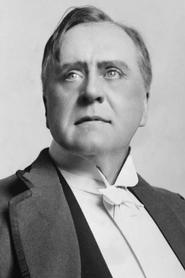
the release was essentially a recording of Herbert Beerbohm Tree's acclaimed stage performance from his production at Her Majesty's Theatre. The filming was done using the 68mm Biograph format, which produced an unusually large and clear image for the time. The camera was likely static, capturing the performance as if from a theater seat. This was one of the very first instances of a major theatrical star being captured on film, representing an early bridge between stage and cinema.
Themes
Mortality and DeathRoyal Power and Its LimitsFamily RelationshipsSuffering and RedemptionThe End of an Era
Themes & topics
Shakespeare AdaptationDeath SceneRoyal FamilyHistorical DramaFather-Son RelationshipMonarchyTragedyMedieval England
Historical background
Archival records place King John in 1899, a year when cinema's first decade shaped what theaters booked.
Why this film matters
Retrospectives include King John when mapping craft and subject matter from cinema's first decade.
Making of
The making of King John represents a pivotal moment in early cinema history, marking one of the first collaborations between legitimate theater and the fledgling film industry. Herbert Beerbohm Tree, initially skeptical of the new medium, was persuaded to allow filming of his acclaimed death scene from the Shakespeare production. The British Mutoscope and Biograph Company sent technicians to capture the performance using their innovative 68mm camera system, which produced remarkably detailed images. The filming process was rudimentary by modern standards - a stationary camera positioned to capture the stage action, with the actors performing essentially as they would for a live audience. Tree's elaborate death scene, complete with writhing, moaning, and dramatic gestures, was perfectly suited to the silent medium and required no adaptation for the camera. The production team worked quickly, as the bulky Biograph camera could only hold short amounts of film stock. This brief filming session represented a significant investment of time and resources for 1899, as it involved coordinating with one of London's most prominent theatrical figures and disrupting regular theater operations.
What critics said
Critics revisiting King John emphasize performative and technical choices visible in surviving prints.
Did you know?
- This is widely considered the first known film adaptation of a work by William Shakespeare, predating all other Shakespeare films by several years
- Herbert Beerbohm Tree was widely known Shakespearean actors of the Victorian era and was initially reluctant to be filmed, fearing it would hurt theater attendance
- The film was shot using the 68mm Biograph format, which produced images of exceptionally high quality for the time but was soon abandoned due to practical difficulties
- Only four brief scenes from Tree's stage production were filmed, with this death scene being the most well-known and preserved
- The original Biograph camera had to be hand-cranked at an extremely fast rate of 30 frames per second, much faster than the standard 16 fps of early cinema
- the release represents one of the earliest examples of capturing a legitimate theatrical performance rather than staging something specifically for the camera
- The film was shown as part of variety programs, often alongside magic lantern shows, live performances, and other short films
- Tree's elaborate costume and makeup for the death scene took hours to apply and was designed to be visible even from the back rows of the theater
- The success of the release helped pave the way for more theatrical adaptations and demonstrated the commercial potential of filming established stage works
- Contemporary accounts suggest audiences were fascinated to see a famous theatrical performance they could otherwise never witness
Visual style
The cinematography of King John reflects the primitive state of film technology in 1899, utilizing a single static camera positioned to capture the stage performance. The film was shot using the Biograph company's 68mm film format, which produced an unusually large and detailed image for the period, with a resolution comparable to modern high-definition video. This large format allowed for remarkable clarity in capturing facial expressions and costume details, though the camera remained fixed throughout the scene. The lighting would have been theatrical rather than cinematic, designed for stage visibility rather than photographic effect. No camera movement was employed, as the technology for panning or tracking shots had not yet been developed. The frame composition was essentially theatrical, with the performers arranged as they would be on stage rather than being positioned for optimal camera angles. Despite these limitations, the large format and careful lighting resulted in a remarkably clear and detailed image that has preserved Tree's performance with surprising fidelity.
Innovations
King John represents several important technical achievements for its time, most notably its use of the 68mm Biograph format, which produced images of exceptional clarity and detail. The film's preservation of a complete dramatic scene, rather than the brief snippets typical of 1899, was technically ambitious. The ability to capture Tree's elaborate performance with sufficient detail to be recognizable was a significant accomplishment. The film demonstrated early cinema's capacity to document theatrical performance, creating a permanent record of a transient art form. The successful synchronization of the camera's hand-cranking with the actors' performance timing was technically challenging for the period. The film's survival and preservation over more than a century is itself proof of the quality of the original materials and the care taken in its storage. The Biograph camera used for the release was capable of shooting at 30 frames per second, much faster than contemporary cameras, resulting in smoother motion that better captured theatrical performance.
Music
As a silent film from 1899, King John had no synchronized soundtrack. During its original exhibition, the film would have been accompanied by live musical performance, typically a pianist or small ensemble playing appropriate dramatic music. The musical accompaniment would have been improvised or selected from standard theatrical repertoire of the era, likely consisting of dramatic, somber pieces to match the death scene's mood. Some exhibitors might have used popular classical pieces known to evoke tragedy or pathos. In modern presentations, the film is sometimes accompanied by newly composed scores or period-appropriate music. The lack of recorded dialogue meant that Tree's performance relied entirely on physical expression and gesture, making it particularly suited to the silent medium. Contemporary audiences would have been familiar with the story of King John and would have understood the context without needing intertitles or dialogue.
Famous quotes
'I am a scribbled form, drawn with a pen upon a parchment' - King John (from Shakespeare's original text)
'And oftentimes excusing of a fault doth make the fault the worse by the excuse' - Pembroke (from Shakespeare's original text)
Memorable scenes
- King John's death scene - the entire film consists of this powerful moment where the tormented monarch writhes in agony while his son and nobles watch helplessly, with Tree's highly physical performance conveying intense suffering through gesture and expression alone.
What audiences thought
Audience reception in 1899 was likely one of fascination and curiosity, as most viewers had never seen a moving image of a famous theatrical performer. Contemporary accounts suggest that audiences were particularly drawn to the opportunity to see Herbert Beerbohm Tree, whose stage performances were typically accessible only to London theatergoers. The film's novelty value was significant - seeing a death scene, even a simulated one, on screen was a powerful experience for early cinema audiences. The short length and dramatic content made it ideal for variety programs, where it could serve as a climactic attraction. Modern audiences viewing the film today often express surprise at its theatricality and the intensity of Tree's performance, which contrasts with more naturalistic acting styles that would later dominate cinema. The film remains of interest primarily to film historians, Shakespeare scholars, and cinema enthusiasts rather than general audiences, due to its historical significance and brevity.
Film connections
Influenced by
- William Shakespeare's play 'King John'
- Victorian theatrical traditions
- Herbert Beerbohm Tree's stage production
- 19th-century melodrama performance style
This film influenced
- Subsequent Shakespeare adaptations
- The Death of Poor Joe (1901) - another early Dickens adaptation
- The Great Train Robbery (1903) - in demonstrating narrative potential of film
Film restoration
The film survives and has been preserved by the British Film Institute. A 35mm reduction print exists and has been digitized for modern viewing. The original 68mm Biograph version is believed to be lost, but the reduction print maintains reasonable quality. The film is in the public domain and has been included in various collections of early cinema and Shakespeare adaptations.
Where to watch
- British Film Institute's streaming platform BFI Player
- YouTube (various public domain uploads)
- Early cinema collections and archives
- Academic film libraries and databases
- Specialized DVD collections of early cinema or Shakespeare adaptations