Films
1 film
About William Engeström
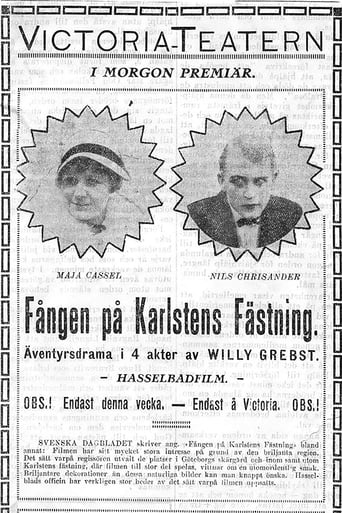
William Engeström worked on one surviving credit: The Prisoner of Karlsten's Fortress (1916). His career in cinema was notably brief, spanning only the year 1916, during which he appeared in at least one significant production. Engeström is primarily remembered for his role in 'The Prisoner of Karlsten's Fortress' (1916), a Swedish silent drama that showcased the historical settings and narratives popular in early Scandinavian cinema. Like many actors of this period, his work was confined to the emerging Swedish film industry, which was producing notable artistic works even before the international acclaim that would come to Swedish cinema in the 1920s. His brief film career suggests he may have been a stage actor who made a single foray into the new medium of cinema, or perhaps an early film enthusiast who did not continue in the industry. Unfortunately, detailed records about his life and career are scarce, as was common for many supporting actors from this era of film history.
The Craft
On Screen
Typical of the melodramatic style prevalent in early silent cinema, emphasizing exaggerated gestures and facial expressions to convey emotion without dialogue
Milestones
- Appeared in 'The Prisoner of Karlsten's Fortress' (1916)
- Participated in the early development of Swedish silent film industry
Best Known For
Iconic Roles
Must-See Films
Working Relationships
Studios
Why They Matter
Impact on Culture
William Engeström represents the countless actors who participated in the foundational years of cinema, particularly in national film industries like Sweden's that would later gain international recognition. While his individual contribution was limited to a brief appearance in 1916, he was part of the broader movement that established Swedish cinema as a significant force in early European film. His work in 'The Prisoner of Karlsten's Fortress' contributed to the historical drama genre that was popular in early Swedish cinema, helping to establish narrative techniques and visual styles that would influence later filmmakers.
Lasting Legacy
As an obscure figure from the earliest days of Swedish cinema, William Engeström's legacy is primarily historical rather than artistic. He serves as an example of the many actors who briefly participated in cinema's formative years before either returning to other professions or fading into obscurity. His appearance in a 1916 film places him among the pioneers of Swedish film, an industry that would later produce internationally acclaimed directors like Victor Sjöström and Ingmar Bergman. While his individual work may not have survived the test of time, he represents the foundation upon which Swedish cinematic excellence was built.
Who They Inspired
Given his brief career and single known film appearance, William Engeström did not have a documented influence on other actors or directors. However, like all early film practitioners, he contributed to the development of film acting techniques during cinema's transition from stage performance to screen performance, helping establish the visual language of silent cinema.
Off Screen
Very little is documented about William Engeström's personal life, which was not uncommon for supporting actors in the early silent film era who did not achieve lasting fame.
Did You Know?
- William Engeström's entire known film career consisted of just one year (1916)
- The film he appeared in, 'The Prisoner of Karlsten's Fortress', was likely based on the real Karlsten Fortress in Sweden
- Early Swedish cinema was among the most artistically advanced in Europe during the 1910s
- Many actors from this era had backgrounds in theater before transitioning to film
- Silent film actors had to master the art of conveying emotion through physical expression alone
- Swedish films from this period often focused on historical and literary subjects
- The lack of detailed records about Engeström is typical for supporting actors of the silent era
- 1916 was during World War I, which affected film production across Europe
- Early Swedish films were often distributed internationally despite the war
- Many silent films from this period have been lost to time
Frequently Asked Questions
Who was William Engeström?
Screen credits include at least one film in 1916. He is primarily known for his role in 'The Prisoner of Karlsten's Fortress,' making him one of the early participants in Swedish cinema's development.
What films is William Engeström best known for?
Titles linked here include The Prisoner of Karlsten's Fortress (1916).
When was William Engeström born and when did he die?
Unfortunately, specific birth and death dates for William Engeström are not documented in available historical records, which is common for many supporting actors from the early silent film era. We know he was active in 1916 and was Swedish by nationality.
What awards did William Engeström win?
William Engeström did not receive any documented awards or honors during his brief film career. The formal award systems for cinema, such as the Academy Awards, would not be established until over a decade after his known film work.
What was William Engeström's acting style?
Like most actors of the early silent era, William Engeström likely employed the melodramatic acting style common in 1910s cinema, characterized by exaggerated gestures and facial expressions to convey emotions without the benefit of dialogue or synchronized sound.