Films
1 film
About Max Smith
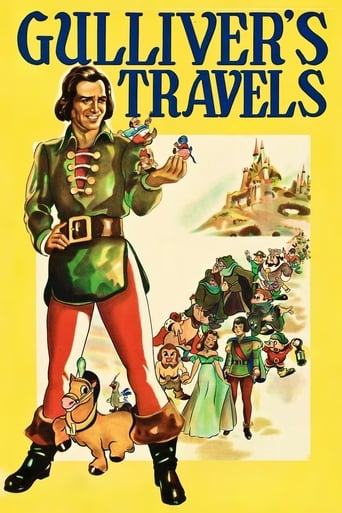
Voice actor who worked during the Golden Age of American animation, most notably contributing to the 1939 Fleischer Studios animated feature 'Gulliver's Travels.' This film was the second full-length animated feature produced by an American studio, following Disney's 'Snow White and the Seven Dwarfs' by two years. Smith was part of the voice cast that brought this ambitious adaptation of Jonathan Swift's classic novel to life animation history. The film was a commercial success and demonstrated that other studios besides Disney could produce successful animated features. Unfortunately, detailed records about Smith's career beyond this single credit are scarce, suggesting he may have been a character actor or bit player whose work in the entertainment industry was primarily concentrated in this production. His contribution to this landmark film places him within the broader context of early voice acting pioneers who helped establish the medium of animated feature films.
The Craft
Milestones
- Voice work in Fleischer Studios' 'Gulliver's Travels' (1939)
Best Known For
Must-See Films
Working Relationships
Studios
Why They Matter
Impact on Culture
Max Smith's contribution to 'Gulliver's Travels' (1939) places him within the generation of voice actors who helped establish animated features as a legitimate art form. The film itself was significant as only the second American animated feature film, proving that the success of Disney's 'Snow White' was not an isolated phenomenon. Voice actors like Smith were instrumental in bringing personality and emotion to animated characters at a time when the medium was still developing its techniques and conventions. The film's commercial success helped pave the way for more animated features and demonstrated the viability of the genre to Hollywood studios and audiences alike.
Lasting Legacy
While Max Smith himself remains largely obscure in film history, his work contributes to the legacy of early voice acting in animation. 'Gulliver's Travels' (1939) remains an important artifact from the Golden Age of Animation, showcasing the Fleischer Studios' distinctive style and their ability to compete with Disney in the feature animation market. The film is remembered for its technical innovations, including the rotoscoping technique used to animate the human characters, and its memorable musical numbers. Smith's participation, however minor, connects him to this significant chapter in animation history.
Who They Inspired
Due to the limited documentation of Max Smith's career, his specific influence on other performers cannot be determined. However, as part of the voice cast of an early animated feature, he contributed to the development of voice acting as a specialized craft in animation, a field that would later produce many legendary performers and become an integral part of the animation industry.
Off Screen
Very limited information is available about Max Smith's personal life, as he appears to have been a minor contributor to early animation whose career left minimal historical documentation.
Did You Know?
- Max Smith worked on 'Gulliver's Travels' (1939), which was only the second full-length animated feature produced in America
- The film was produced by Fleischer Studios, the primary competitor to Disney during the Golden Age of Animation
- The movie took over two years to produce and cost approximately $1.5 million, a substantial budget for its time
- The film was a commercial success, grossing over $3 million at the box office during its initial release
- Voice actors in early animation often went uncredited, which may explain the limited documentation of Smith's career
- The film featured the Fleischer Studios' patented 'Stereoptical Process' for 3D background effects
- Max Smith would have been part of the transition from silent to sound animation, a revolutionary period in film history
Frequently Asked Questions
Who was Max Smith?
American voice with credits in this catalog.
What films is Max Smith best known for?
Titles linked here include Gulliver's Travels (1939).
When was Max Smith born and when did he die?
Unfortunately, specific birth and death dates for Max Smith are not available in historical records, which is not uncommon for minor character actors and voice performers from this era.
What awards did Max Smith win?
There are no documented awards or nominations for Max Smith, which is typical for voice actors who worked on minor roles in early animation films.
What was Max Smith's acting style?
Due to the limited documentation of his career, specific details about Max Smith's acting style are not available. However, as a voice actor in 1939, he would have worked during the early development of voice acting techniques for animation.
What studio did Max Smith work for?
Max Smith worked for Fleischer Studios, one of the major animation studios of the Golden Age and Disney's primary competitor during the 1930s and 1940s.
Why is 'Gulliver's Travels' (1939) historically significant?
The film was only the second American animated feature ever made, proving that animated features could be commercially successful beyond Disney's productions. It showcased Fleischer Studios' technical innovations and artistic style during a pivotal period in animation history.