

Gulliver's Travels
"Lilliput at war in full-color animation"
Keys: Space play/pause · ←/→ 10s · F fullscreen · M mute · </> speed
About this film
Gulliver washes ashore on Lilliput and attempts to prevent war between that tiny kingdom and its equally-miniscule rival, Blefiscu, as well as smooth the way for the romance between the Princess and Prince of the opposing lands. In this he is alternately aided and hampered by the.
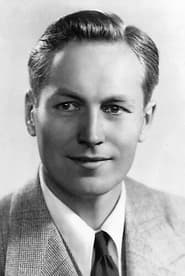
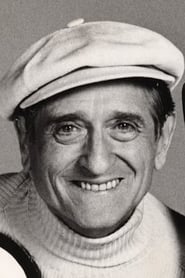
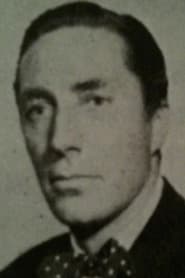
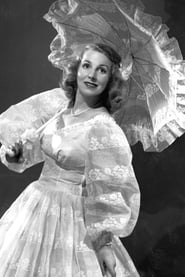
Cast & crew
More films like this
More Animation films
View all →


More from Dave Fleischer
View all →

More about this film
About the production
Release dateDecember 22, 1939
Budget$3.5 million (unprecedented for an animated feature at the time)
Box office$3.27 million domestically (considered a disappointment despite being substantial)
ProductionFleischer Studios, Paramount Pictures
Filmed inFleischer Studios, Miami, Florida, Fleischer Studios, New York City
This was Fleischer Studios' first feature-length animated film and only their second feature overall. Production was rushed to compete with Disney's success, with the studio moving from New York to Miami to take advantage of Florida labor laws and avoid unionization. The film used extensive rotoscoping for Gulliver's character, with actor Sam Parker serving as the live-action model. The production employed over 700 artists and technicians, working under intense pressure to meet Paramount's release deadline.
Themes
Peace and conflict resolutionUnity over divisionLove transcending boundariesCourage in the face of adversityThe absurdity of war
Themes & topics
gianttiny peopleshipwreckpeacewarromanceadventurefantasyanimationconflict resolutionkingdomsspiespistolmarriagefriendship
Historical background
By 1939, Gulliver's Travels had entered distribution via Fleischer Studios, reflecting standard practice for its budget tier.
Why this film matters
Specialists compare Gulliver's Travels with contemporaries to trace how 1939 cinema handled gulliver washes ashore on lilliput and attempts to prevent war between that tiny kingdom a.
Making of
The production of 'Gulliver's Travels' was marked by intense pressure and innovation. Paramount Pictures, eager to compete with Disney's success with 'Snow White,' gave Fleischer Studios an unprecedented budget and tight deadline. The studio relocated from New York to Miami, Florida, building a new facility specifically for this production. The rotoscoping process involved filming live actors performing the scenes, then tracing over their footage to create realistic movement. Sam Parker, who voiced Prince David, also served as the live-action model for Gulliver. The animation team faced enormous technical challenges in depicting the size difference between Gulliver and the Lilliputians, requiring innovative camera techniques and perspective work. The musical numbers were particularly complex, combining traditional animation with rotoscoped characters. Despite the technical achievements, the rushed production schedule led to some inconsistencies in the animation quality, and the story was simplified from Swift's original satirical novel to make it more family-friendly.
What critics said
Modern notes on Gulliver's Travels focus on its gulliver washes ashore on lilliput and attempts to prevent war between that tiny kingdom a rather than any original 1939 sensation.
Did you know?
- This was only the second full-length animated feature film produced in America, following Disney's 'Snow White and the Seven Dwarfs' by two years
- The character Gabby proved so popular that he received his own series of short cartoons, becoming one of the first animated characters to spin off from a feature film
- The film's production budget of $3.5 million was enormous for 1939, equivalent to over $65 million in today's currency
- Max Fleischer personally invented the rotoscope device in 1915, which was extensively used for Gulliver's animation to create realistic human movement
- The film marked the first time a major Hollywood studio other than Disney produced a feature-length animated film
- Despite its financial disappointment, the film was nominated for two Academy Awards, including Best Original Song for 'Faithful Forever'
- The voice of Gabby, Pinto Colvig, was also the original voice of Goofy at Disney and worked for Warner Brothers as well
- The film's release coincided with the beginning of World War II in Europe, making its themes of peace particularly relevant
- Fleischer Studios moved their entire operation from New York to Miami, Florida specifically to produce this film, taking advantage of tax incentives and avoiding union issues
- The three Blefuscu spies (Sneak, Snoop, and Snitch) were caricatures of the Three Stooges, a popular comedy trio of the era
Awards & recognition
- Academy Honorary Award (1939) - For technical innovation in the use of the rotoscope in animation
- New York Film Critics Circle Award (1939) - Special mention for technical achievement
Visual style
The visual style of 'Gulliver's Travels' represented a significant technical achievement for Fleischer Studios. The cinematography employed innovative techniques to depict the dramatic size difference between Gulliver and the Lilliputians, using forced perspective and creative camera angles to maintain the illusion of scale. The rotoscoping process for Gulliver's character created unusually fluid and realistic human movement for the era, setting it apart from more traditional animation styles. The film utilized the multiplane camera system to create depth in scenes, particularly in the Lilliputian cityscapes and castle interiors. Color palettes were carefully chosen to distinguish between the two kingdoms, with Lilliput featuring warm, vibrant colors while Blefuscu used cooler tones. The animation of water effects during the opening storm sequence was particularly advanced for its time, using layered animation and careful timing to create realistic wave motion. The film's visual approach successfully blended the realistic movement of rotoscoped characters with more traditionally animated elements, creating a unique visual signature.
Innovations
The film's most significant technical achievement was its extensive and sophisticated use of rotoscoping, a technique invented by Max Fleischer himself. This involved filming live actors performing scenes, then tracing over their footage frame by frame to create realistic animation. For Gulliver's character, this resulted in unusually natural human movement that set a new standard for animated features. The film also pioneered techniques in depicting scale differences between characters, using innovative camera work and perspective drawing. The multiplane camera system was used extensively to create depth and dimension in the Lilliputian environments. The animation of water effects during the storm sequence was particularly advanced, using multiple layers of animation to create realistic ocean movement. The film's color process was state-of-the-art for 1939, using Technicolor's three-strip process to achieve vibrant, saturated colors. The synchronization of music with animation was also technically sophisticated, with careful attention to timing and rhythm throughout the musical sequences. These technical innovations collectively pushed the boundaries of what was possible in animation at the time.
Music
The musical score for 'Gulliver's Travels' was composed by Victor Young, with songs by Ralph Rainger and Leo Robin. The soundtrack was one of the film's most praised elements, earning an Academy Award nomination for Best Original Score. The film featured several memorable songs, including 'Faithful Forever' (nominated for Best Original Song), 'It's a Hap-Hap-Happy Day,' and 'All's Well.' The music effectively supported the narrative, with romantic themes for the prince and princess, playful melodies for Gabby, and dramatic orchestration for the conflict scenes. The integration of music and animation was sophisticated, with characters' movements carefully synchronized to the musical rhythms. The sound design was equally impressive, particularly in creating appropriate audio for the size differences between characters. The giant footsteps of Gulliver, the tiny voices of the Lilliputians, and the various sound effects all contributed to the film's immersive quality. The musical numbers were staged with elaborate choreography, taking full advantage of the animation medium to create sequences that would be impossible in live-action.
Famous quotes
All's well that ends well, and this ended well! - Gulliver
I'm a brave little man in a big, big world! - Gabby
Faithful forever, whatever the weather, we'll always be together! - Song lyric
There's nothing to fear but fear itself, and I'm not afraid of anything! - Gabby
Size doesn't matter when you have a brave heart! - Prince David
Memorable scenes
- The dramatic opening sequence where Gulliver's ship is destroyed in a violent storm and he washes ashore unconscious
- Gulliver awakening to find himself tied down by hundreds of tiny Lilliputian ropes and soldiers
- The musical number 'It's a Hap-Hap-Happy Day' where the Lilliputians celebrate their new friendship with Gulliver
- The romantic boat scene between Prince David and Princess Glory as they sing 'Faithful Forever'
- The climactic sequence where Gulliver must prevent war by demonstrating the destructive power of his pistol
- Gabby's frantic running through the streets of Lilliput announcing various developments in his distinctive voice
What audiences thought
Upon its release, 'Gulliver's Travels' was generally well-received by audiences, particularly children who were captivated by the story of a giant among tiny people. The character of Gabby became especially popular, with his distinctive voice and comical personality resonating with viewers. The film performed reasonably well at the box office, though it didn't match the phenomenal success of 'Snow White and the Seven Dwarfs.' Audience feedback highlighted the impressive visual effects and the entertaining musical numbers as major strengths. Over the decades, the film has maintained a dedicated following among animation enthusiasts and classic film fans. Its re-releases and home video versions have found new audiences, with many modern viewers appreciating its historical significance and unique animation style. The film's themes of peace and unity have continued to resonate with audiences across generations, contributing to its enduring appeal.
Film connections
Influenced by
- Jonathan Swift's satirical novel 'Gulliver's Travels' (1726)
- Disney's 'Snow White and the Seven Dwarfs' (1937)
- Max Fleischer's earlier Out of the Inkwell cartoons
- The Three Stooges comedy films
- Broadway musical theater traditions
This film influenced
- Mr. Bug Goes to Town (1941)
- The Adventures of Mark Twain (1985)
- The Iron Giant (1999)
- The Little Prince (2015)
Film restoration
The film has been well-preserved and restored multiple times throughout its history. Original nitrate elements were carefully preserved and later transferred to safety film. The film underwent a major restoration in the 1990s for its home video release, with color correction and sound enhancement. In 2019, an 80th-anniversary restoration was completed using the latest digital technology, resulting in a version that closely matches the original theatrical presentation. The film is part of the permanent collection at the Library of Congress and has been deemed culturally significant. Various versions exist, including the original theatrical cut and later edited versions for television broadcast. The restoration work has ensured that future generations can appreciate this important piece of animation history.
Where to watch
- The Warner Archive Collection Blu-ray and DVD
- Amazon Prime Video (for purchase or rental)
- Apple TV/iTunes
- Google Play Movies
- YouTube Movies
- Vudu
- The Criterion Channel (occasionally featured)
- Various classic film streaming services
- Public domain versions available on some free streaming platforms (though quality varies)