Films
1 film
About Arthur Berthelet
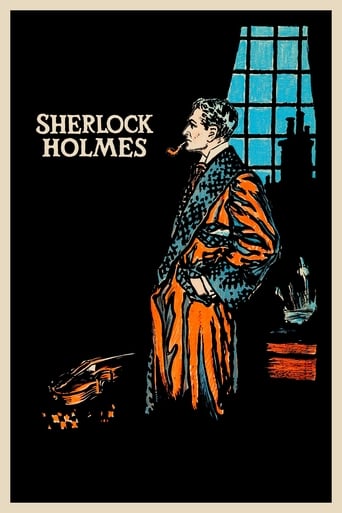
American film director who emerged during the silent era of cinema, though his career was notably brief and concentrated primarily in the mid-1910s. His most significant contribution to film history was directing the 1916 adaptation of 'Sherlock Holmes,' which starred the renowned stage actor William Gillette in the title role. This film was particularly noteworthy as it was one of the earliest cinematic adaptations of Arthur Conan Doyle's famous detective and featured Gillette, who had become synonymous with the character through his long-running stage play. Berthelet's directorial approach demonstrated the emerging techniques of silent film storytelling, utilizing visual narrative methods to translate the literary detective's adventures to the screen. Despite the significance of his Sherlock Holmes adaptation, Berthelet's directorial career appears to have been limited, with most of his known work clustered around 1916. His film was considered lost for decades until a complete print was discovered in France in 2014, restoring an important piece of early cinema history. Beyond his work on Sherlock Holmes, little is documented about Berthelet's other potential projects or his broader contributions to the film industry.
The Craft
Behind the Camera
Employed visual storytelling techniques characteristic of silent era cinema, focusing on atmospheric compositions and dramatic pacing to convey mystery and suspense without dialogue
Milestones
- Directed the 1916 film adaptation of 'Sherlock Holmes' starring William Gillette
- Created one of the earliest cinematic versions of the famous detective
- Preserved William Gillette's iconic portrayal of Holmes for posterity
Best Known For
Must-See Films
Working Relationships
Worked Often With
Studios
Why They Matter
Impact on Culture
Arthur Berthelet's most significant cultural impact comes from his direction of the 1916 'Sherlock Holmes' film, which represents a crucial moment in the adaptation of literary detective fiction to cinema. The film preserved William Gillette's definitive stage performance of Holmes, capturing the actor's interpretation that had influenced decades of theatrical productions. This early adaptation helped establish visual conventions for detective films that would influence countless later productions in the mystery genre. The rediscovery of this presumed-lost film in 2014 was celebrated by film historians and Sherlock Holmes enthusiasts alike, as it provided a rare glimpse into early American cinema and the evolution of one of literature's most enduring characters.
Lasting Legacy
Arthur Berthelet's legacy is inextricably linked to his sole surviving directorial work, the 1916 'Sherlock Holmes' film. While his career was brief and largely undocumented in film history, this single contribution has ensured his place in cinema history as the director who captured William Gillette's well-known Holmes performance on film. The preservation and restoration of this film have made Berthelet's work accessible to modern audiences and scholars, providing valuable insight into early American filmmaking techniques and the adaptation process from stage to screen. His work stands as an important bridge between theatrical and cinematic storytelling during the formative years of the film industry.
Who They Inspired
While direct evidence of Berthelet's influence on other filmmakers is limited due to the obscurity of his career, his work on 'Sherlock Holmes' contributed to the early development of the mystery genre in cinema. The visual techniques and narrative approaches used in the film helped establish conventions that would be refined and expanded upon by subsequent directors in the detective and mystery genres. His adaptation demonstrated how complex literary characters could be successfully translated to the silent screen, influencing how future filmmakers approached similar adaptations.
Off Screen
Very little personal information about Arthur Berthelet has survived in historical records, as he appears to have been a relatively obscure figure in early cinema history whose brief career left minimal documentation.
Did You Know?
- The 1916 'Sherlock Holmes' film was considered lost for nearly a century before being discovered in the archives of the Cinémathèque Française in 2014
- William Gillette, the star of Berthelet's film, was the first actor to portray Sherlock Holmes on screen and had been playing the role on stage since 1899
- The film was produced by Essanay Studios, one of the early major film production companies
- Gillette was 63 years old when he made the film, making him one of the oldest actors to portray Holmes in a leading role
- The rediscovered print of the film was restored by the San Francisco Silent Film Festival
- Berthelet's 'Sherlock Holmes' is the only surviving film appearance of William Gillette
- The film includes elements from both Arthur Conan Doyle's original stories and Gillette's successful stage play
- The rediscovery of this film was called 'the cinematic equivalent of finding a lost Shakespeare play' by film historians
Frequently Asked Questions
Who was Arthur Berthelet?
American on YTB.my. His career appears to have been brief and concentrated primarily around this single notable production.
What films is Arthur Berthelet best known for?
Titles linked here include Sherlock Holmes (1916).
When was Arthur Berthelet born and when did he die?
Unfortunately, specific birth and death dates for Arthur Berthelet are not well-documented in historical records, reflecting his relatively obscure status in film history despite his notable contribution to early cinema.
What awards did Arthur Berthelet win?
There are no documented awards or honors received by Arthur Berthelet, which was not uncommon for directors working in the early silent film era when formal recognition systems like the Academy Awards had not yet been established.
What was Arthur Berthelet's directing style?
Berthelet's directing style in 'Sherlock Holmes' employed the visual storytelling techniques typical of silent era cinema, using atmospheric compositions, dramatic lighting, and expressive performances to convey mystery and suspense without dialogue.
Why is Arthur Berthelet's 'Sherlock Holmes' film significant?
The 1916 'Sherlock Holmes' film is historically significant as it preserves William Gillette's definitive stage performance of the detective, represents one of the earliest cinematic adaptations of the character, and was considered lost for nearly a century before its rediscovery in 2014.