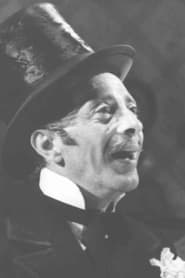
Wladyslaw Godik
Actor
- Active
- 1924-1924
Films 1
About Wladyslaw Godik
Wladyslaw Godik was a little-documented performer associated with the silent-era Yiddish-language film Tkies khaf (1924), one of the important early motion pictures made for Jewish audiences in Eastern Europe. Surviving reference sources identify him as an actor, but detailed biographical information about his life, training, and broader career is scarce, which is not unusual for performers working in regional or minority-language cinema in the 1920s. His known screen activity currently centers on the 1924 production, suggesting either a very limited film career or one that has not been well preserved in surviving records. Because of the fragmentary state of the historical record, it is difficult to reconstruct his full professional arc with certainty, and no widely verified later film appearances are readily documented. Even so, his participation in Tkies khaf places him within the early cultural world of Yiddish cinema, where stage traditions, literary adaptation, and community-specific storytelling played a major role. In that context, Godik belongs to the broader group of actors whose names survive primarily through film credits and archival catalogues rather than extensive publicity materials. His historical importance lies less in a large filmography than in his connection to a foundational era of Jewish screen culture.
More about Wladyslaw Godik
In film history
Wladyslaw Godik's cultural significance is tied to the place he occupies in the history of Yiddish cinema, a small but vital body of work that preserved Jewish language, humor, music, and dramatic themes on film during the silent era. Even when individual performers are not extensively documented, their participation in productions like Tkies khaf helped sustain a cinematic tradition that served diaspora communities and kept theatrical heritage alive on screen. His credit contributes to the broader map of Central and Eastern European film culture, where many artists worked in locally specific industries that were later overshadowed by mainstream national cinemas. In this way, Godik represents the many overlooked contributors whose names endure through archival preservation rather than star biography. For researchers of silent film, his presence is a reminder that film history includes not only major international figures but also the ensemble of artists who built culturally specific cinemas.
Later reputation
Godik's legacy is primarily archival and historical rather than celebrity-based. He is remembered today because his name is attached to Tkies khaf, allowing historians to trace the personnel involved in early Yiddish filmmaking and to understand how these productions were assembled. His survival in film records underscores the importance of cataloguing minor and regional performers, since such credits often provide the only evidence of careers otherwise lost to time. In the broader sweep of film history, his legacy is that of an early screen actor whose work forms part of the foundation of Jewish cinematic heritage. He stands as one of many artists whose limited surviving documentation nevertheless contributes to a fuller understanding of silent-era cultural production.
Influence
There is no clear evidence of direct influence on later named actors or filmmakers that can be confidently attributed to Wladyslaw Godik. His influence is best understood indirectly: by participating in a Yiddish-language film, he contributed to a performance tradition that connected stage acting, community storytelling, and screen adaptation. The cumulative effect of artists like him helped establish conventions and audience expectations for Jewish cinema, even if his individual technique or reach cannot now be precisely measured. His historical influence therefore lies in the preservation of a cultural form rather than in a documented mentorship chain.
Off screen
No reliably verified public information is currently available about Wladyslaw Godik's personal life, including marriages, family background, or private activities outside of his credited screen work. The historical record for many actors in early Yiddish and regional European cinema is incomplete, and Godik appears to be one of those figures whose professional identity survives more clearly than his biography. As a result, any attempt to specify relationships, household details, or later-life circumstances would be speculative. At present, there is no widely documented evidence connecting him to a larger public career in stage or film beyond the 1924 credit.
Credits
- Appeared in the 1924 silent-era Yiddish film Tkies khaf
- Represents an early generation of regional and minority-language screen actors whose work supported the development of Yiddish cinema
- His credited screen presence is part of the surviving archival record of 1920s Eastern European Jewish filmmaking
Roles
- Role in Tkies khaf (1924) - exact character name not preserved in widely accessible sources
Films
- Tkies khaf (1924)
Notes
- He is associated with Tkies khaf (1924), a silent-era Yiddish film, a niche but historically important branch of early cinema.
- Detailed biographical data about him is extremely limited, which is common for many performers in regional European film industries of the 1920s.
- His screen record appears to be concentrated in a single known film credit, making him a particularly elusive figure for researchers.
- Because of the scarcity of surviving information, he is often encountered in film history through catalogues and archival listings rather than newspaper profiles or studio publicity.
- His name helps document the international reach of Yiddish cinema beyond the best-known centers of Hollywood and German expressionist film.
- The preservation of his credit is valuable for reconstructing cast lists of early Jewish cultural productions.
- He is a reminder that many silent-era performers had careers that are only partially visible due to lost films and incomplete records.
Questions
Who was Wladyslaw Godik?
Wladyslaw Godik was an actor known for appearing in the silent-era Yiddish film Tkies khaf (1924). Beyond that credit, surviving biographical information is very limited, which makes him a lesser-documented figure in early film history. He is still notable as part of the personnel of an important cultural and cinematic tradition.
What films is Wladyslaw Godik best known for?
He is best known for Tkies khaf (1924), which appears to be his primary or only widely documented screen credit. Because the historical record is sparse, no additional film appearances can be confidently confirmed from readily available sources. His known film work is therefore centered on that single title.
When was Wladyslaw Godik born and when did he die?
At present, reliable sources do not provide verified birth or death dates for Wladyslaw Godik. His full biographical details remain uncertain, which is common for performers from early regional cinema. Without stronger archival evidence, those dates must remain unknown.
What awards did Wladyslaw Godik win?
No awards or formal honors are currently documented for Wladyslaw Godik. This does not necessarily mean he received none, but rather that no reliable records have surfaced in accessible sources. His significance is historical and archival rather than award-based.
What was Wladyslaw Godik's acting style?
There is no surviving critical description of his individual acting style. Based on the context of Tkies khaf, his performance would have belonged to the expressive, stage-influenced traditions common in silent-era Yiddish cinema. That style generally emphasized clear gesture, emotional legibility, and theatrical presence.
Why is Wladyslaw Godik historically important?
He is historically important because he is part of the documented cast history of Tkies khaf and therefore belongs to the early history of Yiddish-language film. Even when a performer has only a small surviving footprint, that credit helps researchers reconstruct a cinema that is otherwise fragmentary. His name contributes to preserving the memory of minority-language filmmaking in the silent era.