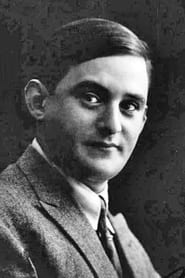
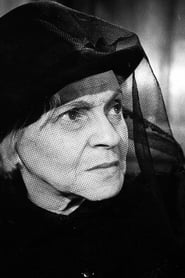
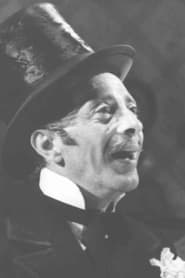
Tkies khaf
Plot
Tkies khaf (1924) is a silent Yiddish-language melodrama centered on a young couple whose love is threatened by the force of a solemn vow and the social-religious expectations surrounding it. Drawing on the same folkloric and dramatic tradition later made famous by The Dybbuk, the film follows a romance that becomes entangled with fate, obligation, and the consequences of a broken promise. Ester Rachel Kaminska and her daughter Ida Kamińska appear as key performers in a story that emphasizes emotional intensity, family authority, and the tension between personal desire and communal law. As the lovers struggle against circumstances that seem preordained, the film builds toward an atmosphere of tragic inevitability in which passion and destiny collide. Because the film survives only in limited documentation, many plot details are less fully recorded than those of later adaptations, but its narrative is widely understood as a precursor to the classic dybbuk-style tale of frustrated love and spiritual consequence.
About the Production
Tkies khaf is a rare early Yiddish silent film and is most notable for bringing together the legendary stage actress Ester Rachel Kaminska and her daughter Ida Kamińska in a screen drama built around a famous Jewish folkloric-melodramatic subject. Surviving documentation is sparse, which is common for Yiddish silent cinema of the period, and many standard production details such as exact budget, exhibition grosses, and complete location data do not appear to have been preserved in widely accessible sources. The film is often discussed as an important antecedent to The Dybbuk (1937), since it uses a similar emotional and spiritual framework involving vows, love, and destiny. Its historical value lies not only in the story itself but also in the cultural significance of its cast and in its place within the small corpus of interwar Yiddish-language feature filmmaking.
Historical Background
Tkies khaf was made in 1924, in the interwar period when Poland was home to one of the largest Jewish populations in Europe and Yiddish-language cultural production was flourishing in theatre, literature, and film. This was also a time of great instability, with Jewish communities navigating modernity, assimilation pressures, lingering traditional life, and rising political uncertainty in the region. Yiddish cinema during this era often served both as entertainment and as a cultural archive, preserving language, manners, music, and religious-social concerns for audiences scattered across Eastern Europe and beyond. The film matters historically because it belongs to the earliest phase of Yiddish feature filmmaking and because it helped shape a screen tradition that would later culminate in internationally celebrated works like The Dybbuk. It also captures a moment when prominent stage artists were beginning to use film to extend the reach of Jewish dramatic art beyond the theatre.
Why This Film Matters
Tkies khaf holds cultural significance as an early example of Yiddish film culture and as a screen artifact connected to the Kaminska theatrical dynasty, one of the foundational families of Yiddish performance history. The film is significant for demonstrating how Jewish folklore, religious ideas, and melodramatic romance were translated into silent cinema for a Yiddish-speaking audience. Its importance is amplified by its relationship to later films on the same thematic ground, especially The Dybbuk, which became a landmark of Jewish cinema; Tkies khaf can be understood as part of the developmental lineage that helped establish the expressive vocabulary of that tradition. For scholars of Jewish culture, the film is valuable not only as an entertainment object but also as evidence of how interwar Jewish communities represented love, obligation, and destiny through popular art.
Making Of
The most significant behind-the-scenes fact about Tkies khaf is its casting of Ester Rachel Kaminska and Ida Kamińska, which gave the production immediate cultural authority within Yiddish theatrical circles. Both performers were central to the development of modern Yiddish stage art, and their appearance in a film built on a spiritually charged melodramatic subject likely helped the project appeal to audiences familiar with their theatrical reputation. The film was made during a period when Yiddish cinema often adapted stage successes or culturally resonant stories to reach Jewish audiences across Eastern Europe and the diaspora. Surviving records do not preserve a rich production dossier, so detailed accounts of shooting conditions, crew disputes, or financing are not securely established, but the film remains an important example of the transition from theatre-based performance to silent screen storytelling in the Jewish cultural sphere.
Visual Style
Detailed technical descriptions of the cinematography are not widely preserved, but as a 1924 silent melodrama it would have relied on expressive composition, gesture, and visual storytelling rather than synchronized sound. Like much Yiddish silent cinema of the period, it likely used theatrical framing and emotionally legible staging to communicate to audiences accustomed to stage performance. The film’s visual style is generally understood through its era and its cultural context: restrained but expressive silent-era imagery aimed at clarifying moral and emotional conflict. Without a widely circulating restored print, close stylistic analysis remains limited, which makes it difficult to verify specific camera or lighting innovations.
Innovations
The film’s principal achievement is not tied to a single technical innovation but to its role in the development of Yiddish cinema as a feature-length dramatic form. It represents an early effort to translate the emotional scale of Yiddish stage drama into silent film language, relying on performance, gesture, and visual storytelling to convey complex spiritual and romantic themes. Its historical significance also lies in preserving the screen presence of major Yiddish theatrical figures at a time when few such performances were recorded on film. In archival terms, simply existing as a documented early Yiddish feature makes it technically and culturally important, even if no specific special-effects or camera breakthroughs are credited to it.
Music
As a silent film, Tkies khaf had no synchronized recorded soundtrack in its original form. Like most silent features, it would have been accompanied in exhibition by live music, which may have varied by venue and local practice. No standardized original score is widely documented in surviving references, and there is no consistently cited modern restoration score in the available mainstream record. Any present-day presentation would typically depend on archival or reconstructed accompaniment rather than an original surviving sound track.
Famous Quotes
No reliably documented surviving dialogue quotes from the original silent version are widely available.
As a silent film, its meaning would have been conveyed through intertitles and performance rather than preserved spoken dialogue.
Memorable Scenes
- The central vow-and-destiny conflict that drives the lovers toward tragedy, embodying the film’s title and thematic core.
- The emotionally charged appearances of Ester Rachel Kaminska and Ida Kamińska, whose presence links the film to Yiddish theatre tradition.
- The climactic moments in which personal desire is shown colliding with family or spiritual obligation, a structure that anticipates later dybbuk narratives.
Did You Know?
- Tkies khaf is a very early Yiddish silent film and is today far less widely known than later classics such as The Dybbuk (1937).
- The film is especially notable for starring Ester Rachel Kaminska and her daughter Ida Kamińska, two of the most important figures in Yiddish theatre history.
- Its title refers to a vow or pledge, which is central to the dramatic conflict of the story.
- The film is often described as a precursor to The Dybbuk because it uses a similar tale of doomed love, fate, and the consequences of broken promises.
- Because many Yiddish silent films were not widely preserved, information about the film’s exact production details remains limited compared with mainstream European silent cinema.
- Tkies khaf forms part of the cultural bridge between Yiddish theatre and Yiddish cinema, a medium that frequently adapted popular stage material and performance traditions.
- The film is important to scholars because it documents the screen work of a major theatrical family whose influence extended across stage and cinema.
- It belongs to a small but historically significant body of interwar Polish/Yiddish films produced for Jewish audiences in Eastern Europe.
- Surviving references to the film are often found in film-history and Jewish-cinema scholarship rather than in general film-reference works.
- The film’s prestige today is rooted less in wide popular visibility and more in its rarity, historical context, and association with the Kaminska legacy.
What Critics Said
Contemporary critical reception is difficult to reconstruct in detail because surviving reviews and press coverage are limited, and the film’s present-day reputation is largely mediated through film history scholarship rather than through a continuous critical tradition. What can be said with confidence is that the film has been respected by historians of Yiddish cinema for its rarity, its distinguished cast, and its place in the genealogy of Jewish melodramatic film. Modern scholars tend to value it as an important precursor text rather than as a widely screened canonical work, and much of its critical standing comes from its association with the Kaminska family and with later masterpieces of Jewish screen drama. Its reputation is therefore archival and historical as much as aesthetic: a surviving clue to a once-vibrant but largely lost film culture.
What Audiences Thought
Specific audience-response records are not well preserved, but the film was made for Yiddish-speaking audiences who were likely drawn to its familiar cultural themes, emotional intensity, and star performers. In its original context, it would have appealed to viewers acquainted with the traditions of Yiddish theatre and with stories of vows, fate, and spiritual consequence. As with many silent-era Jewish films, its broader audience beyond its intended linguistic community was limited, and its later reception has depended largely on historians, archivists, and specialty audiences interested in Yiddish cinema. Today, when it is discussed or screened, it is usually received as a rare historical document and a moving artifact of lost cinematic traditions.
Film Connections
Influenced By
- Yiddish stage melodrama
- Jewish folkloric storytelling
- Theatrical traditions associated with the Kaminska family
- The broader tradition of romantic tragedy in European silent cinema
This Film Influenced
- The Dybbuk (1937)
- Later Yiddish-language melodramas that adapted folkloric and religious themes
More Drama Films
View allFilm Restoration
The film is extremely rare and appears to survive only incompletely or through limited archival documentation; it is often treated by historians as a partially lost or difficult-to-access silent Yiddish film rather than a widely available restored title.