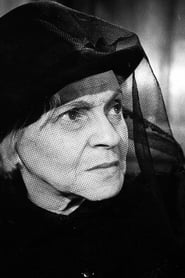
Ida Kamińska
Actor
- Born
- September 24, 1899, Warsaw, Poland
- Died
- August 21, 1980
- Active
- 1924-1970s
Films 1
About Ida Kamińska
Ida Kamińska was a distinguished Polish-Jewish actress, theater director, and cultural figure whose reputation was built primarily in Yiddish theater, with a small but historically significant film presence in the early 20th century. Born into a celebrated theatrical family, she grew up surrounded by the Yiddish stage tradition and became one of its most important interpreters and preservers. Her film work from the silent era is extremely limited, and she is best documented in cinema history for appearing in Tkies khaf (1924), a title associated with her early career. Although she is far better known for the stage than for motion pictures, her screen appearance places her within the broader world of classic Central and Eastern European cinema and Jewish artistic life. She later became internationally famous as an actress and director of Yiddish theater, especially after World War II, when she helped sustain a cultural tradition nearly destroyed by the Holocaust. Kamińska's career is also notable for her resilience, her commitment to Jewish cultural expression, and her status as a symbol of artistic continuity across upheaval and displacement. She remained an important public figure well beyond the silent era, and her artistic legacy is remembered through both theater and film history.
More about Ida Kamińska
On screen
Kamińska was known for an emotionally disciplined, deeply expressive acting style rooted in Yiddish theatrical tradition. Her performances were often marked by dignity, restraint, and a strong sense of inner life, allowing her to communicate pain, humor, and moral complexity with clarity. In stage work, she combined vocal precision with a finely tuned awareness of gesture and rhythm, an approach that translated well to screen in her limited film appearances. Her style emphasized authenticity and cultural specificity rather than broad melodrama, which made her especially compelling in serious dramatic roles. She brought a strong humanistic presence to her characters, often portraying ordinary people under extraordinary social pressure. In cinema, this gave her performances a quiet force that resonated even in brief or rare screen work.
In film history
Ida Kamińska occupies a central place in the cultural history of Eastern European Jewry because she helped preserve and dignify Yiddish theatrical art through some of its most difficult historical moments. Even though her filmography is small, her name carries weight in cinema studies because Tkies khaf connects her to the silent-film period and to the broader ecosystem of Jewish-language screen culture in Poland. Her career bridged prewar, wartime, and postwar worlds, making her a living link between the classic era of Yiddish theater and later international recognition. She became a symbol of artistic survival, especially for audiences who understood Yiddish theater as both entertainment and cultural memory. In film history, she represents the intersection of stage and screen in a minority-language cinematic tradition that was often marginalized by mainstream histories. Her presence in classic cinema databases is especially valuable because it helps recover the contributions of artists whose careers were larger in theater than in film but still important to the silent-era record.
Later reputation
Kamińska's legacy lies in her role as a guardian of Yiddish performance culture and as one of the most respected Jewish actresses of the 20th century. Her work ensured that a rich theatrical tradition remained visible after the devastation of the Holocaust, and her artistic authority made her an important representative of that tradition on international stages and screens. For film historians, she is significant as a rare silent-era-linked performer whose broader career illuminates the cultural networks behind early Jewish cinema in Poland. Her later acclaim, especially for The Shop on Main Street, brought attention to the depth and seriousness of her craft and introduced her to audiences far beyond the Yiddish-speaking world. She remains remembered not simply as an actress, but as an institution-builder and cultural symbol whose influence extended across national borders. Her legacy continues in scholarship on Jewish theater, Eastern European cinema, and women’s leadership in the performing arts.
Influence
Kamińska influenced generations of Yiddish actors and cultural workers by demonstrating that Jewish-language performance could be artistically serious, modern, and socially vital. Her example helped shape postwar efforts to preserve Yiddish theater as a living art rather than a museum piece. She also influenced later screen actors through the emotional precision and moral gravity she brought to performance, particularly in roles that required restraint rather than theatrical excess. Because she came from a lineage of theatrical leadership and carried that tradition into modern times, she became a model for how performers can also serve as cultural custodians. Her international recognition in film helped broaden awareness of Jewish performance traditions in world cinema. Her impact is therefore both artistic and historical, linking classic theater, early cinema, and postwar cultural recovery.
Off screen
Ida Kamińska came from one of the most important theatrical families in Yiddish culture; her mother, Ester Rachel Kamińska, is often referred to as the 'mother of Yiddish theater,' and her father, Abraham Kamiński, was also a theater figure. Her life was shaped by both artistic inheritance and historical trauma, particularly the destruction of much of the Yiddish-speaking world during World War II. She survived the war and continued to work in theater, becoming a crucial cultural representative for displaced and postwar Jewish communities. Her personal life was closely intertwined with her professional mission, and she is remembered as someone who carried both family tradition and collective memory through her art. She was married, and her family connections were deeply embedded in the theatrical world, though much of her public identity centered on her role as an artist and cultural guardian.
Education
Formal education details are not consistently documented in readily available classic-cinema sources; she was primarily educated through the theatrical environment of her family and through practical stage experience.
Credits
- Appeared in the silent-era film Tkies khaf (1924), one of her earliest known screen credits
- Became one of the foremost figures in Yiddish theater in the 20th century
- Served as an artistic leader and director in the postwar Yiddish stage world
- Achieved international recognition for sustaining Yiddish cultural performance after the Holocaust
- Received major state and cultural honors for her contributions to theater and Jewish arts
- Was recognized globally for her performance in The Shop on Main Street (1965), which brought her worldwide attention beyond the Yiddish stage
Roles
- Her role in Tkies khaf (1924)
- Hana/Anna in The Shop on Main Street (1965)
- Leading Yiddish stage roles associated with matriarchs, wives, and morally complex women
Films
- Tkies khaf (1924)
- The Shop on Main Street (1965)
Awards
- Order of the Banner of Work
- Polish State Award recognition for cultural contribution
- International critical acclaim for The Shop on Main Street (1965)
Nominations
- Academy Award nomination for The Shop on Main Street (1965) - Best Foreign Language Film as part of the film's recognition
- International festival recognition and critical honors for The Shop on Main Street (1965)
Honors
- Recognition as a leading figure in Yiddish theater
- Honored by cultural institutions for preserving Jewish theatrical heritage
- State and artistic honors in Poland and abroad for lifetime contribution to the arts
Collaborators
- Members of the Kamiński theatrical family
- Yiddish stage actors and directors in Warsaw and postwar Poland
- Filmmakers and cast associated with The Shop on Main Street
Studios
- Yiddish theater companies in Warsaw and later postwar European theatrical institutions
- State Jewish Theater in Poland
Family
- Marek Arnsztejn (dates not consistently documented in available sources)
Notes
- She came from one of the most famous Yiddish theater families in Europe.
- Her mother, Ester Rachel Kamińska, was one of the foundational figures of Yiddish theater.
- Her early screen work is extremely limited, which makes Tkies khaf (1924) especially notable in her filmography.
- She is much better known for theater than for cinema, yet she remains listed in classic film references because of her silent-era connection.
- She achieved international fame later in life through The Shop on Main Street (1965).
- She played an important role in preserving Yiddish culture after World War II.
- Her career crossed silent film, stage performance, and postwar international cinema.
- She is often discussed in histories of Jewish cultural survival as much as in acting histories.
Questions
Who was Ida Kamińska?
Ida Kamińska was a Polish-Jewish actress and theater director best known for her work in Yiddish theater and for her rare but notable screen appearances. She is a major figure in 20th-century Jewish cultural history and is remembered as both a performer and a preserver of theatrical tradition.
What films is Ida Kamińska best known for?
Her film work is limited, but she is associated with Tkies khaf (1924) from the silent era and later with The Shop on Main Street (1965), which brought her international recognition. Her reputation, however, rests much more strongly on her stage career than on her filmography.
When was Ida Kamińska born and when did she die?
Ida Kamińska was born on September 24, 1899, in Warsaw, Poland. She died on August 21, 1980.
What awards did Ida Kamińska win?
She received major cultural and state honors, including recognition from Polish authorities for her contribution to the arts. Her greatest international acclaim came from The Shop on Main Street, which earned widespread critical attention and festival recognition.
What was Ida Kamińska's acting style?
Her acting style was emotionally precise, dignified, and deeply rooted in Yiddish theatrical traditions. She favored truthfulness, restraint, and character depth over broad melodrama, which gave her performances a strong sense of humanity.
Why is Ida Kamińska important in film history?
She is important because she connects silent-era screen history with the broader world of Jewish-language performance and postwar European cinema. Even though her filmography is small, her presence helps document a cultural tradition that is essential to classic cinema history.
What is Ida Kamińska's legacy?
Her legacy is that of a cultural guardian who helped preserve Yiddish theater through the upheavals of the 20th century. She is remembered as one of the great actresses of her community and as a symbol of artistic resilience and continuity.