Films
1 film
About Mark Tsibulsky
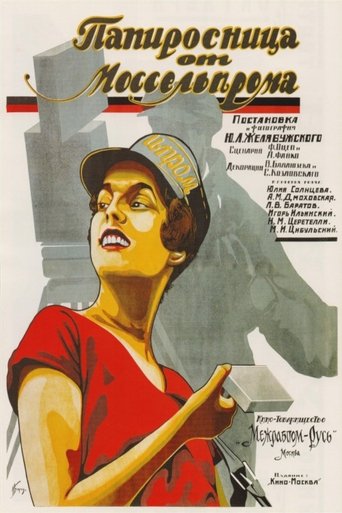
Soviet actor: career, while brief, on the landscape of early Russian cinema. He emerged during the vibrant experimental period of Soviet filmmaking in the 1920s, a time when directors were new cinematic languages. His sole known screen appearance was in the 1924 comedy 'The Cigarette Girl of Mosselprom,' a film that has since become a celebrated classic of the silent era. In this satirical comedy, Tsibulsky played a supporting role, contributing to the film's whimsical critique of Moscow's commercial culture and the burgeoning Soviet advertising industry. His performance was emblematic of the period's acting style, which often blended exaggerated gestures with subtle comedic timing to convey narrative without dialogue. Despite the promise shown in his debut, Tsibulsky's film career appears to have been confined to this single production, making him a quintessential one-film actor whose legacy is forever tied to this specific work. After 1924, there are no further records of his involvement in the motion picture industry, and details of his subsequent life and career remain largely undocumented, a common fate for many supporting actors of the early Soviet period.
The Craft
On Screen
Mark Tsibulsky's acting style in 'The Cigarette Girl of Mosselprom' was characteristic of Soviet silent comedy, utilizing broad physical gestures and exaggerated facial expressions to communicate humor and character to the audience. His performance was part of an ensemble that embraced a theatrical, almost vaudevillian approach, which was common in early cinema before the development of more naturalistic acting techniques. The style was perfectly suited to the film's satirical tone, relying on visual gags and slapstick elements to drive the narrative and critique societal norms.
Milestones
- Appeared in the influential Soviet comedy 'The Cigarette Girl of Mosselprom' (1924)
Best Known For
Iconic Roles
Must-See Films
Working Relationships
Worked Often With
Studios
Why They Matter
Impact on Culture
Mark Tsibulsky's cultural impact is intrinsically linked to the lasting legacy of 'The Cigarette Girl of Mosselprom.' While he was not a leading figure, his participation places him within a historically significant film that captured the essence of the New Economic Policy (NEP) era in the Soviet Union. The film itself is a vital cultural artifact, offering a rare comedic and satirical look at Soviet life in the 1920s, and Tsibulsky is a part of that historical record. His contribution, however small, helped create a work that continues to be studied by film historians as an example of early Soviet avant-garde cinema and its unique blend of comedy, romance, and social commentary.
Lasting Legacy
The legacy of Mark Tsibulsky is that of a representative figure of the countless actors who populated the early Soviet film industry but whose names have faded into obscurity. He serves as a reminder of the collaborative nature of filmmaking, where even minor roles are essential to a film's success and enduring power. His primary legacy is his immortalization in a classic of world cinema; anyone who watches 'The Cigarette Girl of Mosselprom' today sees his performance, ensuring that a part of him continues to be seen by new generations of film enthusiasts. He symbolizes the many anonymous artisans who built the foundations of a national cinema.
Who They Inspired
Due to the brevity of his film career and his status as a supporting actor, there is no documented evidence that Mark Tsibulsky directly influenced other performers or filmmakers. His influence is passive, existing as part of the collective performance style showcased in 'The Cigarette Girl of Mosselprom,' which may have served as a reference point for actors in subsequent Soviet comedies. The film itself was influential, and by extension, all its contributors, including Tsibulsky, played a role in shaping the trajectory of Soviet comedic cinema, even if their individual contributions were not explicitly recognized or traced by later artists.
Off Screen
Very little is documented about the personal life of Mark Tsibulsky, as his name appears only in the context of his single film credit. Like many supporting actors from the early Soviet era, detailed biographical records were not systematically kept, especially for those who did not achieve star status. Information regarding his family, relationships, or life outside of his brief film appearance has been lost to history, making him a somewhat enigmatic figure whose entire legacy is preserved only through his performance on celluloid.
Did You Know?
- Mark Tsibulsky's entire known filmography consists of a single movie, making him a 'one-film wonder.'
- 'The Cigarette Girl of Mosselprom' was one of the first Soviet films to become a major commercial success abroad, particularly in Germany.
- The film's title, 'Mosselprom,' refers to a real state-owned food processing trust in Moscow, a symbol of the NEP era's commercialism.
- Despite being a Soviet film, it features a cameo by the famous American silent film star Harold Lloyd, whose image appears on a poster, exemplifying the film's playful, meta-cinematic approach.
- The director, Yuri Zhelyabuzhsky, was a figure in Russian cinema, having previously worked as a cameraman for the legendary filmmaker Yevgeni Bauer.
- Tsibulsky's co-star, Igor Ilyinsky, went on to become.
- The film was considered lost for decades before a copy was rediscovered and restored in the latter half of the 20th century.
- The film's narrative playfully blurs the line between fiction and reality by having the actors play versions of themselves.
Frequently Asked Questions
Who was Mark Tsibulsky?
Soviet with credits in this catalog.' His career appears to have been limited to this single film, making him a notable but obscure figure from the early days of Soviet cinema.
What film is Mark Tsibulsky best known for?
Mark Tsibulsky is solely known for his appearance in 'The Cigarette Girl of Mosselprom' (1924), a satirical comedy that has become a classic of Soviet silent film and is celebrated for its critique of 1920s Moscow culture.
When was Mark Tsibulsky born and when did he die?
The specific dates of Mark Tsibulsky's birth and death are not documented in historical film records. Like many supporting actors of his time, biographical details outside of his film work are unfortunately unavailable.
What awards did Mark Tsibulsky win?
There are no records of Mark Tsibulsky receiving any major awards or nominations for his work. The award systems for film, particularly in the Soviet Union during the 1920s, were not as established as they later became.
What was Mark Tsibulsky's acting style?
Tsibulsky's acting style was typical of silent film comedy, relying on physical expression and exaggerated gestures to convey humor and character. His performance fit the satirical and theatrical tone of 'The Cigarette Girl of Mosselprom.'