The Cigarette Girl of Mosselprom
"Office dreams, sidewalk cigarettes, Moscow romance"
Keys: Space play/pause · ←/→ 10s · F fullscreen · M mute · </> speed
About this film
As she works in her tedious office job, Maria Ivanovna dreams about being married, and she has particular hopes that her co-worker Nikodim Mityushin will take an interest in her. Nikodim, though, is in love with Zina, who sells cigarettes on the sidewalk, and he frequently buys c.
Cast & crew
More films like this

More Romance films
View all →




More from Yuri Zhelyabuzhsky
View all →
More about this film
About the production
Release dateOctober 13, 1924
Box officeUnknown - box office tracking was not standardized in early Soviet cinema
ProductionGoskino
Filmed inMoscow, Soviet Union
The film was notable for being shot on location in Moscow during the NEP period, capturing the city's transformation. The production faced challenges due to limited resources and technical equipment typical of early Soviet cinema. Director Yuri Zhelyabuzhsky employed innovative camera techniques and self-referential filmmaking elements that were ahead of their time. The Mosselprom building, which served as a key location, was an actual Soviet state enterprise building that became an iconic Moscow landmark.
Themes
Romantic love and courtshipThe allure of cinema and celebrityBureaucracy versus freedomUrban modernization and changeClass mobility in Soviet society
Themes & topics
cigarette girloffice romancefilm crewMoscowsilent filmlove triangleAmerican businessmanfilmmakingbureaucracydreamsurban life1920s
Historical background
Silent-era audiences encountered The Cigarette Girl of Mosselprom around 1924, as studios refined cross-cutting and star-driven storytelling.
Why this film matters
The Cigarette Girl of Mosselprom shows how silent filmmakers conveyed plot through gesture, title cards, and editing.
Making of
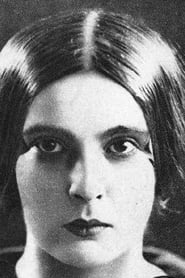
The production of 'The Cigarette Girl of Mosselprom' took place during a unique period in Soviet cultural history known as the NEP (New Economic Policy), which allowed for more artistic freedom and experimentation. Director Yuri Zhelyabuzhsky, who came from a theatrical background, brought a sophisticated understanding of performance to the film. The casting of Yuliya Solntseva as Zina proved fortuitous, as she brought both beauty and a natural comedic timing to the role. The film crew faced significant technical challenges, including primitive camera equipment and limited film stock, which forced them to be creative with their shooting techniques. The decision to shoot on location in Moscow rather than in studios was unusual for the time and gave the film an authentic documentary-like quality. Igor Ilyinsky, who played Nikodim, developed his physical comedy style during this production, which would later make him one of Soviet cinema's most beloved comic actors.
What critics said
Press notices for The Cigarette Girl of Mosselprom (1924) are sparse in digitized sources; interest today rests on preserved prints and comparison with related titles.
Did you know?
- The film was one of the first Soviet comedies to achieve international recognition and was exported to several countries.
- Yuliya Solntseva, who played Zina, later became a prominent film director herself, married to director Alexander Dovzhenko.
- The Mosselprom building featured in the film became one of Moscow's most recognizable architectural landmarks and still stands today.
- The film includes a meta-narrative element where characters watch themselves being filmed, making it one of the earliest examples of self-referential cinema.
- Director Yuri Zhelyabuzhsky was the son of famous Russian theater actress Vera Komissarzhevskaya.
- The American character Oliver MacBride was played by Nikolai Tseretelli, a Russian actor who had previously worked in Hollywood.
- The film's title became a cultural reference point in Soviet Russia, with 'cigarette girl' becoming a slang term for attractive street vendors.
- The movie was partially restored in the 1960s by Soviet film archives, though some scenes remain lost.
- It was one of the few Soviet films of the 1920s to feature a romantic comedy plot rather than revolutionary or propaganda themes.
- The film's success helped establish the romantic comedy genre in Soviet cinema, though it would later be suppressed under Stalinist cultural policies.
Awards & recognition
- No major awards were recorded for, as the Soviet award system for cinema was not yet established in 1924
Visual style
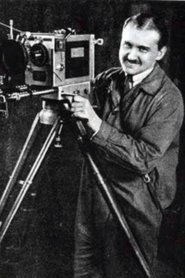
The cinematography, handled by Anatoli Golovnya, was innovative for its time, featuring dynamic camera movements and location shooting that gave the film a documentary-like authenticity. The filmmakers made extensive use of Moscow's urban landscape, employing tracking shots and unusual angles to capture the energy of the city. The film includes several technically sophisticated sequences, including the meta-cinematic scenes where a film crew is shown at work, requiring complex camera choreography. Golovnya employed natural lighting techniques for the outdoor scenes, creating a visual contrast between the bright, lively street scenes and the dim, oppressive office environments. The cinematography also featured early examples of what would later be called 'point-of-view' shots, particularly in sequences showing characters watching films being made.
Innovations
The film was technically innovative for its time, particularly in its use of location shooting and complex camera movements. Director Yuri Zhelyabuzhsky employed early forms of what would later be called 'meta-cinema,' with the film containing scenes about filmmaking itself. The production used portable cameras that allowed for greater mobility than typical studio-bound films of the era. The film also featured early examples of match cutting and parallel editing techniques that helped advance the narrative in sophisticated ways. The special effects, while primitive by modern standards, were cleverly executed, particularly in the sequences showing film production. The movie's success demonstrated that Soviet filmmakers could achieve technical quality comparable to their Western counterparts despite limited resources.
Music
As a silent film, 'The Cigarette Girl of Mosselprom' originally featured live musical accompaniment that varied by theater and location. The typical score would have included popular Russian folk songs, classical pieces, and contemporary dance music of the 1920s. Some theaters employed small orchestras, while others used a single pianist or organist. The music was meant to enhance the comedy and romance, with lively tunes for the street scenes and more sentimental melodies for the romantic moments. Modern restorations of the film have featured newly composed scores by contemporary musicians who attempt to recreate the spirit of 1920s Soviet musical accompaniment while using modern orchestration techniques.
Famous quotes
In Moscow, even the cigarettes have dreams of Hollywood.
Every girl who sells cigarettes thinks she's a star waiting to be discovered.
Love in Moscow is like the weather - always changing and never predictable.
The camera sees what the heart cannot express.
In this new Russia, even love must have proper documentation.
Memorable scenes
- The opening sequence showing Zina selling cigarettes on the busy Moscow street, capturing the energy and chaos of 1920s urban life.
- The meta-cinematic scene where the film crew shoots on location and the characters watch themselves being filmed, breaking the fourth wall before it was common.
- The comedic office scene where Maria Ivanovna daydreams about romance while surrounded by bureaucratic paperwork.
- The climactic sequence at the film studio where all the romantic entanglements come to a head amid the chaos of a movie set.
- The final scene on the Moscow streets that brings all the characters together in a celebration of love and cinema.
What audiences thought
The film was enormously popular with Soviet audiences upon its release, who appreciated its humor, romance, and relatable characters. Many viewers were particularly delighted by the scenes shot on recognizable Moscow streets, which gave them a sense of connection to the story. The movie's success at the domestic box office was notable for the time, and it played in Soviet theaters for an extended run. The character of Zina became something of a cultural icon, with many young women emulating her style and attitude. The film's popularity extended beyond major cities to provincial towns, where it was often one of the few entertainment options available. International audiences, where the film was shown, also responded positively, though its distribution was limited by political and logistical barriers.
Film connections
Influenced by
- American romantic comedies of the early 1920s
- German expressionist cinema techniques
- Russian theatrical traditions
- Early Hollywood studio system films
- D.W. Griffith's narrative techniques
This film influenced
- Later Soviet romantic comedies of the 1930s
- Meta-cinematic works of the 1960s French New Wave
- Soviet films about filmmaking such as 'Cinema' (1930)
- Modern Russian comedies about urban life
- International films about the film industry
Film restoration
The film has been partially preserved by Soviet and Russian film archives, though some sequences remain incomplete or lost. A restoration was undertaken in the 1960s that compiled the best available elements from various sources. The Gosfilmofond archive in Russia holds the most complete version of the film. Some original nitrate footage still exists but is too fragile for regular screening. The film has been digitized and is available in various formats for study and exhibition, though the image quality varies depending on the source material used for particular sequences.
Where to watch
- Available on DVD from specialized classic film distributors
- Streaming on some classic cinema platforms
- Screenings at film archives and cinematheques
- Available for academic viewing through university film departments
- Occasionally shown at classic film festivals