Films
1 film
About Georg Reimers
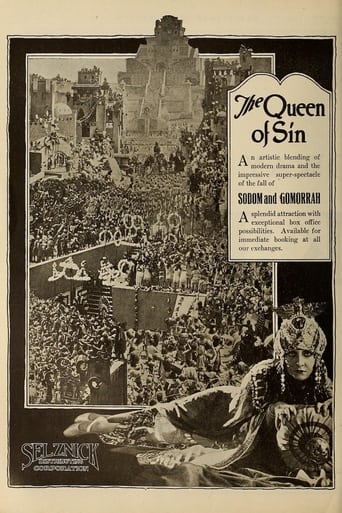
Georg Reimers is credited on a single production — Sodom and Gomorrah (1922). Primarily known for his role in the epic 1922 production 'Sodom and Gomorrah' (original title: 'Sodom und Gomorrha'). This film, directed by Michael Kertész (later known as Michael Curtiz in Hollywood), was ambitious Austrian productions of its time, featuring elaborate sets and thousands of extras. Reimers was part of the ensemble cast that brought this biblical epic to life during the height of Austrian silent cinema. His performance, like those of his contemporaries, relied entirely on physical expression and pantomime to convey emotion and narrative in the absence of synchronized sound. The film itself was notable for its controversial themes and artistic ambition, representing the sophisticated European cinema of the early 1920s. Unfortunately, like many supporting actors of the silent era, detailed records of Reimers' complete career and personal life remain scarce, with his appearance in 'Sodom and Gomorrah' standing as his most documented work.
The Craft
On Screen
As a silent film actor, Reimers would have employed exaggerated physical gestures and facial expressions typical of the era, using body language and pantomime to convey emotions and narrative points without dialogue. His performance style would have been influenced by the theatrical traditions of Austrian stage acting, adapted for the cinematic medium.
Milestones
- Appeared in the epic Austrian silent film 'Sodom and Gomorrah' (1922)
- Participated in
- Worked under director Michael Kertész before his Hollywood career
Best Known For
Iconic Roles
Must-See Films
Working Relationships
Worked Often With
Studios
Why They Matter
Impact on Culture
Georg Reimers represents the countless supporting actors who formed the backbone of European silent cinema, contributing to the artistic achievements of the era despite remaining largely anonymous in film history. His participation in 'Sodom and Gomorrah' places him within the context of Austria's golden age of silent film, a period when Austrian cinema was producing sophisticated, artistically ambitious works that competed with the best of German and international cinema. Though his individual contribution may seem minor, actors like Reimers were essential to creating the rich, immersive worlds that characterized epic silent films.
Lasting Legacy
Georg Reimers' legacy is primarily preserved through his appearance in 'Sodom and Gomorrah,' one of the surviving artifacts of Austria's sophisticated silent film industry. While he may not be remembered as an individual star, his work contributes to our understanding of ensemble acting in early European cinema and the collaborative nature of film production during this period. His story illustrates how many talented performers from the silent era have been lost to history, remembered only through the films they helped create.
Who They Inspired
As a supporting actor from the silent era, Georg Reimers' direct influence on subsequent generations of performers is difficult to trace, but he represents the tradition of ensemble acting that was crucial to the success of early epic films. His work in Austrian cinema during the 1920s contributed to the development of European film techniques that would later influence international cinema, particularly through the migration of talent like director Michael Kertész to Hollywood.
Off Screen
Very little is documented about Georg Reimers' personal life, which was common for supporting actors in the silent film era, especially in European cinema where many records from this period have been lost or were never comprehensively maintained.
Did You Know?
- Appeared in 'Sodom and Gomorrah' directed by Michael Kertész, who later became famous in Hollywood as Michael Curtiz, director of 'Casablanca'
- The film 'Sodom and Gomorrah' was
- The film featured elaborate sets designed by notable art directors of the Austrian silent film era
- Like many silent films, 'Sodom and Gomorrah' dealt with controversial themes that pushed the boundaries of what was acceptable in cinema
- The film was produced by Sascha-Film, one of Austria's most important early film production companies
- Reimers' career appears to have been extremely brief, with only this single documented film credit
- The film's destruction of Sodom sequence was particularly noted for its special effects and massive scale
Frequently Asked Questions
Who was Georg Reimers?
Austrian with credits in this catalog.' He was a supporting actor during Austria's golden age of silent cinema.
What films is Georg Reimers best known for?
Titles linked here include Sodom and Gomorrah (1922).
When was Georg Reimers born and when did he die?
Unfortunately, specific birth and death dates for Georg Reimers are not well-documented, which was common for many supporting actors from the silent era, especially in European cinema.
What awards did Georg Reimers win?
There are no recorded awards or nominations for Georg Reimers, which was typical for supporting actors of his era, particularly those with brief film careers.
What was Georg Reimers' acting style?
As a silent film actor, Reimers would have used the exaggerated physical gestures and facial expressions characteristic of the era, relying entirely on body language and pantomime to convey emotions and story without dialogue.