Sodom and Gomorrah
"Michael Curtiz's Austrian Sodom epic before Hollywood."
Keys: Space play/pause · ←/→ 10s · F fullscreen · M mute · </> speed
About this film
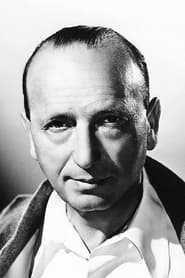
In Michael Curtiz's 1922 Austrian Sodom and Gomorrah, Mary is pushed by her mother toward an elderly banker and nearly drives her fiancé to suicide before a dream reveals the biblical city's destruction. Made before Curtiz emigrated to Hollywood, the superproduction mixes modern decadence with massive ancient spectacle.
Cast & crew
More films like this
More Drama films
View all →







More from Michael Curtiz
View all →


More about this film
About the production
Release date1922-10-27
ProductionSascha-Film
Filmed inVienna, Austria
This was an Austrian silent epic production that utilized elaborate sets and costumes for the biblical sequences. The film was part of the ambitious European epic productions of the early 1920s that competed with Hollywood spectacles. The production featured complex dream sequences that required sophisticated special effects for the period, including multiple exposure techniques and elaborate set designs to create the biblical settings of Sodom and the Syrian court.
Themes
Moral corruption and redemptionThe consequences of selfish actionsBiblical allegoryDreams as psychological revelationSexual manipulation and its consequences
Themes & topics
dream sequencebiblical allegorymoral corruptionseductionredemptionancient historyjudgmentsuicide attemptprisonangelqueenoppression
Historical background
Sodom and Gomorrah (1922) reached screens through Sascha-Film. Exhibitors of the time built silent-era bills that mixed shorts, features, and live acts, so a clear premise helped Sodom and Gomorrah travel between cities and exchange markets.
Why this film matters
Archivists and revival programmers still cite Sodom and Gomorrah (1922) when tracing studio habits, casting pools, and the visual rhetoric audiences once took for granted. Even modest surviving prints help map how Sodom and Gomorrah fit beside competing releases of its day.
Making of
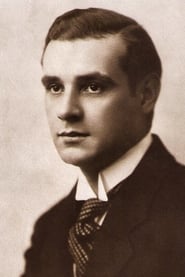
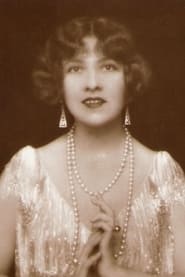
The production of 'Sodom and Gomorrah' was an ambitious undertaking for the Austrian film industry in 1922. Director Michael Curtiz, then still known as Mihály Kertész, was already establishing himself as a prominent director in European cinema. The film required extensive set construction for the biblical sequences, with the Sodom scenes particularly demanding in terms of scale and detail. The dream sequences presented technical challenges for the cinematography department, requiring innovative techniques to distinguish between reality and the various dream states. The cast, led by Georg Reimers, Victor Varconi, and Lucy Doraine, had to portray multiple versions of their characters across different time periods and realities. The film's production reflected the Austrian cinema's attempt to compete with the large-scale epics being produced in Germany and Hollywood during the same period.
What critics said
Trade coverage around 1922 discussed Sodom and Gomorrah for pacing, clarity, and program fit rather than blockbuster grosses. Later writers value it as evidence of period style and as a reference point beside other films from the same era.
Did you know?
- This was one of Michael Curtiz's early films before he moved to Hollywood, where he would later direct classics like 'Casablanca'
- The film is also known by the German title 'Sodom und Gomorrha'
- It was produced by Sascha-Film, one of Austria's most important early film production companies
- The biblical sequences were particularly elaborate for their time, featuring hundreds of extras and detailed set constructions
- The film's structure, with its nested dream sequences, was quite experimental for early 1920s cinema
- Victor Varconi, who appears in the production, would later move to Hollywood and appear in Cecil B. DeMille's 'The Sign of the Cross' (1932)
- The film's themes of moral corruption and redemption were common in European cinema of the post-WWI period
- The production coincided with the height of Austrian expressionist cinema
- The film's preservation status makes it a rare example of early Austrian epic cinema
- The biblical story was used as an allegory for contemporary moral concerns in post-war European society
Visual style
The cinematography of 'Sodom and Gomorrah' employed techniques typical of early 1920s European epic productions. The film utilized elaborate lighting schemes to distinguish between the various narrative levels - the modern story, the biblical sequences, and the historical dream sequences. The Sodom scenes likely featured dramatic, expressionist-inspired lighting to create an atmosphere of decadence and impending doom. The dream sequences would have required special photographic techniques, including multiple exposures and dissolves, to create the transitions between reality and the various dream states. The cinematography would have emphasized the grand scale of the sets, particularly in the biblical sequences, using wide shots to establish the epic scope of the production.
Innovations
The film demonstrated several technical achievements for its time, particularly in its execution of complex dream sequences and large-scale biblical scenes. The production utilized sophisticated set construction techniques to create the ancient city of Sodom and the Syrian court, requiring extensive art direction and carpentry work. The film's use of multiple exposure techniques to create dream-within-dream sequences was innovative for the period. The production also employed elaborate makeup and costume design to distinguish between the different time periods and to create the appearance of divine beings in the biblical sequences. The film's scale, with its hundreds of extras and detailed set pieces, represented a significant technical achievement for the Austrian film industry of 1922.
Music
As a silent film, 'Sodom and Gomorrah' would have been accompanied by live musical performance during its original theatrical run. The specific musical scores used for the film are not well-documented, but typical practice for epic films of this era would have involved either a compiled score using classical pieces or a specially composed score. The biblical sequences would have called for dramatic, orchestral music, while the modern scenes might have used more intimate musical themes. The dream sequences would have required musical cues that helped distinguish between the different levels of reality. The original musical accompaniment would have been crucial to establishing the film's moral and emotional tone.
Famous quotes
No surviving dialogue quotes are available as this is a silent film
Memorable scenes
- The angel's appearance in Sodom and rejection of Lea's advances
- Mary's transformation into the Queen of Syria
- The destruction of Sodom sequence
- The final awakening and redemption scene
- The transition between dream sequences
What audiences thought
Information about the original audience reception to 'Sodom and Gomorrah' is scarce, but given the film's epic scale and moral themes, it likely attracted audiences interested in spectacle and serious drama. The biblical elements would have appealed to contemporary audiences familiar with religious stories, while the modern framing device would have provided relevance to their own lives. The film's length and complex structure might have challenged some viewers, but audiences of the early 1920s were generally accustomed to longer films and more elaborate narratives. The film's status as an Austrian production would have given it special appeal to domestic audiences proud of their national cinema's achievements.
Film connections
Influenced by
- German expressionist cinema
- Biblical epic tradition
- Psychological drama
- European literary adaptations
This film influenced
- Later biblical epics of the 1920s
- Films with complex dream sequences
- Psychological dramas using religious allegory
Film restoration
The film is considered partially lost or incomplete, with only fragments or reduced versions surviving. As with many films from this era, particularly those produced in Austria, complete preservation has been challenging. Some archives may hold portions of the film, but a complete, restored version is not widely available to modern audiences.
Where to watch
- Due to its preservation status, the film is not widely available on commercial streaming platforms. It may be accessible through specialized film archives, museum collections, or rare film screenings at cinematheques and film festivals dedicated to silent cinema.