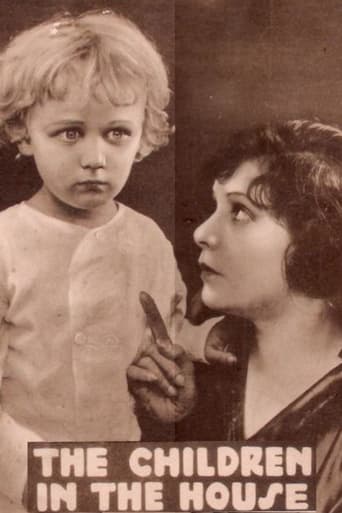
William Hinckley
Actor
- Active
- 1916-1916
Films 1
About William Hinckley
William Hinckley appears in surviving film records as a very lightly documented silent-era actor, credited in the 1916 film The Children in the House. Beyond this single on-screen credit, readily verifiable biographical information about his life, training, and broader career is extremely scarce in major film reference sources, suggesting that he may have had a brief acting career or worked only in a small number of productions that have not been well preserved in later archives. His known activity falls squarely in the mid-1910s, a period when American motion pictures were rapidly expanding and many performers appeared in one-off or short-lived supporting roles without leaving extensive paper trails. Because there are no securely established records tying him to a larger body of work, he is best understood as one of the many under-documented performers who helped populate early feature filmmaking. The surviving evidence indicates that he was an actor active in 1916, but further details about his personal background, training, and subsequent career have not been reliably confirmed. In classic-cinema databases, he is primarily significant as a historical credit attached to a preserved title rather than as a widely profiled star. His obscurity itself is characteristic of the silent era, when many cast members were not as fully publicized as lead performers and studio publicity did not always preserve complete personal histories.
More about William Hinckley
In film history
William Hinckley’s cultural impact is best understood in the context of silent-era ensemble filmmaking rather than through celebrity status. Performers like him contributed to the realism, social texture, and narrative fullness of early features, even when their names were not widely publicized or preserved in later histories. His screen credit in The Children in the House places him among the supporting players who helped shape the developing grammar of American feature films during the 1910s. Although he does not appear to have left a large public legacy, his presence in surviving film records is part of the broader historical fabric of early cinema and the many artists whose work supported the medium’s growth.
Later reputation
Hinckley’s legacy is archival and historical: he survives primarily as a named credit in a silent film from 1916, offering evidence of the many working actors whose careers were not extensively documented. For historians, such names are important because they help reconstruct the labor force of early filmmaking and the cast networks that made feature production possible. Even when a performer leaves behind only a sparse paper trail, that trace contributes to a more complete understanding of silent-era production practices. His name endures as part of the film history record, reminding researchers that early cinema was built not only by major stars and directors but also by numerous lesser-known supporting players.
Influence
There is no documented evidence that William Hinckley directly mentored later actors or became a major influence on performance style. His influence, if any, is indirect and historical: he is one of the many early screen performers whose work helped normalize acting for the camera during cinema’s formative years. Such performers collectively influenced the evolution of screen acting by participating in the transition from theatrical presentation to a more naturalistic film style. In that broader sense, his contribution belongs to the silent-era ensemble tradition that shaped later screen performance norms.
Off screen
No reliable biographical record has been located that identifies William Hinckley’s family background, marriages, residence, or personal relationships. As with many minor silent-era performers, surviving trade publications and later reference works do not appear to preserve enough detail to reconstruct a full personal history with confidence. There is also no securely verified information about children, education, or post-film life in the available film-historical record. Any attempt to specify those details would be speculative, so they should be treated as unknown until corroborated by archival documentation.
Credits
- Appeared in the silent film The Children in the House (1916)
- Represents one of the many lesser-documented performers working in American silent cinema during the mid-1910s
- Associated with an early feature-era production from the period when narrative cinema was consolidating its storytelling conventions
Roles
- Role in The Children in the House (1916)
Films
- The Children in the House (1916)
Notes
- William Hinckley is credited in a 1916 silent film, The Children in the House, but little else about his career is securely documented.
- He appears to have been active only in the year 1916 in surviving film records.
- He is an example of a silent-era performer whose name survives even when detailed biographical data does not.
- Because no reliable birth or death information is readily available, his life remains largely a mystery to modern researchers.
- His surviving credit helps historians reconstruct the cast lists of early American feature films.
- Many minor actors from the silent era were not extensively profiled in trade papers, which is likely part of why Hinckley is obscure today.
- The scarcity of records around him is not unusual for non-starring performers in early cinema.
Questions
Who was William Hinckley?
William Hinckley was a silent-era actor known from surviving film records for appearing in The Children in the House (1916). He is not well documented in major reference sources, so his broader biography remains largely unknown. He is best understood as a minor performer from the early feature-film period.
What films is William Hinckley best known for?
He is best known for The Children in the House (1916), which is the principal surviving credit associated with his name. No other securely verified film credits are readily available in standard reference material. As a result, that title is his key historical association.
When was William Hinckley born and when did he die?
His birth and death dates are not presently confirmed in the available film-historical record. Likewise, his birthplace and nationality are not securely documented in the sources typically used for classic cinema research. Until archival evidence emerges, those details should be considered unknown.
What awards did William Hinckley win?
No awards or nominations are currently documented for William Hinckley. That is not unusual for an under-documented silent-era supporting player, especially one whose surviving record is limited to a single known credit. There is also no evidence of formal honors.
What was William Hinckley's acting style?
There is no surviving critical description of his acting style in the available record. Because he worked in silent cinema, any performance would have relied on gesture, facial expression, and physical presence rather than spoken dialogue. Beyond that general silent-era context, his individual approach cannot be verified.
What is William Hinckley's legacy in film history?
His legacy is primarily archival, as a credited participant in early silent cinema rather than a major star. Names like his help film historians reconstruct production histories and cast lists from the 1910s. He represents the many performers whose work supported the growth of feature filmmaking even if they remained little known.