Duncan Penwarden
Actor
- Active
- 1930-1930
Films 1
About Duncan Penwarden
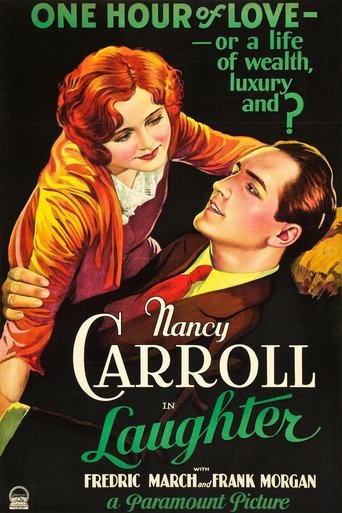
Duncan Penwarden was a very early sound-era screen actor whose surviving film record is extremely small, but he is documented in connection with the 1930 film "Laughter." His career appears to have been brief and concentrated around the transition from silent cinema to talking pictures, a period when many stage-trained and little-known performers entered Hollywood productions. Because of the scarcity of surviving biographical documentation, much of his life outside his film credit remains obscure, and he does not seem to have developed the long screen career of better-known contemporaries. He is best understood as one of the many short-lived supporting players of early Hollywood whose work survives mainly in cast lists and studio records rather than in a large body of films. His name is preserved in classic cinema history chiefly through film reference databases and the cast history of early 1930s production. No reliable evidence has surfaced in standard references to indicate a major later career, extensive awards recognition, or a substantial public persona beyond his film credit. As a result, Duncan Penwarden remains a minor but legitimate figure of early talkies whose surviving footprint is valuable to researchers of transitional-era cinema.
More about Duncan Penwarden
In film history
Duncan Penwarden's cultural impact is limited in the sense that he did not become a widely recognized star, but his presence in early sound cinema still matters to film historians. Performers like him help map the often-incomplete labor history of Hollywood during the transitional years around 1930, when studios were rapidly adapting to the demands of synchronized sound. Even when an actor's filmography is short, their credit can illuminate casting practices, studio networks, and the many lesser-known artists who contributed to the shape of early talkies. In that respect, Penwarden's significance is archival as much as performative: he is part of the surviving evidence for the broad, collaborative machinery of classic cinema.
Later reputation
Penwarden's legacy rests almost entirely on documentation rather than fame, which is common for many minor performers of the early sound era. For researchers and database compilers, his credit in "Laughter" is an important record that helps maintain completeness in classic film histories. His name survives as a reminder that early Hollywood was populated not only by stars but also by many supporting actors whose careers were fleeting or poorly documented. In film history, such figures are significant because they preserve the texture of the period and reveal how much of the industry depended on a large, often anonymous workforce. Though not a star, he remains part of the historical fabric of early American cinema.
Influence
There is no evidence that Duncan Penwarden had a documented influence on major actors or directors in the usual sense, and no known protégés are associated with him. His influence is indirect: he contributes to the historical record of early talkie casting and the wider ecosystem of performers who made the transition from silent films or stage work into sound cinema. For modern historians, his credit underscores how many careers in classic Hollywood were brief but still worthy of preservation. That archival presence can influence scholarship by encouraging more complete reconstructions of production histories and cast lists.
Off screen
No reliable public biographical sources currently provide verified information about Duncan Penwarden's personal life, family background, marriages, or later years. Standard classic cinema references do not appear to preserve enough data to confidently identify his private life or distinguish it from other similarly named individuals. Because of that, any claims about relationships, residence, or family would be speculative and are not included here. He remains primarily a name attached to a single surviving film credit rather than a fully documented celebrity profile.
Credits
- Appeared in the 1930 film "Laughter," the principal surviving screen credit associated with his name
- Represents the kind of minor supporting performer who worked during the silent-to-sound transition in Hollywood
- His credit survives in classic film reference records despite the scarcity of later biographical detail
- Serves as a documented example of an early talkies-era actor whose career may have been brief or under-recorded
Roles
- Role in "Laughter" (1930)
Films
- Laughter (1930)
Notes
- Duncan Penwarden is most clearly associated with a single surviving film credit: "Laughter" (1930).
- His career falls exactly into the period when Hollywood was converting from silent films to sound films, a time when many actors' careers changed dramatically.
- There is very little publicly available biographical information about him, making him one of the more obscure names in early talkies cast records.
- He is a useful example of how many filmographies from the era survive only in fragments.
- Because of the lack of confirmed personal data, some database entries may list him only by credit, with no further biography.
- His obscurity does not mean he was unimportant; it means his surviving documentation is limited compared with major stars.
- Researchers of classic cinema often encounter performers like Penwarden when reconstructing cast lists from early studio films.
Questions
Who was Duncan Penwarden?
Duncan Penwarden was an early screen actor known primarily for appearing in the 1930 film "Laughter." Very little verified biographical information survives about him, so he is remembered mainly as a minor performer from the early sound era.
What films is Duncan Penwarden best known for?
He is best known for "Laughter" (1930), which appears to be his principal surviving screen credit. No other widely documented film roles are currently confirmed in standard classic cinema references.
When was Duncan Penwarden born and when did he die?
His birth and death dates are not currently verified in the available classic film record. Likewise, his birthplace and other personal details have not been reliably documented.
What awards did Duncan Penwarden win?
No awards or major nominations are known for Duncan Penwarden from the surviving historical record. He appears to have been a minor supporting actor rather than a decorated star.
What was Duncan Penwarden's acting style?
There is not enough surviving evidence to describe a distinctive acting style with confidence. Given his placement in the early talkies era, he would have worked during a period when screen acting was adjusting from silent-era expressiveness to more naturalistic speech-driven performance.
What is Duncan Penwarden's legacy in film history?
His legacy is mainly archival: he represents the many lesser-known actors whose names survive in cast lists even when detailed biographies do not. That makes him valuable to historians studying the full roster of performers in early Hollywood.