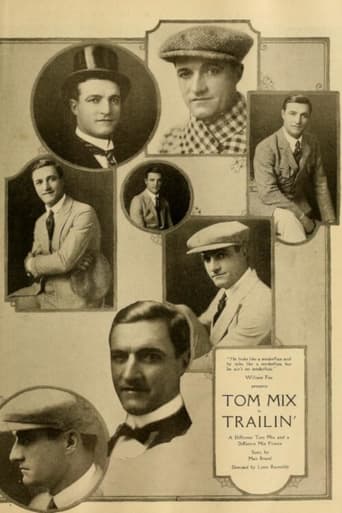
William De Vaull
Actor
- Active
- 1921-1921
Films 1
About William De Vaull
William De Vaull was a silent-era film actor whose documented screen career is extremely limited and appears to have been concentrated in the early 1920s. He is credited in the 1921 film Trailin', which suggests he worked during the period when westerns and frontier melodramas were a major part of American popular cinema. Beyond this credit, surviving reference sources provide very little biographical detail, which is not unusual for minor or supporting players from the silent era whose careers were not extensively publicized in trade publications or later studio retrospectives. No reliable evidence has surfaced to confirm major stardom, a long filmography, or a later transition into talkies. Because of the scarcity of surviving records, much of his personal life, training, and career trajectory remains undocumented. He should therefore be understood primarily as a little-documented early screen performer whose known contribution to film history rests on the surviving credit attached to Trailin'.
More about William De Vaull
On screen
No reliable contemporary reviews or surviving performance analyses are readily available for William De Vaull, so his acting style cannot be described with confidence. Given his era and the genre of his known film, his work was likely shaped by the expressive, gesture-based performance conventions of silent cinema, with emphasis on physical clarity, facial expression, and readable screen presence. Any finer assessment would be speculative.
In film history
William De Vaull's cultural impact is modest and primarily archival rather than widely popular. He represents the many working performers who helped populate silent-era productions, especially genre films like westerns, but whose names did not always survive in the public memory alongside the more famous stars of the period. His presence in Trailin' contributes to the historical record of early 1920s screen acting and the industrial breadth of the silent film era. For film historians, performers such as De Vaull are important because they illustrate how much of early cinema was built by supporting actors whose careers were rarely fully documented. Even when little biographical material survives, these credits help reconstruct the texture of the era and the collaborative nature of studio filmmaking.
Later reputation
William De Vaull's legacy lies in his place within the surviving record of silent cinema rather than in widespread fame. He is an example of the many early film actors whose careers are only partially preserved through cast lists, trade-paper mentions, and surviving film databases. For modern researchers and database users, his name helps fill out the personnel history of a 1921 western and contributes to a more complete understanding of the silent film workforce. His legacy is therefore historical and documentary: he stands as part of the broader, often under-credited foundation of American screen acting in the 1920s.
Influence
There is no clear evidence that William De Vaull directly influenced well-known actors or filmmakers, nor that he served as a mentor to others. His influence is best understood indirectly, through his participation in the silent-era performance tradition that shaped later screen acting norms. Supporting players like De Vaull helped establish the ensemble realism and genre conventions that later generations of film performers inherited. In that sense, his contribution belongs to the collective evolution of early American cinema rather than to a traceable individual lineage of influence.
Off screen
No dependable public record was found that documents William De Vaull's personal life in detail. Information about marriages, family connections, residence, education, and later life is not readily available in standard film reference sources. This kind of archival gap is common for lesser-known silent-era performers, especially those who did not become major studio names. As a result, his private life remains largely unknown to modern researchers.
Credits
- Screen credit in the silent western Trailin' (1921)
- Participation in early 1920s American silent cinema
- Association with the frontier/western film cycle of the period
Roles
- Role in Trailin' (1921) — character name not reliably documented in accessible sources
Films
- Trailin' (1921)
Notes
- William De Vaull is documented in connection with only a very small number of surviving film references.
- His known screen credit places him in the silent western genre, one of the most commercially important forms of early American cinema.
- He appears to have been active only in 1921, at least in surviving filmography records.
- No reliable birth or death information is readily available in standard reference sources.
- He is an example of a silent-era performer whose career is preserved more in cast lists than in publicity materials.
- Because of the scarcity of records, he is likely to be of interest mainly to researchers and classic-film databases rather than general audiences.
Questions
Who was William De Vaull?
William De Vaull was a little-documented silent-era actor best known today for his credit in Trailin' (1921). Surviving records suggest he worked in early American cinema, but very little biographical information has survived about his life or career.
What films is William De Vaull best known for?
He is best known for Trailin' (1921), which is the principal surviving screen credit associated with his name. No broader, reliably documented filmography is readily available in standard reference sources.
When was William De Vaull born and when did he die?
His birth date and death date are not currently documented in reliable accessible sources. Likewise, his birth place and other personal details remain unverified.
What awards did William De Vaull win?
No awards or major nominations are known for William De Vaull from the available historical record. He appears to have been a minor or supporting silent-era performer whose work was not widely recognized through formal award systems.
What was William De Vaull's acting style?
There is no surviving critical description that allows for a detailed assessment of his acting style. Since he worked in silent cinema, his performances would likely have depended on expressive physical acting, facial nuance, and clear visual storytelling.
What is William De Vaull's legacy in film history?
His legacy is primarily archival: he is one of many early screen performers whose names survive in cast records even when personal details do not. For film historians, his credit helps document the personnel behind early silent westerns and the broader fabric of 1920s cinema.