1921 · null

Also available on: Archive.org
Trailin'

Trailin'

1921 null United States
family secrets and hidden identityfrontier justice and revengeinheritance and ancestrymasculine honor and self-reliancethe mythic West as a place of revelation

Plot

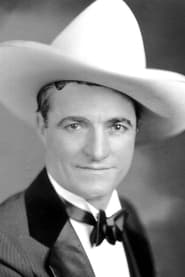
Tom Mix plays a self-assured, devil-may-care young aristocrat whose life is upended when a mysterious old man suddenly appears and shoots his father dead. After the murder, Tom discovers that his father had kept the truth about his deceased mother hidden, along with a concealed clue: a photograph of a ranch in Idaho that had been locked away for years in a secret room of the family mansion. Determined to uncover the truth, Tom heads west and follows the trail left behind by the picture, where the search for his mother’s past becomes tangled with danger, frontier conflict, and romance. As he investigates the ranch and the people connected to it, he is forced to confront the family secrets that shaped his identity while relying on the physical daring and quick thinking that made Mix a popular western star.

About the Production

Release Date 1921
Production Fox Film Corporation

Trailin' was produced during Tom Mix’s peak years at Fox, when his westerns were designed as fast-moving vehicle pictures built around his athletic riding, stunt work, and charismatic screen persona. Like many early 1920s Fox westerns, the film appears to have been made on a compact schedule with an emphasis on action, outdoor settings, and clear melodramatic storytelling rather than elaborate production design. Surviving documentation on the exact budget, shooting schedule, and locations is limited, which is typical for many silent-era genre films from this period. The film is also notable as part of the cycle in which Fox helped define Mix as one of the era’s leading western heroes.

Historical Background

Trailin' was released in 1921, a moment when Hollywood was consolidating the feature-film western into a major commercial genre while the American silent film industry was expanding nationwide. The early 1920s were also a transitional period in popular entertainment: the frontier had largely closed in real life, but the West remained central to American mythology, and films like Trailin' helped keep that myth active through adventure stories, family melodrama, and rugged individualism. Tom Mix was among the foremost stars embodying that mythology; his films offered audiences a fantasy of open spaces, decisive action, and personal honor at a time when modern urban life was increasingly dominant. The film matters historically because it sits inside the formative cycle of studio westerns that established many of the genre’s enduring visual and narrative conventions.

Why This Film Matters

Although not among the most famous Tom Mix titles today, Trailin' is culturally significant as part of the star’s contribution to the shaping of the screen cowboy. Mix helped define the cinematic western hero as both a skilled rider and an expressive performer capable of romance, family drama, and moral resolve, and films like this reinforced those traits for mass audiences. The movie also reflects how early westerns blended frontier action with domestic melodrama, a formula that influenced later western storytelling across film and television. For scholars of silent cinema, it is an example of the Fox western production line that helped standardize the genre during the 1920s and preserve the cowboy as an enduring American icon.

Making Of

Trailin' was made at a time when Fox Film Corporation was heavily packaging Tom Mix as a bankable western brand, pairing him with plots that mixed romance, family revelation, and action. Director Lynn Reynolds was experienced in silent western production, and the film appears to have followed the studio’s efficient formula: a concise story premise, a strong central hero, and ample opportunities for riding sequences and confrontation scenes. Specific behind-the-scenes anecdotes, casting disputes, or location diaries have not been widely preserved for this title, which is common for early 1920s genre productions. What is clear is that the picture was part of the industrial machine that kept Mix visible in theaters year after year, reinforcing his image as a fearless, morally upright, physically capable western hero.

Visual Style

As a silent-era Fox western, Trailin' likely relied on strong outdoor photography, clear staging, and medium-to-long shots that showcased riding, movement, and spatial geography. Silent western cinematography of this period emphasized legibility and dynamism, allowing audiences to follow pursuit scenes, confrontations, and character relationships without synchronized dialogue. The visual style would have been shaped by the need to feature Tom Mix’s physical prowess, so mounted action and open landscapes were probably framed to maximize motion and star presence. Exact cinematographer credit and camera techniques are not widely documented in the available record, but the film fits the visual standards of early 1920s studio western production.

Innovations

Trailin' does not appear to be associated with a named technical innovation, but it participated in the refinement of the feature western as a polished studio product. Its likely technical strengths lay in efficient editing, staged action clarity, and the use of exterior photography to support Tom Mix’s stunt-oriented appeal. Silent westerns of this period often depended on practical riding work, chase staging, and visual storytelling that could communicate plot turns without intertitles doing all the work. The film’s use of a hidden room and photograph as a mystery device also shows how studio westerns were integrating melodramatic narrative engineering into the genre.

Music

As a 1921 silent film, Trailin' had no synchronized recorded soundtrack. It would originally have been accompanied by live music in theaters, usually performed by a pianist, organist, or small orchestra depending on venue size and resources. Exhibition music was typically selected from cue sheets, stock music libraries, or local improvisation, and likely aimed to heighten the action, suspense, and romantic developments. No surviving original score associated specifically with the film is widely documented.

Memorable Scenes

  • The shocking opening murder in which the old man suddenly shoots Tom’s father dead, immediately setting the mystery and revenge plot in motion.
  • The discovery of the hidden photograph of a ranch in Idaho, a clue that transforms a family tragedy into a frontier investigation.
  • Tom’s journey west to trace the ranch and uncover the truth behind his mother’s concealed past.
  • The confrontation of the family secret through the locked room in the mansion, a classic silent-melodrama reveal.
  • The action sequences that would have showcased Tom Mix’s riding and physical daring, which were central attractions for contemporary audiences.

Did You Know?

  • Trailin' is a Tom Mix western from the early Fox period, when he was one of the biggest action stars in American silent cinema.
  • The film was directed by Lynn Reynolds, who helmed a number of westerns and adventure pictures during the silent era.
  • Its plot uses a classic silent-era melodramatic device: a hidden family secret revealed through an old photograph and a concealed room.
  • The surviving synopsis indicates that the story hinges on the discovery of the heroine or family connection in Idaho, reflecting the period’s fascination with the American West as both frontier myth and mystery landscape.
  • Because many silent Fox films were later lost or incompletely preserved, detailed production records for Trailin' are scarce compared with later sound-era westerns.
  • The title spelling, Trailin', reflects the colloquial western branding often used for Tom Mix features.
  • The film stars Eva Novak, a frequent silent-era western and adventure lead actress.
  • Bert Sprotte appears in the cast; he often played imposing authority figures or villains in silent films.
  • Like many Tom Mix vehicles, the movie likely emphasized horseback action, pursuit, and physical stunts as key attractions for contemporary audiences.
  • Trailin' belongs to the era when westerns were moving from short subjects toward more elaborate feature-length melodramas with emotional backstory and serial-like mystery elements.

What Critics Said

Contemporary reviews for many Fox westerns featuring Tom Mix were often favorable in trade papers and regional exhibition columns, which tended to praise his athleticism, star appeal, and dependable box-office value; however, specific surviving review coverage for Trailin' is limited. In retrospect, the film is generally of interest more for its place within Mix’s career and the development of silent western formulas than for individual auteurist acclaim. Modern critical attention to the title is constrained by incomplete preservation and the scarcity of detailed production records, so it is usually discussed in film-historical rather than broad critical terms. Where mentioned, it is seen as representative of the efficient, action-oriented westerns that kept Mix at the forefront of the genre in the silent era.

What Audiences Thought

Audience reception would likely have been strong among fans of Tom Mix, whose name alone was a major draw in the early 1920s. Mix’s films were marketed as dependable entertainment for western audiences who expected riding, danger, romance, and a charismatic hero who could outfight and outthink antagonists. Because exhibition was heavily regional and print survival is incomplete, precise audience-response data is not readily available, but the continued production of Mix westerns by Fox suggests sustained public demand. The film’s blend of mystery and family secrets would also have appealed to viewers who enjoyed melodramatic hooks alongside frontier action.

Film Connections

Influenced By

  • Dime novel western traditions
  • Silent-era frontier melodramas
  • Tom Mix’s earlier Fox western persona
  • Popular stage and pulp mystery devices

This Film Influenced

  • Later Tom Mix westerns
  • 1920s studio western adventures
  • Subsequent family-secret western melodramas

Film Restoration

The film is believed to have limited survival status in the broader silent-era sense, and detailed public availability is poor; many early Fox features are lost or survive only in fragments or archival copies. A definitive modern preservation summary is not widely documented in the sources commonly available to general databases, so its current accessibility should be treated as uncertain unless confirmed by a major archive.

Themes & Topics

Tom Mixmystery ranchIdahosecret roomfather murderfamily secretwestern adventuresilent film