
North of Hudson Bay
"Murder north of the bay"
Keys: Space play/pause · ←/→ 10s · F fullscreen · M mute · </> speed
About this film
Tom Mix falls for Estelle MacDonald on a steamboat north where murder and a framed partner await. On a steamboat heading North, where his brother has struck gold, Mike Dane falls in love with Estelle MacDonald. When he arrives at the Canadian trading post, Dane learns that his brother has been murdered and his partner sentenced to death as the killer.
Cast & crew
More films like this

More Action films
View all →
More from John Ford
View all →

More about this film
About the production
Release dateNovember 4, 1923
Box officeUnknown
ProductionFox Film Corporation
Filmed inYosemite National Park, California, Fox Studios, Los Angeles, California
Filmed during the winter months to achieve authentic snowy conditions, though much of the snow was artificial as California locations couldn't provide consistent winter weather. The production faced significant challenges with the primitive filming equipment in cold conditions, often requiring cameras to be heated between takes to prevent freezing. Tom Mix performed many of his own stunts, including dangerous horse riding sequences across icy terrain, which was typical of his dedication to authentic action sequences in his films.
Themes
Justice and revengeFrontier justice vs. legal justiceLove in harsh environmentsCivilization vs. wildernessBetrayal and redemption
Themes & topics
Historical background
1923 placed North of Hudson Bay within United States cinema as Fox Film Corporation navigated wartime markets, immigration audiences, and the shift from intertitles to sound.
Why this film matters
Archivists revisit North of Hudson Bay (1923) for John Ford style, genre norms at Fox Film Corporation, and the exhibition context of 70 minutes programming.
Making of
The production of 'North of Hudson Bay' took place during a transitional period in John Ford's career, as he was moving from short films to feature-length productions. Ford and Tom Mix developed a respectful working relationship, though their approaches to filmmaking differed significantly - Mix favored spectacular stunts and action sequences, while Ford was more interested in character development and visual storytelling. The filming in Yosemite National Park required special permits from the National Park Service, which was relatively new at the time. The cast and crew endured harsh conditions during the winter filming, with temperatures often dropping below freezing, making the mechanical cameras of the era difficult to operate. Mix brought his famous horse Tony to the production, and the horse became one of the film's unofficial stars, performing several dangerous stunts that thrilled audiences of the time.
What critics said
Retrospective writing on North of Hudson Bay stresses craft by John Ford, print survival, and repertory value rather than opening-week gross alone.
Did you know?
- This was one of John Ford's earliest Western films, made when he was still developing his distinctive directorial style that would later make him famous.
- Tom Mix, the film's star, was the highest-paid actor in Hollywood at the time, earning approximately $17,500 per week.
- The film was shot in just three weeks, which was typical for the rapid production schedules of silent era Westerns.
- Although set in Canada, the entire film was shot in California to take advantage of the state's diverse landscapes and proximity to Hollywood studios.
- This film represented one of the early collaborations between John Ford and Fox Film Corporation, a relationship that would continue for many years.
- The steamboat scenes were filmed using a combination of full-scale sets and miniatures, as actual steamboats were difficult to access for filming.
- Kathleen Key, who played the female lead, was a rising star in Hollywood but her career would decline with the advent of sound films.
- The film's title was changed during production from 'The Frozen North' to 'North of Hudson Bay' to avoid confusion with another film released the same year.
- Many of the supporting cast members were actual rodeo performers hired for their authentic riding and stunt abilities.
- The film's intertitles were written by James Kevin McGuinness, who would later become a prominent screenwriter and producer.
Visual style
The cinematography by Charles G. Clarke utilized the natural beauty of Yosemite National Park to create stunning visual contrasts between the snow-covered landscapes and the dramatic action sequences. Clarke employed innovative techniques for the time, including the use of filters to enhance the appearance of snow and ice, creating a sense of cold and isolation that reinforced the film's narrative themes. The steamboat scenes featured pioneering camera work, with shots from various angles to convey the scale and power of the vessel. The film also made effective use of silhouette shots against the bright snow, creating dramatic visual compositions that emphasized the isolation of the characters in the wilderness. While the camera work was relatively static by modern standards, it was sophisticated for its time and demonstrated Ford's early interest in using landscape as a character in his films.
Innovations
The film utilized some of the most advanced filming techniques available in 1923, including location shooting in challenging winter conditions. The production employed early special effects techniques for the steamboat sequences, using matte paintings and miniatures to create the illusion of large vessels on northern waters. The snow scenes benefited from new photographic processes that allowed for better exposure in bright, reflective conditions, a significant technical challenge for early cinematographers. The film also featured relatively complex editing for its time, with cross-cutting between parallel action sequences to build tension during the climax. While not groundbreaking in terms of technical innovation, the film demonstrated the increasing sophistication of Hollywood production values in the early 1920s.
Music
As a silent film, 'North of Hudson Bay' would have been accompanied by live musical performance during its theatrical run. The original score was likely compiled from standard photoplay music libraries, with selections chosen to match the mood of each scene. Typical accompaniment would have included dramatic, sweeping themes for the landscape shots, romantic music for the scenes between Mike and Estelle, and tense, rhythmic music for the action sequences. Some larger theaters might have employed small orchestras, while smaller venues would have used a piano or organ. The Fox Film Corporation often provided suggested cue sheets for their films to ensure consistent musical accompaniment across different theaters. No original score survives, and modern screenings typically use newly composed scores or period-appropriate classical music.
Famous quotes
Justice may be blind in the cities, but in the North, it sees with the eyes of the wolf.
Gold makes honest men forget their names, but it never makes them forget their greed.
In this frozen land, the warmest thing you'll find is the barrel of a gun pointed at your back.
Memorable scenes
- The dramatic steamboat journey through icy waters, with Mike Dane first encountering Estelle MacDonald as they both face the dangers of the northern voyage.
- The tense confrontation at the trading post when Dane learns of his brother's murder and the false accusation against his brother's partner.
- The climactic chase sequence across the frozen landscape, with Mix performing spectacular horse riding stunts while pursuing the real murderer.
What audiences thought
The film was commercially successful upon its release, particularly in rural areas and smaller towns where Western films were especially popular. Tom Mix's enormous star power guaranteed strong attendance, and audiences responded enthusiastically to his action sequences and horsemanship. Contemporary theater reports indicated that the film played well in both urban and rural markets, with many theaters running it for multiple weeks due to popular demand. The romantic subplot between Mix and Kathleen Key's characters was also well-received by female audiences, helping to broaden the film's appeal beyond the typical Western demographic. While audience reactions from 1923 are difficult to document precisely, the film's financial success and the continued popularity of its stars suggest that it was well-received by moviegoers of the era.
Film connections
Influenced by
- The Great Train Robbery (1903)
- D.W. Griffith's Western shorts
- William S. Hart's Western films
- The Covered Wagon (1923)
This film influenced
- The Iron Horse (1924)
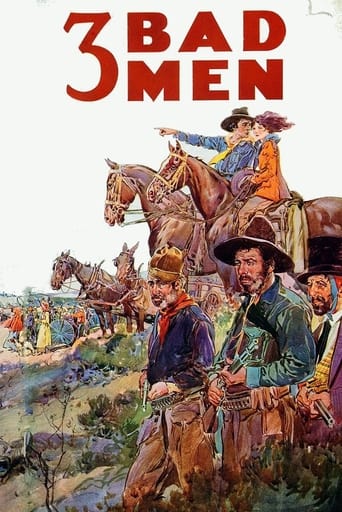
- 3 Bad Men (1926)
- Stagecoach (1939)
- Northwest Passage (1940)
Film restoration
The film is believed to be partially preserved, with some reels existing in film archives, though it is not known to survive in its complete form. The Library of Congress holds portions of the film, and some fragments exist in European archives. Like many silent films, it has suffered from nitrate decomposition over the decades. The Fox Film Corporation's nitrate holdings were largely destroyed in various fires and poor storage conditions in the 1930s and 1940s. No complete restoration has been undertaken, and the film is not commercially available on home media formats.
Where to watch
- Film archives with special access
- Occasional screenings at silent film festivals
- Not commercially available on streaming platforms or home video