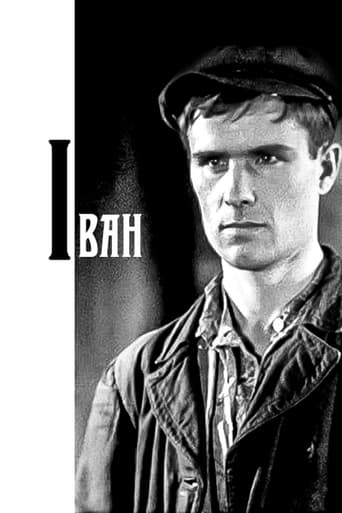
Films
1 film
About Konstantin Bondarevsky
Konstantin Bondarevsky is credited on a single production — Ivan (1932). His career appears to have been extremely brief, with his only known film credit being in the 1932 Soviet production 'Ivan.' This period marked a transitional time in Soviet filmmaking as the industry moved from silent films to talkies, following the revolutionary cinematic experiments of the 1920s. Bondarevsky likely emerged during this period of artistic and political change in the Soviet Union, when filmmakers were adapting to new technological possibilities while navigating the increasing ideological demands of Stalinist cultural policy. His single known appearance suggests he may have been a character actor or someone who had a brief foray into acting before pursuing other career paths. The lack of additional film credits from this prolific era of Soviet cinema indicates that his acting career was either extremely short-lived or that many records from this period have been lost or remain undocumented in Western film databases.
The Craft
Milestones
- Appeared in the Soviet film 'Ivan' (1932)
Best Known For
Must-See Films
Why They Matter
Impact on Culture
As an actor with only one known film credit from 1932, Konstantin Bondarevsky's cultural impact appears to have been minimal within the broader scope of Soviet cinema history. His participation in 'Ivan' places him within the important transitional period of early Soviet sound cinema, a time when filmmakers were experimenting with the new possibilities of synchronized sound while adapting to the increasing ideological constraints of the Stalin era. While individual contributions of minor actors like Bondarevsky are often overlooked in historical narratives, they collectively formed the foundation of Soviet film production during this crucial period of artistic and political transformation.
Lasting Legacy
Konstantin Bondarevsky's legacy is primarily that of an obscure figure from early Soviet cinema, representing the countless actors who participated in the film industry during its formative years but whose careers were brief or undocumented. His single known appearance in 'Ivan' (1932) makes him part of the historical record of Soviet filmmaking during the early sound period, though his individual contributions have not been preserved in film historical accounts. Like many actors from this era, particularly those who had brief careers or played minor roles, Bondarevsky serves as a reminder of the vast number of artists who contributed to cinema's development but whose stories remain largely untold.
Who They Inspired
Due to the extremely limited documentation of Konstantin Bondarevsky's career, there is no available information about his influence on other actors or filmmakers within the Soviet cinema tradition.
Off Screen
Very little is known about Konstantin Bondarevsky's personal life, which is typical for minor actors from early Soviet cinema whose records were not extensively preserved or documented outside of their film work.
Did You Know?
- Appeared in only one known film during his entire career
- His film career coincided with the transition from silent to sound cinema in the Soviet Union
- The year 1932 marked a period of increasing ideological control over Soviet arts and culture
- Many records from early Soviet cinema were lost or poorly documented, making research on minor actors challenging
- His active years covered only a single year, suggesting either a very brief acting career or lost filmography
- Early Soviet sound films like 'Ivan' (1932) were experimental in nature as filmmakers adapted to new technology
Frequently Asked Questions
Who was Konstantin Bondarevsky?
Soviet with credits in this catalog. His career was extremely brief, spanning just the single year of 1932, placing him during the transitional period when Soviet cinema was adapting to sound technology.
What films is Konstantin Bondarevsky best known for?
Titles linked here include Ivan (1932).
When was Konstantin Bondarevsky born and when did he die?
Specific birth and death dates for Konstantin Bondarevsky are not available in historical records, which is common for minor actors from early Soviet cinema whose personal information was not extensively preserved.
What awards did Konstantin Bondarevsky win?
There are no documented awards or nominations for Konstantin Bondarevsky, which is consistent with his status as a minor actor with only one known film credit during the early Soviet era.
What was Konstantin Bondarevsky's acting style?
Due to the limited documentation of his career and the absence of his only known film 'Ivan' (1932) from widely available archives, there is no recorded information about Bondarevsky's specific acting style or techniques.
Why is so little known about Konstantin Bondarevsky?
The scarcity of information about Bondarevsky is typical of minor actors from early Soviet cinema, many of whom had brief careers and whose personal details were not preserved in film historical records, especially during the turbulent political and social changes of the 1930s.