

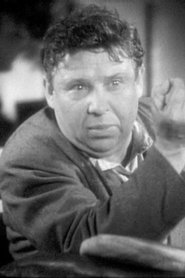
Ivan
"Dovzhenko's rural rhythms meet industry"
Keys: Space play/pause · ←/→ 10s · F fullscreen · M mute · </> speed
About this film
Upon reaching pre-war life, after the critical lambasting of his masterpiece Earth, Dovzhenko returned with a more popular iteration of its main motifs. Much like Earth, Ivan concerns itself with the natural rhythms of country life, disrupted by the beat of looming industrialisation.
Cast & crew
More films like this

More Drama films
View all →







More from Oleksandr Dovzhenko
View all →
More about this film
About the production
Release date1932
Box officeUnknown - Soviet box office figures from 1932 were not systematically recorded
ProductionUkrainian Film Studios (VUFKU)
Filmed inUkrainian SSR, Rural villages in Ukraine
Following the controversy surrounding his masterpiece 'Earth' (1930), Dovzhenko created 'Ivan' as a more accessible work that still explored similar themes. The film was produced during the First Five-Year Plan when Soviet cinema was heavily influenced by socialist realism. Dovzhenko faced pressure from Soviet authorities to create more ideologically straightforward content after 'Earth' was criticized for its poetic ambiguity.
Themes
Industrialization vs. traditionCollectivizationTransformation of rural lifeSocialist progressThe New Soviet Man
Themes & topics
Ukrainian villageCollective farmIndustrializationSocialist transformationRural lifeProgressTraditionModernizationAgricultureFactory work
Historical background
Audiences in 1932 encountered Ivan at a point when the pre-war was reshaping what movies could say and show. After the critical lambasting of his film Earth by the Soviet authorities, Dovzhenko returned with a more popular iteration of its main motifs. Much like Earth, Ivan concerns itself with the natural rhythms of country life, disrupted by the beat of looming industrialisation.
Why this film matters
Ivan continues to attract interest because it captures a distinctive pre-war approach to character and spectacle. Ivan (Ukrainian: «Iвaн», Russian: «Иван») is a 1932 Soviet drama film directed by Aleksandr Dovzhenko.
Making of
The production of 'Ivan' occurred during a particularly difficult period for Dovzhenko, who was facing intense scrutiny from Soviet cultural authorities following the reception of 'Earth'. While 'Earth' was criticized for its formalist tendencies and insufficient ideological clarity, Dovzhenko was pressured to create works that more clearly supported Soviet policies. For 'Ivan', he adopted a more straightforward narrative approach while still maintaining his distinctive visual poetry. The filming took place in actual Ukrainian villages, where Dovzhenko and his crew documented the real changes brought by industrialization and collectivization. The director worked closely with local communities, casting many non-professional actors to achieve greater authenticity. The production faced numerous challenges including limited resources, technical difficulties with early sound equipment, and the need to navigate increasingly strict censorship requirements.
What critics said
Later criticism frames Ivan through restoration quality and its director or studio filmography.
Did you know?
- This film was Dovzhenko's attempt to create a more 'popular' and accessible work after the controversy surrounding 'Earth'
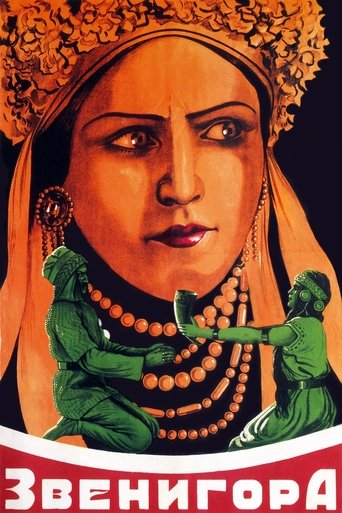
- The film was part of Dovzhenko's unofficial trilogy about Ukrainian rural life, following 'Zvenigora' (1928) and 'Earth' (1930)
- Like many Soviet films of the early 1930s, 'Ivan' was subject to censorship and editorial changes to align with party ideology
- The film's title character represents the 'New Soviet Man' - transformed by socialist progress
- Dovzhenko used non-professional actors from Ukrainian villages to achieve authenticity
- The film was shot during the height of collectivization, a period of massive social upheaval in rural Ukraine
- Many of the film's original scenes were lost or destroyed during World War II
- The film's visual style combines documentary realism with poetic imagery characteristic of Dovzhenko's work
- Sound technology was still relatively new in Soviet cinema when this film was made
- The film was briefly banned in some regions for not being sufficiently enthusiastic about collectivization
Visual style
The cinematography of 'Ivan' combines documentary realism with poetic visual elements characteristic of Dovzhenko's style. The film features sweeping shots of the Ukrainian countryside, contrasting natural beauty with industrial machinery. The camera work emphasizes the scale of transformation, using both intimate close-ups of characters and expansive wide shots of changing landscapes. The transition from silent to sound cinema is evident in the visual approach, with more static camera setups in dialogue scenes but maintaining the dynamic movement of Dovzhenko's earlier work. The film's visual language employs symbolic imagery, particularly in its juxtaposition of natural elements with industrial symbols. The black and white photography uses strong contrasts to emphasize the dramatic changes occurring in rural society.
Innovations
As one of Dovzhenko's early sound films, 'Ivan' demonstrated the director's adaptation to new cinematic technology. The film employed location sound recording in rural settings, which was technically challenging for the period. The production utilized portable sound equipment to capture authentic ambient sounds from Ukrainian villages and industrial sites. The film's editing techniques balanced the requirements of sound cinema with Dovzhenko's distinctive visual style. The cinematography made effective use of new film stocks that were better suited for sound production. The film also demonstrated innovative approaches to synchronizing natural sounds with musical elements to create an effective audio-visual experience. These technical achievements were particularly notable given the limited resources available to Soviet filmmakers during this period.
Music
As an early Soviet sound film, 'Ivan' featured a musical score that blended traditional Ukrainian folk melodies with modern orchestral arrangements reflecting the industrial theme. The sound design included natural ambient sounds from rural environments contrasted with mechanical noises of factories and machinery. The film's audio was recorded using early sound-on-film technology, which presented technical challenges for the production team. Musical elements were used to underscore emotional moments and to bridge the gap between traditional and modern elements of the story. The soundtrack also included workers' songs and revolutionary music that reinforced the film's ideological message. The limited technology of the period meant that sound quality was sometimes uneven, but the film made effective use of audio to enhance its narrative impact.
Famous quotes
The old ways must give way to the new future
Progress cannot be stopped by tradition
We are building a new world from the soil of our ancestors
The machine is the new heart of our village
Memorable scenes
- The opening sequence showing traditional rural life before industrialization
- The dramatic arrival of tractors and machinery in the village
- Ivan's transformation from farmer to industrial worker
- The final montage contrasting old and new ways of life
- Scenes of collective farm meetings and political education
What audiences thought
Soviet audiences of the early 1930s generally received 'Ivan' positively, appreciating its more straightforward storytelling compared to the avant-garde style of 'Earth'. Rural viewers particularly connected with the film's depiction of familiar landscapes and the transformation of traditional life. The film's emphasis on progress and industrialization resonated with the official narrative of building socialism. However, some audience members, particularly those with traditional views, may have found the film's celebration of rapid change unsettling. The film did not achieve the lasting popular appeal of some other Soviet productions of the era, partly due to its relatively modest distribution and the overshadowing of Dovzhenko's reputation by his more famous works.
Film connections
Influenced by
- Soviet socialist realism
- Ukrainian folk culture
- Documentary film traditions
- Dovzhenko's own earlier works
- Soviet propaganda films
This film influenced
- Later Soviet films about collectivization
- Dovzhenko's subsequent works
- Ukrainian films of the 1930s
- Soviet films about rural transformation
Film restoration
The film exists in incomplete form, with some scenes lost or damaged. Portions of the original negative were destroyed during World War II. What remains has been partially restored by Soviet and later Ukrainian film archives. The surviving elements are held at the Gosfilmofond in Russia and the Dovzhenko Centre in Ukraine. Some versions combine surviving footage with still photographs to reconstruct missing scenes. The film's preservation status reflects the broader challenges of maintaining Soviet cinema from this period.
Where to watch
- Available through specialized film archives
- Screenings at classic film festivals
- Some versions available through the Dovzhenko Centre
- Occasionally shown at cinematheques and museum retrospectives
- Limited availability through academic film collections