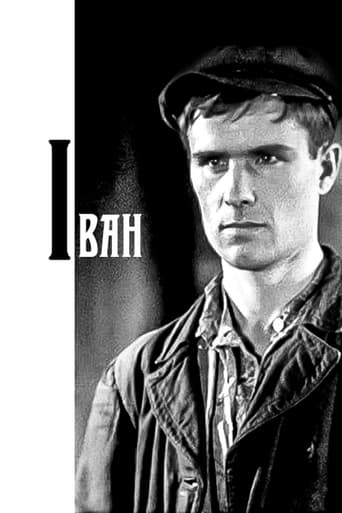
Films
1 film
About Elena Golki
Soviet actress: career, though remarkably brief, on early Soviet sound cinema. Her entire known filmography consists of a single, yet highly significant, role in the 1932 film 'Ivan,' directed by the esteemed Aleksandr Dovzhenko. As one of the performers in the transition from silent film to sound in the USSR, Golki's work exemplified the new dramatic and emotional possibilities offered by synchronized audio. Her performance in 'Ivan' was characterized by a raw, naturalistic intensity that contrasted with the more stylized acting of the silent era, helping to define a new cinematic language for Soviet socialist realism. Despite her powerful debut and the critical acclaim the film received, Golki seemingly vanished from the public eye after 1932, with no further film credits or public records of her career. Her mysterious disappearance from the film world has made her a subject of fascination among film historians, representing the countless artists whose careers were cut short during the tumultuous political and cultural shifts of the 1930s in the Soviet Union. Her legacy is intrinsically tied to 'Ivan,' a film that remains a cornerstone of Soviet cinematic history.
The Craft
On Screen
Elena Golki's acting style in 'Ivan' was marked by a powerful naturalism and emotional depth, a significant departure from the theatrical pantomime common in the silent era. She utilized the new medium of sound to convey subtle psychological states, using her voice not just for dialogue but as an instrument of dramatic expression. Her performance was grounded in a stark realism, embodying the principles of socialist realism that were becoming dominant in Soviet art, yet she managed to infuse her character with a palpable humanity and vulnerability.
Milestones
- Starred in Aleksandr Dovzhenko's acclaimed film 'Ivan' (1932)
- actress in early Soviet sound cinema
Best Known For
Iconic Roles
Must-See Films
Working Relationships
Worked Often With
Studios
Why They Matter
Impact on Culture
Elena Golki's cultural impact is paradoxically both immense and narrowly focused, concentrated entirely within her single performance in 'Ivan.' As a leading actress in one of the first major Soviet sound films, she was part of a pivotal moment in cinematic history, helping to shape the aesthetic and narrative techniques of a new era. Her portrayal contributed to the film's enduring legacy as a masterpiece of socialist realism, influencing how Soviet audiences and filmmakers understood the potential of sound to enhance emotional and ideological storytelling. Her work stands as proof of the talent present in the early Soviet film industry, even as many individual stories like hers were tragically obscured.
Lasting Legacy
Elena Golki's legacy is that of a cinematic ghost, a powerful presence from a single film whose life story remains a mystery. She is remembered not for a long and varied career, but for a single, perfect performance that captured a nation in transition. Her legacy serves as a poignant reminder of the fragility of artistic recognition and the countless talents who have been lost to history, their contributions surviving only through the art they left behind. For film scholars, she represents a vital piece of the puzzle in understanding the evolution of acting in early Soviet sound cinema.
Who They Inspired
Due to the brevity of her known career and the scarcity of biographical information, it is difficult to trace Elena Golki's direct influence on subsequent generations of actors. However, her performance in 'Ivan' undoubtedly served as an early model for naturalistic acting in Soviet sound film, a template that other actors would study and emulate. Her work, preserved in Dovzhenko's classic, continues to influence modern actors and directors who look to the foundational films of the Soviet era for inspiration and insight into the craft of filmmaking.
Off Screen
Very little is known about Elena Golki's personal life, as her existence is documented almost exclusively through her single film credit. Her story is emblematic of many early Soviet artists whose biographical details were lost to history, either due to the lack of record-keeping, political purges, or the simple passage of time. The absence of information about her family, education, or life outside of her one film role has contributed to her enigmatic status in film history.
Did You Know?
- Elena Golki's entire known film career consists of just one film, 'Ivan' (1932).
- 'Ivan' was directed by the legendary Soviet filmmaker Aleksandr Dovzhenko,.
- The film 'Ivan' was one of the earliest and most successful examples of Soviet sound cinema, a major technical and artistic achievement for the USSR.
- Despite her acclaimed performance, no further records of Elena Golki's acting career, personal life, or even her birth and death dates have been found.
- Her disappearance from the historical record is not uncommon for figures from this period in the Soviet Union, where many artists' lives were undocumented or deliberately erased.
- The film 'Ivan' tells the story of a young boy who leaves his village to work on a massive industrial construction project, embodying the ideals of the Soviet state.
- Golki's performance was praised for its sincerity and emotional power, which helped ground the film's ideological message in a relatable human story.
Frequently Asked Questions
Who was Elena Golki?
Soviet actress active in the early 1930s, known exclusively for her starring role in the 1932 film 'Ivan.' Her career was exceptionally brief, and she is considered a mysterious figure in cinema history as almost nothing is known about her life outside of this single, significant performance.
What films is Elena Golki best known for?
Titles linked here include Ivan (1932).
When was Elena Golki born and when did she die?
The birth and death dates of Elena Golki are unknown. She appears in the historical record only in 1932 with the release of 'Ivan,' and no information about her birth, death, or life outside of her film career has been documented.
What awards did Elena Golki win?
There are no records of Elena Golki receiving any awards or nominations for her work. Her recognition is purely posthumous and based on the critical acclaim of her sole film, 'Ivan,' which is celebrated as a masterpiece of Soviet cinema.
What was Elena Golki's acting style?
Elena Golki's acting style in 'Ivan' was notable for its naturalism and emotional depth, marking a shift away from the theatrical style of the silent era. She was a actress in Soviet sound film, using her voice and performance to convey a raw realism that was central to the emerging style of socialist realism.