Films
2 films
About Konstantin Nazarenko
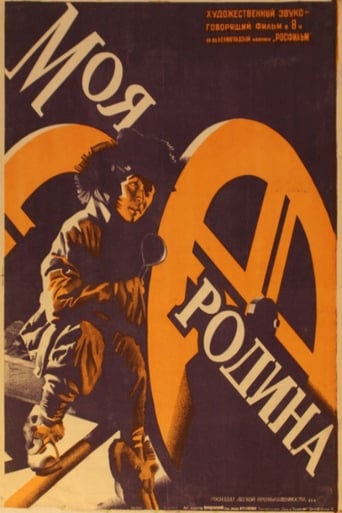
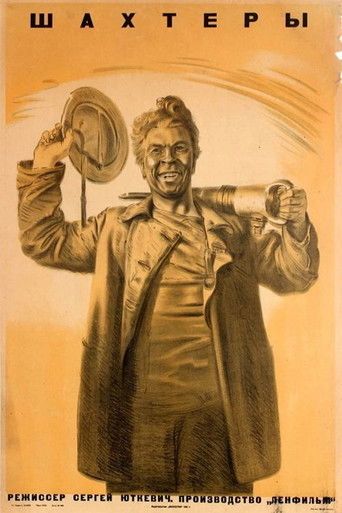
Soviet actor who emerged during the early sound era of Soviet cinema in the 1930s. His career, though relatively brief, coincided with a pivotal period in Soviet filmmaking when the industry was transitioning from silent films to talkies while serving as a vehicle for socialist realism propaganda. Nazarenko appeared in two significant Soviet films of the 1930s that exemplified the ideological themes prevalent during Stalin's rule. His performance in 'My Motherland' (1933) showcased his ability to embody the heroic proletariat archetype that was central to Soviet cinematic narratives of the era. By the time he appeared in 'The Miners' (1937), Nazarenko had established himself as a reliable character actor capable of portraying working-class heroes in films that emphasized industrial progress and collective achievement. His filmography, while limited, reflects the typical trajectory of many Soviet actors of his generation who specialized in roles that supported the state's cultural and political objectives. Unfortunately, detailed biographical information about his later life and career beyond these two films remains scarce in available historical records.
The Craft
On Screen
Nazarenko's acting style was characteristic of Soviet socialist realism, emphasizing clear, direct performances that embodied the ideals of the working class and Soviet patriotism. His approach was likely influenced by the theatrical traditions prevalent in early Soviet cinema, with exaggerated gestures and clear enunciation suitable for both stage and screen.
Milestones
- Debut in 'My Motherland' (1933)
- Featured role in 'The Miners' (1937)
- Participation in early Soviet sound cinema
Best Known For
Iconic Roles
Must-See Films
Working Relationships
Studios
Why They Matter
Impact on Culture
Konstantin Nazarenko's contribution to Soviet cinema, while modest in scope, reflects the broader cultural project of using film as a tool for socialist education and propaganda during the 1930s. His performances in films like 'My Motherland' and 'The Miners' helped reinforce the state-sanctioned narratives about industrial progress, collective achievement, and Soviet patriotism. As part of the ensemble of actors who brought socialist realism to life on screen, Nazarenko participated in creating the visual language of Soviet identity during a crucial period of nation-building and ideological consolidation.
Lasting Legacy
Konstantin Nazarenko's legacy is primarily preserved through his surviving film work, which serves as historical documentation of Soviet cinematic techniques and ideological messaging during the Stalin era. While he may not have achieved the lasting fame of major Soviet stars like Nikolai Cherkasov or Boris Babochkin, his performances contribute to our understanding of how character actors supported the grand narratives of Soviet cinema. His films remain valuable resources for film historians studying the evolution of Soviet propaganda and the implementation of socialist realism in motion pictures.
Who They Inspired
As a character actor in the Soviet system, Nazarenko's influence would have been primarily in setting examples for other actors in how to portray working-class heroes authentically within the constraints of socialist realism. His performances, though not widely documented in acting manuals, would have contributed to the established patterns of proletarian characterization that influenced subsequent generations of Soviet actors.
Off Screen
Very limited information is available about Konstantin Nazarenko's personal life, which is not uncommon for Soviet character actors of the 1930s whose biographical details were often overshadowed by their ideological contributions to cinema.
Did You Know?
- Appeared in films during the critical transition period from silent to sound cinema in the Soviet Union
- Both of his known films ('My Motherland' and 'The Miners') focused on industrial and patriotic themes typical of 1930s Soviet cinema
- His active years covered only four years according to available filmography records
- Worked during the height of Stalin's cultural purges, which dramatically affected the Soviet film industry
- His films exemplify the socialist realist aesthetic mandated by Soviet cultural authorities
- Like many Soviet actors of his era, detailed biographical information is scarce in Western sources
- His film work coincided with the first Five-Year Plan period of rapid Soviet industrialization
Frequently Asked Questions
Who was Konstantin Nazarenko?
Screen credits include early Soviet sound films, primarily known for his roles in 'My Motherland' (1933) and 'The Miners' (1937).
What films is Konstantin Nazarenko best known for?
Titles linked here include My Motherland (1933), The Miners (1937).
When was Konstantin Nazarenko active in cinema?
Based on his known filmography, Konstantin Nazarenko was active as an actor from 1933 to 1937 during the early sound era of Soviet cinema.
What was Konstantin Nazarenko's acting style?
Nazarenko's acting style was characteristic of Soviet socialist realism, featuring direct performances that embodied working-class ideals and supported the state's ideological messaging.
What was the cultural significance of Konstantin Nazarenko's films?
His films were significant as examples of Soviet socialist realism in cinema, serving as propaganda tools that promoted industrial progress and Soviet patriotism during Stalin's rule.