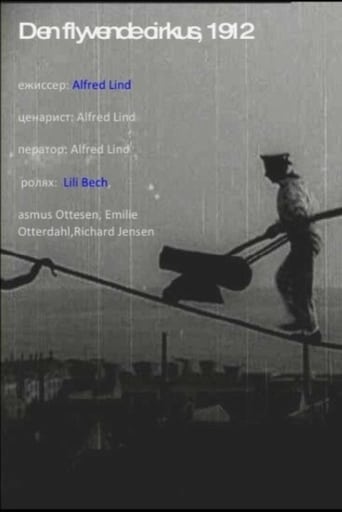
Stella Lind
Actor
- Active
- 1912-1912
Films 1
About Stella Lind
Stella Lind is a very obscure early screen performer whose documented film career, as preserved in surviving filmographies, places her in the silent-era production The Pride of the Circus (1912). Beyond this credited appearance, reliable biographical information about her life, background, and later career is not readily available in standard reference sources, a common situation for many performers active in the earliest years of motion pictures. Her known screen work dates to the formative period of American cinema, when film actors often appeared briefly, sometimes under inconsistent or fragmentary credit records. Because of the scarcity of surviving documentation, it is not possible to reconstruct a fuller career arc with confidence without risking conflation with similarly named individuals. She remains of interest primarily to historians and database researchers because her name survives in film records from 1912, offering a small but genuine trace of participation in the silent era. In the absence of verifiable evidence for additional roles, her career must be understood as that of a minimally documented early film actor rather than a widely recorded star. Her presence in The Pride of the Circus is nevertheless part of the broader history of transitional stage-to-screen performance at the dawn of feature filmmaking.
More about Stella Lind
In film history
Stella Lind's cultural impact lies less in celebrity than in archival significance. Performers like Lind are important because they help historians map the breadth of participation in the earliest silent films, including the many actors whose names were recorded only occasionally. Her credit in a 1912 film places her within the first generation of screen actors, when motion pictures were still establishing acting conventions, production systems, and audience expectations. Even without extensive documentation, her presence contributes to the historical record of women working in cinema during the medium's formative period. For modern database users and film scholars, such names are valuable evidence of how broad and varied the early screen community was.
Later reputation
Stella Lind's legacy is primarily archival and historiographic rather than star-based. She stands as one of many early film performers whose existence is preserved in cast lists and contemporary records, reminding researchers that the silent era included thousands of working actors whose careers were brief or poorly documented. Her appearance in The Pride of the Circus (1912) links her to the very early development of American screen entertainment, when cinema was still experimenting with genre, staging, and performance style. Because no substantial body of surviving work is currently associated with her, her name functions as a historical marker more than a celebrity legacy. For film history databases, that marker is still meaningful: it helps preserve a more complete picture of the people who built early cinema.
Influence
There is no verifiable evidence that Stella Lind directly influenced other actors, directors, or filmmakers in a documented way. Her influence is best understood indirectly, as part of the labor force of early screen performers whose collective work shaped silent-film acting conventions. Actors in this period helped establish the transition from theatrical performance to a more restrained cinematic style, even when individual contributions were not preserved in detail. Lind's surviving credit contributes to that broader lineage, but specific influence claims would be speculative.
Off screen
No reliable biographical record is readily available for Stella Lind's personal life, including family background, relationships, residence, or later activities. Unlike major silent-era figures whose careers were documented in fan magazines, studio publicity, and later reference works, Lind appears to have left only a thin archival footprint. As a result, it would be speculative to identify marriages, children, or other personal details. Her surviving documentation is limited to her screen credit and the historical context of the film in which she appeared.
Credits
- Credited appearance in the silent-era film The Pride of the Circus (1912)
- Participation in one of the early years of American motion-picture production
- Representation of the many lesser-documented performers whose names survive in silent film records
- Association with an early circus-themed film, a popular subject in early cinema
Films
- The Pride of the Circus (1912)
Notes
- Stella Lind is credited in the 1912 silent film The Pride of the Circus, one of the few surviving identifiers tied to her name.
- Her career, as currently documented, falls entirely within the early silent era.
- She is an example of a film performer whose historical presence is known from filmography records rather than extensive publicity material.
- No verified birth or death information is readily available in standard reference sources.
- Her name is useful for research because it helps avoid overlooking lesser-known women active in early cinema.
- The scarcity of information about her is typical of many performers from the first decades of motion pictures.
- Her known film association comes from a circus-themed production, a popular early-cinema subject.
Questions
Who was Stella Lind?
Stella Lind was an early silent-era actor known from a surviving credit in The Pride of the Circus (1912). Very little reliable biographical information has survived about her life or later career. She is primarily of interest to film historians because her name appears in one of the earliest years of American cinema.
What films is Stella Lind best known for?
She is currently best known for The Pride of the Circus (1912), which is the only securely documented film credit readily associated with her. Additional credits may exist in incomplete archival sources, but they are not verified here. As a result, her known filmography remains extremely limited.
When was Stella Lind born and when did she die?
Her birth and death dates are not readily available in standard reference sources. Because the surviving record is so thin, it is not possible to provide verified dates or places without risking confusion with another person. She remains a documented but biographically obscure early film performer.
What awards did Stella Lind win?
No awards or formal honors are currently documented for Stella Lind. This is not unusual for performers from the silent era, especially those whose careers were brief or poorly recorded. Her significance is historical rather than award-based.
What was Stella Lind's acting style?
There is no surviving critical description of Stella Lind's individual acting style. Since she worked in the silent era, her performance would have relied on gesture, facial expression, and visual clarity typical of early cinema. However, any more specific assessment would be speculative without surviving film analysis.
What is Stella Lind's legacy in film history?
Her legacy is mainly archival: she represents the many early screen performers whose names survive even though detailed biographical records do not. By appearing in a 1912 film, she is part of the foundation of silent-era cinema history. Preserving her credit helps create a fuller, more accurate record of early film production.