
Films
1 film
About William Starks
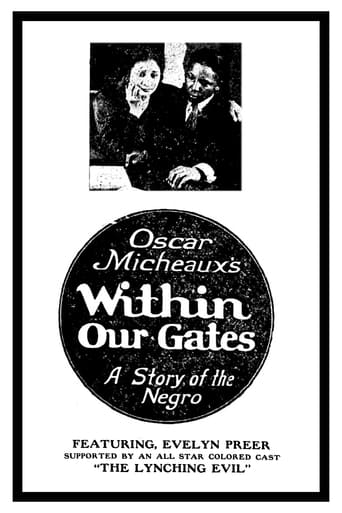
William Starks appears in Oscar Micheaux's Within Our Gates (1920), one of the earliest surviving features by a Black American director. This catalog lists no other roles for him.
The Craft
Milestones
- Appeared in Oscar Micheaux's 'Within Our Gates' (1920), the earliest surviving feature film directed by an African American
- Participated in early African American independent cinema movement
- Contributed to challenging racial stereotypes in silent era films
Best Known For
Iconic Roles
Must-See Films
Working Relationships
Worked Often With
Studios
Why They Matter
Impact on Culture
William Starks' contribution to 'Within Our Gates' places him within the important context of early African American cinema resistance to racial misrepresentation. The film itself was a direct response to D.W. Griffith's controversial 'The Birth of a Nation' and sought to present authentic Black experiences and perspectives. By participating in this groundbreaking work, Starks helped pave the way for future generations of African American filmmakers and actors who would continue to fight for authentic representation in American cinema. His involvement, though brief, represents the collective effort of early Black artists to create their own narratives and challenge the dominant racist imagery prevalent in early 20th century American film.
Lasting Legacy
While William Starks may not have achieved widespread recognition during his lifetime, his legacy endures through his participation in. 'Within Our Gates' has been preserved and studied by film scholars as a crucial document of early Black resistance in cinema, and all participants, including Starks, are acknowledged as pioneers who helped establish the foundation for African American filmmaking. His story represents the countless unsung Black performers of the silent era whose contributions have only recently begun to receive proper historical recognition and scholarly attention.
Who They Inspired
As an early participant in African American independent cinema, William Starks contributed to a tradition that would influence generations of Black filmmakers and actors. The work of pioneers like Starks and his contemporaries in Oscar Micheaux's films demonstrated the importance of Black-controlled media representation, a principle that would continue to guide African American artists throughout the 20th century and into the present day. Their efforts laid groundwork for the Black independent film movement of the 1960s and beyond, as well as contemporary discussions about diversity and representation in Hollywood.
Off Screen
Very little personal information is available about William Starks, which is unfortunately common for many African American actors from the silent era who worked outside the mainstream Hollywood system. Historical records from this period often failed to document the lives and careers of Black performers comprehensively.
Did You Know?
- 'Within Our Gates' was considered lost for decades before being rediscovered in Spain in the 1970s
- The film was created as a direct response to D.W. Griffith's 'The Birth of a Nation' (1915)
- Oscar Micheaux, the film's director, was an African American filmmaker who produced over 40 films
- 'Within Our Gates' is recognized as the earliest surviving feature film directed by an African American
- Many of the actors in Micheaux's films were non-professionals or had very brief film careers
- The film faced censorship challenges in several cities due to its frank depiction of racial violence
- Micheaux often reused actors across his films, making it difficult to track individual careers
- Early African American independent films like this were typically shown in segregated theaters or special venues
Frequently Asked Questions
Who was William Starks?
Screen credits include Oscar Micheaux's groundbreaking 1920 film 'Within Our Gates.' He was among the Black performers who participated in early independent African American cinema during a time when opportunities for Black actors in mainstream Hollywood were extremely limited.
What films is William Starks best known for?
Titles linked here include Within Our Gates (1920).
When was William Starks born and when did he die?
Unfortunately, specific birth and death dates for William Starks are not available in historical records, which is common for many African American performers from the silent era who worked outside the mainstream Hollywood system.
What awards did William Starks win?
There are no records of William Starks receiving any formal awards or recognition during his lifetime. His significance lies in his contribution to early African American cinema rather than in formal accolades.
What was William Starks' acting style?
Specific details about William Starks' acting style are not documented in available historical records. Like many actors in early independent Black cinema, he likely adapted to the dramatic requirements of silent film performance while helping to present authentic African American characters.
Why is 'Within Our Gates' historically significant?
'Within Our Gates' is historically significant as the earliest surviving feature film directed by an African American (Oscar Micheaux) and as a direct cinematic response to the racist portrayals in D.W. Griffith's 'The Birth of a Nation.' The film was groundbreaking for its honest depiction of racial violence and discrimination in America.
What was the context for African American actors in the 1920s?
African American actors in the 1920s faced severe limitations in mainstream Hollywood, often relegated to stereotypical roles or excluded entirely. Independent Black filmmakers like Oscar Micheaux created opportunities for Black performers to portray more authentic and complex characters, though these productions operated with minimal resources and limited distribution.