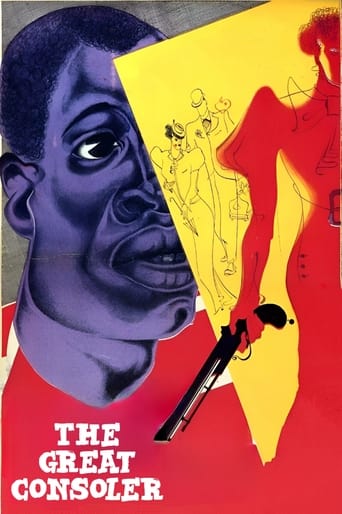
Films
1 film
About O. Rayevskaya
Soviet actress: brief film career was concentrated entirely in the early 1930s, a pivotal period for Soviet cinema transitioning from silent films to sound. Her sole known and documented screen appearance was in the 1933 film 'The Great Consoler' (Velikiy uteshitel), a Soviet drama directed by Lev Kuleshov. This film is considered a significant work of its era, and Rayevskaya's participation, though not in a leading role, places her within the context of this important cinematic movement. Her career appears to have been exceptionally short-lived, with her filmography limited to this single production in 1933. Consequently, detailed biographical information about her life, training, or reasons for not pursuing further film work remains scarce and largely undocumented in major historical film archives. She represents the many supporting players of the early Soviet film industry whose contributions, while part of historically significant films, were not extensively recorded for posterity, leaving her as a somewhat enigmatic figure from that period of cinema history.
The Craft
Milestones
- Appeared in the 1933 Soviet film 'The Great Consoler' directed by Lev Kuleshov
Best Known For
Must-See Films
Working Relationships
Worked Often With
Studios
Why They Matter
Impact on Culture
O. Rayevskaya's cultural impact is intrinsically tied to her participation in 'The Great Consoler,' a film directed by the influential Soviet filmmaker Lev Kuleshov. While her individual contribution was likely minor, she was part of a cast and crew that contributed to a significant work in the canon of early Soviet sound cinema. The film itself is studied for its narrative style and its place within Kuleshov's body of work, meaning Rayevskaya is a small but existing part of that cinematic legacy. Her legacy is not one of individual stardom but rather as a representative example of the numerous actors who formed the backbone of the Soviet film industry during its formative years, contributing to films that have endured as historical artifacts even if all their participants are not widely remembered.
Lasting Legacy
The legacy of O. Rayevskaya is that of a filmographic footnote, a name preserved on the cast list of a historically important Soviet film. She serves as a reminder of the countless supporting actors and bit players who were essential to the creation of classic cinema but whose personal stories have been lost to time. Her enduring mark on film history is her name in the credits of 'The Great Consoler,' ensuring she is at least nominally remembered as part of that film's creation and the broader context of 1930s Soviet filmmaking.
Who They Inspired
Given her brief and undocumented career, there is no evidence to suggest that O. Rayevskaya directly influenced other actors or directors. Her influence is limited to her performance within the single film, which would have been seen by contemporary Soviet audiences. Any subsequent influence is indirect, as part of the overall fabric of a film that may have inspired or been studied by later generations of filmmakers, particularly those examining the techniques of Lev Kuleshov.
Off Screen
Due to the extremely limited nature of O. Rayevskaya's documented film career, there is no available information regarding her personal life, family, or activities outside of her single known film role in 1933. Details about her life before or after this brief appearance are not recorded in publicly accessible historical or filmographic databases.
Did You Know?
- Her entire known film career consists of a single film, 'The Great Consoler' (1933).
- She worked with Lev Kuleshov, a Soviet filmmaker and theorist famous for the 'Kuleshov effect.'
- Her first name is only known by its initial, 'O.,' a common occurrence for lesser-known supporting actors in early film credits.
- The film she appeared in, 'The Great Consoler,' is based on the life of American writer O. Henry.
- Despite being in a Soviet film, she is listed in some international databases, highlighting the global reach of filmography records.
- Her active period in film is recorded as exactly one year, 1933 to 1933.
- No biographical details about her life outside of this film role are readily available in major film encyclopedias.
Frequently Asked Questions
Who was O. Rayevskaya?
Soviet actress from the early 1930s whose only known film credit is in the 1933 movie 'The Great Consoler.' Her career was exceptionally brief, and very little personal information about her is documented.
What film is O. Rayevskaya best known for?
She is exclusively known for her role in the 1933 Soviet drama 'The Great Consoler' (Velikiy uteshitel), which was directed by the influential filmmaker Lev Kuleshov.
When was O. Rayevskaya born and when did she die?
The birth and death dates for O. Rayevskaya are not known. Her documented existence in film history is limited to her single appearance in 1933.
What awards did O. Rayevskaya win?
There are no records of O. Rayevskaya receiving any awards or nominations for her work, which was limited to a single film role.
What was O. Rayevskaya's acting style?
Due to the lack of extensive documentation and surviving analysis of her performance, her specific acting style is unknown. She would have worked within the conventions of early Soviet sound cinema.