
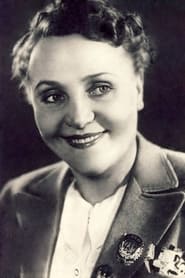
Natalya Uzhviy
Actor
Born: September 8, 1898 in Lyubomirka, Kiev Governorate, Russian Empire (now Ukraine) Died: July 29, 1986 Active: 1915-1986 Birth Name: Natalya Mikhailovna Uzhviy (Наталья Михайловна Ужвий)
Films
1 film
About Natalya Uzhviy
Soviet and Ukrainian actress: over five decades, making her performers in Soviet theater and cinema. Born into a peasant family, she began her artistic journey in local theater troupes before joining the prestigious Les Kurbas Theatre in Kyiv. Her breakthrough came in the 1920s when she joined the Ivan Franko National Academic Drama Theater, where she would remain a leading actress for most of her career. Uzhviy's film career, while less extensive than her stage work, included memorable performances in Soviet classics such as 'The Vyborg Side' (1939), where she showcased her remarkable ability to portray strong, revolutionary women. During World War II, she performed for soldiers at the front lines, becoming a symbol of Soviet resilience and artistic dedication. Her post-war career flourished with numerous acclaimed performances that earned her the highest honors in Soviet arts. Uzhviy's final years were marked by continued stage work and mentorship of younger actors, cementing her legacy as a foundational figure in Soviet and Ukrainian theatrical arts.
The Craft
On Screen
Uzhviy was renowned for her powerful, emotionally charged performances that combined naturalistic depth with theatrical grandeur. Her acting technique emphasized psychological realism while maintaining the dramatic intensity required for Soviet revolutionary themes. She particularly excelled at portraying strong, determined women who embodied socialist ideals, bringing both vulnerability and strength to her characters. Her stage presence was commanding, with a distinctive voice and physical expressiveness that made her performances unforgettable.
Milestones
- Joined Ivan Franko National Academic Drama Theater in 1926
- Starred in 'The Vyborg Side' (1939), one of her most famous film roles
- Awarded People's Artist of the USSR in 1944
- Received Stalin Prize in 1946 for theatrical achievements
- Performed for troops during World War II (1941-1945)
- Received Hero of Socialist Labor in 1978
Best Known For
Iconic Roles
Must-See Films
Accolades
Won
- People's Artist of the USSR (1944)
- Stalin Prize (1946)
- Hero of Socialist Labor (1978)
- Two Orders of Lenin
- Order of the Red Banner of Labor
- People's Artist of the Ukrainian SSR (1944)
Nominated
- Stalin Prize nominations for multiple theatrical productions (1940s-1950s)
Special Recognition
- Hero of Socialist Labor (1978)
- Order of Lenin (twice)
- Order of the October Revolution
- Order of the Patriotic War 2nd class
- Medal 'For Valiant Labor in the Great Patriotic War 1941-1945'
- Jubilee Medal 'Thirty Years of Victory in the Great Patriotic War 1941-1945'
Working Relationships
Worked Often With
Studios
Why They Matter
Impact on Culture
Natalya Uzhviy profoundly shaped Soviet and Ukrainian theatrical culture through her revolutionary approach to character interpretation and her unwavering commitment to socialist ideals in art. Her performances helped define the archetype of the Soviet heroine - strong, principled, and devoted to the communist cause. During World War II, her front-line performances boosted morale and became legendary among soldiers and civilians alike. Uzhviy's work bridged the gap between traditional Ukrainian folk theater and modern Soviet dramatic arts, preserving cultural heritage while advancing new artistic forms. Her influence extended beyond performance as she helped establish new standards for theatrical education and professional development in the Soviet Union.
Lasting Legacy
Natalya Uzhviy's legacy endures through the generations of actors she trained and the artistic standards she established at the Ivan Franko Theater. The theater's main stage was named in her honor, and her performances remain studied as exemplars of Soviet theatrical excellence. Her film work, particularly 'The Vyborg Side,' continues to be recognized as classic examples of Soviet cinema. Uzhviy's name is synonymous with Ukrainian theatrical excellence, and she is remembered as. Her dedication to combining artistic excellence with ideological commitment created a template for Soviet cultural workers that influenced the entire cultural landscape of the USSR.
Who They Inspired
Uzhviy influenced countless actors through her teaching and example at the Ivan Franko Theater, where her methods of character development and emotional authenticity became standard practice. Her approach to portraying revolutionary women helped establish a new archetype in Soviet cinema and theater that influenced subsequent generations of performers. Directors sought her collaboration due to her ability to bring depth and authenticity to ideologically important roles. Her success demonstrated that Ukrainian actors could achieve the highest honors in Soviet arts, paving the way for other Ukrainian performers. Her combination of technical mastery and emotional depth became a model for actors throughout the Soviet Union.
Off Screen
Natalya Uzhviy was married twice during her lifetime. Her first marriage was to fellow actor Mikhail Gritsko, which ended in divorce. She later married director Vladimir Sklyarenko, with whom she shared both personal and professional collaborations. Despite her demanding career, Uzhviy maintained close relationships with her family and was known for her generosity toward younger actors. She lived most of her adult life in Kyiv, where she became a beloved cultural figure. Her personal life reflected the same dedication and passion that characterized her artistic career.
Education
Self-taught in acting, began performing in local theater troupes as a teenager, later received formal training through theater workshops and mentorship under established directors
Family
- Mikhail Gritsko (1920s-1930s)
- Vladimir Sklyarenko (1940s-1986)
Did You Know?
- She performed for soldiers at the front lines during World War II, sometimes under enemy fire
- Her stage debut came at age 17 in a local theater troupe
- She was one of the few actresses to receive the title 'Hero of Socialist Labor'
- The main stage of the Ivan Franko Theater in Kyiv is named after her
- She spoke Ukrainian fluently despite Russian being the official language of Soviet arts
- Her performance in 'The Vyborg Side' was used as a teaching example in Soviet film schools
- She continued performing on stage well into her 80s
- Her autobiography was published posthumously in 1990
- She was known for mentoring young actors without charge
- Her personal archive contains letters from soldiers she entertained during WWII
In Their Own Words
The stage is not just a platform, it's a pulpit from which we must speak truth to the people
Every role, whether in theater or film, must serve the greater purpose of building our socialist future
The actor's greatest responsibility is to make the audience feel what the character feels, to live their truth on stage
Art without ideology is like a body without a soul - it may be beautiful but it has no purpose
When I perform for soldiers at the front, I'm not just an actress - I'm a weapon in our fight for victory
Frequently Asked Questions
Who was Natalya Uzhviy?
Renowned Soviet and Ukrainian actress who achieved fame primarily through her work at the Ivan Franko National Academic Drama Theater. She was.
What films is Natalya Uzhviy best known for?
Titles linked here include The Vyborg Side (1939), Taras Shevchenko (1951).
When was Natalya Uzhviy born and when did she die?
Born September 8, 1898; died July 29, 1986.
What awards did Natalya Uzhviy win?
Uzhviy received the highest honors available to Soviet artists, including People's Artist of the USSR (1944), the Stalin Prize (1946), and Hero of Socialist Labor (1978). She also received multiple Orders of Lenin and other state decorations recognizing her artistic achievements and contributions to Soviet culture.
What was Natalya Uzhviy's acting style?
Uzhviy was known for her powerful, emotionally charged performances that combined psychological realism with theatrical intensity. She excelled at portraying strong, principled women who embodied socialist ideals, using her distinctive voice and commanding stage presence to create unforgettable characters that resonated with Soviet audiences.