Paul Le Blanc
Actor
- Active
- 1916-1916
Films 1
About Paul Le Blanc
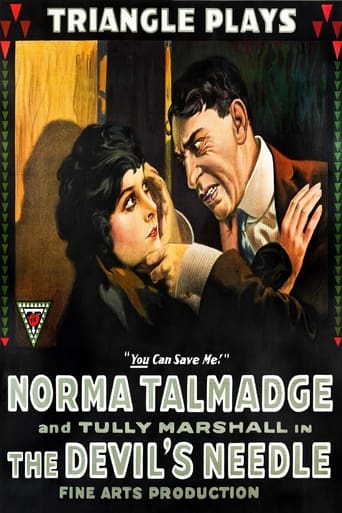
Paul Le Blanc appears in surviving film reference sources as a silent-era screen actor, but very little biographical information has been reliably preserved about him. The available record places him in the cast of The Devil's Needle (1916), a melodramatic feature from the silent film period, which suggests he was working in motion pictures during the mid-1910s. Beyond that credit, standard reference sources do not consistently provide details about his birth, early life, training, or later career, and he does not appear to have had a widely documented long-term screen presence. Like many actors of the silent era who played supporting or uncredited roles, he may have worked briefly in films or across stage and screen without leaving a robust archival trail. Because of the scarcity of surviving documentation, it is difficult to reconstruct a full personal or professional biography with certainty. He remains a minor but legitimate part of early American cinema history through his documented association with The Devil's Needle.
More about Paul Le Blanc
In film history
Paul Le Blanc's cultural impact is limited by the fragmentary nature of his surviving record, but he is still part of the broader historical fabric of silent cinema. Performers like him filled out the casts of early feature films and helped establish the professional acting pool from which the American film industry developed. His presence in The Devil's Needle connects him to the social melodrama traditions that were popular in the 1910s and to the evolving language of screen acting before synchronized sound. While he was not a star with a widely documented public persona, his credit contributes to the preservation and study of early film personnel, which is essential to understanding the full ecosystem of silent-era production.
Later reputation
Paul Le Blanc's legacy lies primarily in documentation rather than celebrity. He survives in film history as one of the many named contributors to early silent features whose work is visible in cast lists even when their personal histories are obscure. For researchers, his name is a reminder that classic cinema was built not only by famous stars and directors but also by numerous lesser-known actors whose careers may be represented by a single surviving credit. His legacy therefore belongs to the archival memory of silent film and the ongoing effort to identify and preserve the labor of early screen performers.
Influence
There is no evidence that Paul Le Blanc had a documented influence on later actors or directors in the way major stars or filmmakers did. However, as part of the working cast of a 1916 feature, he contributed to the professional performance standards and ensemble practices of early American cinema. His historical influence is indirect: he represents the many performers whose work helped normalize film acting as a craft and whose careers helped shape the industry even if they were not individually celebrated.
Off screen
No reliable biographical information about Paul Le Blanc's personal life has been found in standard classic-cinema reference sources. His marriages, family background, residence, and activities outside the film industry are not documented in the available record. This lack of data is common for many minor silent-era performers whose careers were brief or whose paperwork has not survived in accessible archives. As a result, any claim about his private life would be speculative.
Education
No verified information about his education has been located in accessible classic-cinema references.
Credits
- Documented screen credit in the silent film The Devil's Needle (1916)
- Participation in early American feature filmmaking during the silent era
- Representation of the many lesser-known performers who helped build the supporting cast system of early Hollywood
Roles
- Role in The Devil's Needle (1916)
Films
- The Devil's Needle (1916)
Notes
- Paul Le Blanc is known today primarily through his credit in The Devil's Needle (1916).
- He appears to be a very lightly documented silent-era performer, with little surviving biographical information.
- His name is sometimes the sort of entry that appears in cast lists and film databases even when personal details are absent.
- The Devil's Needle was released during a period when feature-length melodramas were becoming an important part of American cinema.
- Because there is no robust surviving public biography, he is a classic example of an obscure early-film actor preserved mainly by film records.
- He should not be confused with later or similarly named individuals outside silent cinema.
Questions
Who was Paul Le Blanc?
Paul Le Blanc was a silent-era screen actor who is documented for appearing in The Devil's Needle (1916). Very little biographical information about him survives in standard film-reference sources, so he is known mainly through his early film credit. His record is typical of many lesser-known performers from the silent period.
What films is Paul Le Blanc best known for?
He is best known for The Devil's Needle (1916), which is the principal surviving screen credit associated with his name. No broader, reliably documented filmography is readily available in standard references.
When was Paul Le Blanc born and when did he die?
His birth and death dates are not reliably documented in the accessible record. Standard classic-cinema sources do not provide verified information about his place of birth or death, if applicable.
What awards did Paul Le Blanc win?
No awards or nominations are documented for Paul Le Blanc in the available classic-cinema reference record. Given the limited surviving information about his career, there is no evidence of major industry honors attached to his name.
What was Paul Le Blanc's acting style?
His specific acting style is not described in surviving sources. Since he worked in the silent era, his performance would have relied on visual expression, gesture, and physical presence, but any further detail would be speculative without contemporaneous reviews or archival commentary.
What is Paul Le Blanc's legacy in film history?
His legacy is that of a documented but obscure silent-era performer whose name survives in early film records. He represents the many supporting actors who helped build the silent film industry even though their personal histories were not widely preserved.