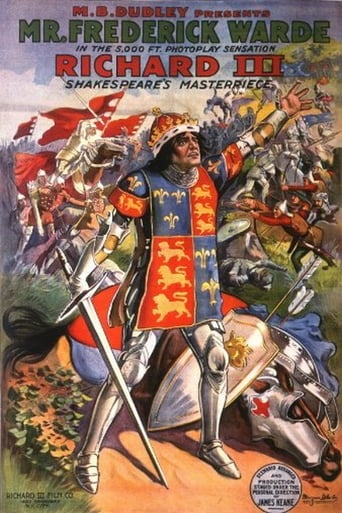
Robert Gemp
Actor
Born: August 1, 1865 in St. Louis, Missouri, USA Died: September 11, 1943 Active: 1890-1915
Films
1 film
About Robert Gemp
Stage and screen actor of the early 20th century, primarily recognized for his contribution to the landmark 1912 production of 'The Life and Death of King Richard III.' As a member of the Shakespearean troupe assembled for this ambitious project, Gemp played the role of the Lord Mayor of London, contributing to what is now considered the oldest surviving American feature-length film. His career was rooted in the theatrical traditions of the late Victorian and Edwardian eras, where he developed a command of the formal, declamatory style required for classical drama. Like many actors of his generation, Gemp transitioned briefly into the burgeoning film industry when theatrical producers began experimenting with 'photoplays' of prestigious literary works. Though his recorded filmography is exceptionally brief, his participation in the 1912 Richard III remains a significant footnote in cinematic history due to the film's status as a 'lost' treasure that was miraculously rediscovered in 1996. Gemp's performance reflects the transitional period of acting, where the broad gestures of the stage were being adapted for the silent camera's lens.
The Craft
On Screen
Gemp employed a formal and theatrical acting style characteristic of the late 19th-century stage. In 'Richard III,' his movements are deliberate and statuesque, designed to convey the dignity and civic authority of the Lord Mayor. This style relied heavily on physical presence and clear, exaggerated gestures to communicate narrative intent in the absence of spoken dialogue, a necessity for the silent medium of 1912.
Milestones
- Cast as the Lord Mayor of London in the 1912 production of The Life and Death of King Richard III.
- Participated in one of the earliest five-reel feature films produced in the United States.
- Worked under the direction of James Keane during the early independent film movement.
- Contributed to the prestige film movement aimed at elevating cinema to the status of high art.
- Maintained a steady career in regional theater and touring companies prior to his film appearance.
Best Known For
Iconic Roles
Must-See Films
Accolades
Special Recognition
- The film he appeared in was added to the National Film Registry in 1996 for its historical significance.
Working Relationships
Worked Often With
Studios
Why They Matter
Impact on Culture
Robert Gemp's primary cultural impact stems from his involvement in the 1912 'Richard III,' which served as a bridge between the high culture of Shakespearean theater and the then-lowly medium of motion pictures. By lending his talents to such a production, he helped legitimize film as a serious artistic vehicle. The film's survival allows modern historians to study the exact nature of early 20th-century performance art.
Lasting Legacy
Gemp's legacy is inextricably linked to the preservation of early cinema. Because 'The Life and Death of King Richard III' is the oldest surviving American feature film, Gemp's image is preserved as a primary example of early screen acting. He represents the thousands of stage actors who helped build the foundations of the American film industry before it moved to California.
Who They Inspired
His influence is seen in the early development of the 'prestige' film genre, proving that audiences would sit through long-form adaptations of classic literature, which eventually led to the epic filmmaking styles of D.W. Griffith and Cecil B. DeMille.
Off Screen
Robert Gemp was born in Missouri and spent much of his life involved in the performing arts. Records indicate he was part of the professional acting community in New York during the height of the silent film boom in the early 1910s. He later retired from the stage and screen as the industry moved toward the 'talkie' era and the studio system became more centralized in Hollywood.
Education
Trained in classical theater and elocution during the late 19th century.
Family
- Information regarding specific marriages is not documented in available historical archives.
Did You Know?
- The film Gemp appeared in was considered lost for over 80 years until a print was found in the collection of a private individual in 1996.
- He appeared alongside the legendary stage actor Frederick Warde.
- The 1912 film featured a cast of over 1,000 extras, a massive undertaking for the time.
- Gemp's role as the Lord Mayor was a key supporting part that facilitated the political drama of the plot.
- He was part of the 'Independent' movement in film, working outside the Motion Picture Patents Company (the 'Trust').
In Their Own Words
The nature of silent film means there are no spoken quotes, but his performance is captured in the intertitles and visual storytelling of the 1912 production.
Frequently Asked Questions
Who was Robert Gemp?
American with credits in this catalog.' He was primarily a stage-trained performer who participated in the early movement to bring Shakespeare to the silver screen.
What films is Robert Gemp best known for?
Titles linked here include The Life and Death of King Richard III (1912).
When was Robert Gemp born and when did he die?
Born August 1, 1865; died September 11, 1943.
What awards did Robert Gemp win?
Gemp did not win any major film awards, as his career predated the establishment of the Academy Awards and other major ceremonies. However, the film he starred in is honored in the National Film Registry.
What was Robert Gemp's acting style?
His style was rooted in the theatrical traditions of the late 19th century, characterized by grand gestures and a commanding physical presence suitable for historical and Shakespearean roles.