Films
2 films
About George Moss
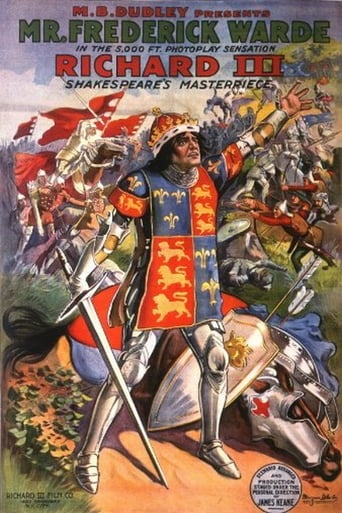
Character actor of the American silent film era, active primarily between 1912 and 1917. He is best remembered for his roles in high-profile literary adaptations and prestige productions of the early feature-film period. Moss gained significant recognition for his portrayal of Tressel in the 1912 production of 'The Life and Death of King Richard III', which is historically significant as the oldest surviving American feature-length film. Throughout his brief but impactful screen career, he worked with directors such as Frank Lloyd, J. Searle Dawley, and Edwin S. Porter. His filmography includes appearances alongside stars of the era, most notably Mary Pickford in 'In the Bishop's Carriage' (1913) and William Farnum in the 1917 epic 'Les Misérables'. Moss often portrayed authoritative or ecclesiastical figures, such as his role as Bishop Myriel in 'Les Misérables' and the Bishop in 'In the Bishop's Carriage'. His career concluded around 1917, leaving behind a legacy tied to some of the most technically and culturally important films of the silent era's formative years.
The Craft
On Screen
Moss was known for a dignified and theatrical acting style typical of the early silent era's 'prestige' performers. He specialized in character roles that required a commanding presence, often playing religious figures, mentors, or elder statesmen. His performances were noted for their restraint compared to the more hyperbolic pantomime of the time, fitting the naturalistic shift led by directors like Frank Lloyd and Edwin S. Porter.
Milestones
- Appeared in 'The Life and Death of King Richard III' (1912), the oldest surviving American feature film.
- Portrayed Bishop Myriel in the prestigious 1917 Fox production of 'Les Misérables'.
- Co-starred with 'America's Sweetheart' Mary Pickford in 'In the Bishop's Carriage' (1913).
- Worked under the direction of Academy Award-winning director Frank Lloyd.
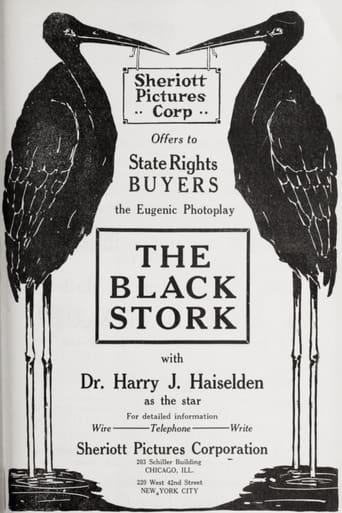
- Was a featured player in 'The Black Stork' (1917), a controversial and influential social drama.
Best Known For
Iconic Roles
Must-See Films
Accolades
Special Recognition
- Recognized in the American Film Institute (AFI) archives for his role in the oldest surviving U.S. Feature film.
Working Relationships
Worked Often With
Studios
Why They Matter
Impact on Culture
George Moss contributed to the legitimization of cinema as an art form by participating in 'High Art' adaptations of Shakespeare and Victor Hugo. At a time when movies were often viewed as low-brow entertainment, his involvement in 'The Life and Death of King Richard III' helped prove that the medium could handle complex, feature-length narratives. His work in 'The Black Stork' also placed him at the center of early cinema's engagement with difficult social and ethical controversies, specifically the eugenics movement of the early 20th century.
Lasting Legacy
Moss's legacy is primarily preserved through the historical survival of his films. Because 'The Life and Death of King Richard III' was rediscovered in 1996 and identified as the oldest surviving American feature, Moss's performance as Tressel has become a subject of study for film historians. He represents the bridge between the 19th-century theatrical tradition and the birth of the modern motion picture industry.
Who They Inspired
While not a leading man, Moss influenced the development of character acting in silent film, demonstrating how supporting roles could provide the moral or narrative gravity necessary for epic storytelling.
Off Screen
Details regarding George Moss's personal life remain scarce due to the era in which he worked. He was part of the early New York and New Jersey-based film industry before the major shift to Hollywood. His professional associations suggest he was a respected member of the theatrical community who transitioned into the 'flickers' during the rise of the feature-length format.
Did You Know?
- His film 'The Life and Death of King Richard III' was considered lost for over 80 years until a print was found in a private collection in 1996.
- He played the role of a Bishop in at least two major films: 'In the Bishop's Carriage' and 'Les Misérables'.
- Moss appeared in 'The Black Stork', a film so controversial it was banned in several cities for its themes regarding eugenics.
- He worked with Mary Pickford during her transition into one of the first global superstars.
- His 1917 version of 'Les Misérables' was the first time the Victor Hugo novel was filmed in Hollywood.
Frequently Asked Questions
Who was George Moss?
American character with credits in this catalog. He is best known for his roles in major literary adaptations like 'Richard III' and 'Les Misérables'.
What is George Moss's most famous film?
His most historically significant film is 'The Life and Death of King Richard III' (1912), which is the oldest surviving American feature-length movie. He is also well-known for playing Bishop Myriel in the 1917 version of 'Les Misérables'.
Did George Moss work with any famous stars?
Yes, he appeared in films alongside some of the biggest names of the silent era, including Mary Pickford in 'In the Bishop's Carriage' and William Farnum in 'Les Misérables'.
What kind of roles did George Moss usually play?
Moss typically played dignified character roles, often appearing as religious figures, such as bishops, or supporting characters in Shakespearean dramas.
Is George Moss still alive?
No, George Moss was active in the early 1900s and is deceased, though his exact death date is not widely recorded in surviving film archives.