Violet Stuart
Actor
Born: January 1, 1884 in Buffalo, New York, USA Died: October 1, 1968 Active: 1912-1915 Birth Name: Violet Stewart
Films
1 film
About Violet Stuart
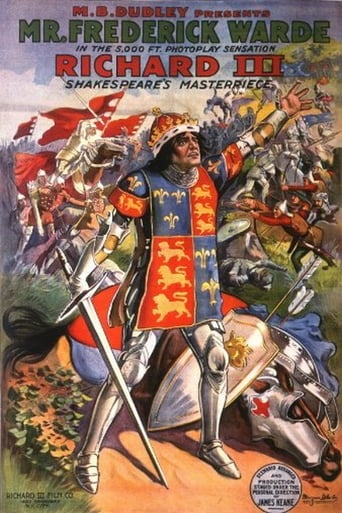
American actress of the early silent film era, primarily active during the formative years of the feature-length motion picture. She is most significantly recognized for her role as Lady Anne Plantagenet in the 1912 landmark production 'The Life and Death of King Richard III', which is celebrated as the oldest surviving American feature film. Born in Buffalo, New York, in 1884, she began her career in the burgeoning New York film industry, often working with independent production companies like the Sterling Camera and Film Company. Her performance in 'Richard III' showcased her ability to adapt Shakespearean theatricality to the silent screen, a challenging feat in an era of evolving cinematic language. Beyond her most famous role, she appeared in several short films and dramas between 1912 and 1915, including 'The Land of the Lost' and 'The Game of Three'. Though her screen career was relatively brief, her contribution to historically significant films in American history ensures her place in cinema archives. She passed away in 1968, decades after the film she starred in was believed to be lost to history.
The Craft
On Screen
Her acting style was rooted in the transition from 19th-century stage melodrama to the more restrained requirements of the silent camera. In 'Richard III', she utilized expressive facial gestures and stylized posture to convey the grief and eventual seduction of Lady Anne, a performance that had to communicate complex Shakespearean emotions without the benefit of spoken verse.
Milestones
- Cast as Lady Anne in the first feature-length Shakespearean adaptation in the United States (1912)
- Starred in 'The Life and Death of King Richard III', the oldest surviving American feature film
- Collaborated with renowned Shakespearean tragedian Frederick Warde
- Participated in the early 'Film d'Art' movement's American co-productions
- Featured in the 1914 drama 'The Land of the Lost' as Miriam Bradley
Best Known For
Iconic Roles
Must-See Films
Accolades
Special Recognition
- Recognized by the American Film Institute (AFI) for her role in the oldest surviving American feature film
Working Relationships
Worked Often With
Studios
Why They Matter
Impact on Culture
Violet Stuart's primary cultural impact stems from her participation in the 1912 'Richard III', a film that proved feature-length narratives were commercially and artistically viable in America. At a time when 'flickers' were mostly short subjects, her involvement in a 55-minute Shakespearean epic helped elevate the status of cinema to a legitimate art form comparable to the theater. The film's rediscovery in 1996 brought her performance back into the cultural consciousness, allowing modern audiences to witness the earliest surviving example of American feature-length acting.
Lasting Legacy
Her legacy is inextricably linked to the preservation of film history. As the leading lady of the oldest surviving American feature, she represents the 'missing link' between the nickelodeon era and the Golden Age of Hollywood. Her portrayal of Lady Anne remains a primary reference point for film historians studying early cinematic adaptations of classic literature.
Who They Inspired
While she did not have a long-standing career to influence later generations directly, her work in 'Richard III' set a precedent for the 'prestige' film—movies based on high-culture literary sources designed to attract middle-class audiences to cinemas.
Off Screen
Violet Stuart was born in Buffalo, New York, and was part of the early wave of East Coast actors who entered the film industry before the major shift to Hollywood. Records indicate she was also known by the surname Stewart. She maintained a relatively private life outside of her film credits during the 1910s.
Education
Trained in theatrical performance during the late 19th/early 20th century.
Did You Know?
- The film she is most famous for, 'Richard III', was considered lost for over 80 years until a pristine copy was found in 1996.
- She played Lady Anne opposite Frederick Warde, who was a stage actor of the 19th century.
- The 1912 film featured a new score by the Ennio Morricone upon its restoration and re-release in the late 1990s.
- She is sometimes credited as Violet Stewart in early trade publications.
- Her film 'Richard III' was one of the first to use the 'States Rights' distribution system.
- She appeared in 'The Land of the Lost' (1914), which was a popular adventure drama of its time.
- Despite the film's success, she largely retired from the screen by 1916.
Frequently Asked Questions
Who was Violet Stuart?
Early American silent film actress best known for starring in the 1912 film 'The Life and Death of King Richard III'. She played the role of Lady Anne, making her the leading lady of the oldest surviving American feature film.
What films is Violet Stuart best known for?
Titles linked here include The Life and Death of King Richard III (1912), The Land of the Lost (1914).
When was Violet Stuart born and when did she die?
Born January 1, 1884; died October 1, 1968.
What awards did Violet Stuart win?
As she was active during the very early years of cinema before the establishment of major award bodies like the Academy Awards, she did not win any competitive film awards. However, her work is highly honored by film preservationists today.
What was Violet Stuart's acting style?
Her style was a blend of theatrical Shakespearean tradition and early silent film pantomime. She used broad, expressive movements to convey the complex emotions of her characters in an era without synchronized sound.