Carlotta De Felice
Actor
Born: March 1, 1892 in New York City, USA Died: March 6, 1969 Active: 1912-1916
Films
1 film
About Carlotta De Felice
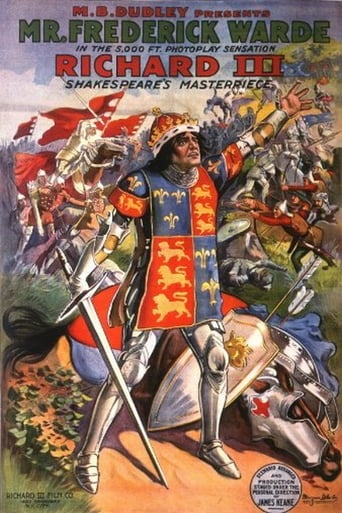
American silent film actress who emerged during the early 1910s, a pivotal era when the motion picture industry was transitioning from short subjects to feature-length narratives. She is most significantly remembered for her role as Princess Elizabeth in the 1912 production of 'The Life and Death of King Richard III,' which holds the distinction of being the oldest surviving American feature film. Beyond this landmark role, De Felice — prominent member of the Vitagraph Studios stock company, appearing in notable dramas such as 'The Christian' (1914) alongside Earle Williams and Edith Storey. Her career was closely intertwined with that of her husband, James Keane, a multi-talented director, writer, and actor who co-directed her most famous work. In late 1914, trade publications like Variety reported that she served as the leading woman for the United Kennograph Motion Picture Company, where her husband was the general manager. Despite a health scare involving an appendectomy in 1914, she continued to work in the industry through the mid-1910s, contributing to the foundational years of American narrative cinema before fading from the public eye.
The Craft
On Screen
De Felice practiced a theatrical style of acting common in the early silent era, which emphasized expressive gestures and facial clarity to convey emotion without the aid of spoken dialogue. Her roles often required a sense of regal poise and dramatic vulnerability, particularly in her Shakespearean and historical dramas.
Milestones
- Cast as Princess Elizabeth in the first feature-length Shakespearean adaptation in cinema history (1912).
- Appeared in 'The Life and Death of King Richard III', the oldest surviving American feature film.
- Served as the leading lady for the United Kennograph Motion Picture Company.
- Featured in the high-profile Vitagraph production 'The Christian' (1914), based on the million-selling novel by Hall Caine.
- Collaborated with early cinema pioneer André Calmettes and her husband James Keane.
Best Known For
Iconic Roles
Must-See Films
Accolades
Special Recognition
- Recognized by the American Film Institute (AFI) during the restoration and re-release of 'Richard III' in 1996.
Working Relationships
Worked Often With
Studios
Why They Matter
Impact on Culture
Carlotta De Felice occupies a unique place in film history due to her participation in 'The Life and Death of King Richard III.' As one of the primary cast members of the oldest surviving American feature film, her image and performance serve as a primary source for scholars studying the birth of the American feature. Her work helped bridge the gap between the 19th-century theatrical tradition and the emerging medium of film, proving that complex Shakespearean narratives could be successfully adapted for a mass movie-going audience.
Lasting Legacy
Her legacy is preserved through the miraculous 1996 discovery of a pristine print of 'Richard III' in the collection of a former projectionist. This discovery elevated De Felice from an obscure silent-era name to a visible figure in the study of early cinematic history. She remains a representative of the early 'Film d'Art' movement in America, which sought to bring high-culture prestige to the nickelodeon era.
Who They Inspired
While she did not found a specific school of acting, her participation in the first feature-length Shakespeare film influenced the way subsequent generations of actors approached classical texts on screen, moving away from short 'tableaux' toward sustained character arcs.
Off Screen
Carlotta De Felice was married to James Keane, a prominent figure in early silent cinema who worked as a director, screenwriter, and actor. Their professional and personal lives were deeply linked, as Keane often directed the films in which she starred or managed the companies where she was the leading actress.
Education
Likely trained in stage acting or through the stock company system prevalent in New York during the early 1900s.
Family
- James Keane (married circa 1910s)
Did You Know?
- The film she is most famous for, 'Richard III', was considered lost for over 70 years until a copy was found in 1996.
- She was the leading woman of the United Kennograph company, which was managed by her husband.
- In October 1914, trade papers reported she underwent a successful operation for appendicitis.
- She worked with Frederick Warde,.
- Her most famous film features a modern-day prologue and epilogue showing the actors in street clothes, a rarity for the time.
- She appeared in 'The Christian' (1914), which was based on the first British novel to sell a million copies.
Frequently Asked Questions
Who was Carlotta De Felice?
American silent film actress active during the early 1910s. She is best known for starring in 'The Life and Death of King Richard III' (1912), the oldest surviving American feature film.
What is Carlotta De Felice's most famous movie?
Her most famous work is the 1912 adaptation of Shakespeare's 'Richard III.' She also had a notable role in the 1914 Vitagraph drama 'The Christian.'
Was Carlotta De Felice married to anyone in the film industry?
Yes, she was married to James Keane, who was a director, writer, and actor. He co-directed her in 'Richard III' and managed the film company where she was the lead actress.
Why is Carlotta De Felice important to film history?
She is important because she appeared in the first feature-length Shakespearean film ever made. The survival of this film allows historians to study her performance as a rare example of acting from the very beginning of the feature-film era.
What was Carlotta De Felice's acting style?
She utilized the pantomimic and highly expressive style of the early silent era. This involved using broad physical gestures to communicate the complex emotions of Shakespearean drama without sound.