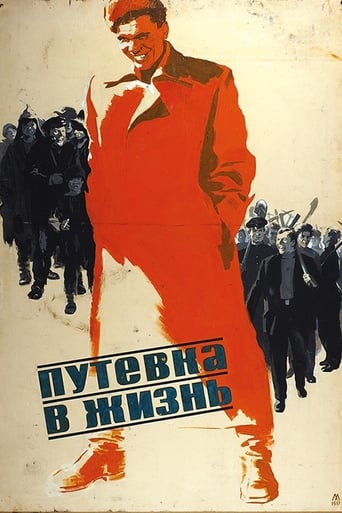
Films
1 film
About Aleksander Novikov
Soviet actor who had a brief but notable appearance in the 1931 film 'Road to Life' (Путёвка в жизнь), directed by Nikolai Ekk. This film was one of the first Soviet talking pictures and achieved international recognition, winning an award at the Venice Film Festival. Novikov's career appears to have been extremely brief, with records indicating activity only in 1931, suggesting he may have been a non-professional actor or someone whose acting career was cut short by the political and social upheavals of the 1930s in the Soviet Union. The film itself was a significant milestone in Soviet cinema, dealing with the rehabilitation of homeless youth through labor education, and Novikov was part of this important cultural production. Unfortunately, detailed biographical information about Novikov is scarce, which was not uncommon for actors from this era of Soviet cinema, particularly those who had brief careers or were not part of the major theatrical traditions.
The Craft
Milestones
- Appeared in 'Road to Life' (1931), one of the first Soviet talking pictures
Best Known For
Iconic Roles
Must-See Films
Working Relationships
Worked Often With
Studios
Why They Matter
Impact on Culture
While Aleksander Novikov himself had minimal cultural impact due to his brief career, he was part of 'Road to Life' (1931), which was a groundbreaking film in Soviet cinema history. This film was among the first Soviet talking pictures and helped establish the template for Soviet social realist cinema. The film's international success, including an award at the Venice Film Festival, helped bring Soviet cinema to global attention in the early 1930s. Novikov's participation, however brief, places him within this important cultural moment when Soviet cinema was transitioning from silent to sound and establishing its distinctive ideological and artistic approach.
Lasting Legacy
Aleksander Novikov's legacy is primarily tied to his involvement in 'Road to Life' (1931), a historically significant film that represents a milestone in early Soviet sound cinema. While Novikov himself did not achieve lasting fame or influence, his contribution to this work ensures his place in film history as part of the cast that helped bring one of the first Soviet talking pictures to life. The film itself continues to be studied by film historians as an example of early Soviet sound cinema and social realist filmmaking.
Who They Inspired
Due to the extremely brief nature of his career and the lack of documented information about his work, there is no evidence that Aleksander Novikov directly influenced other actors or filmmakers. His influence is limited to his participation in a historically significant film that influenced the development of Soviet cinema.
Off Screen
Very little is known about Aleksander Novikov's personal life, which was typical for many Soviet actors from the early sound era who had brief careers or were not prominent public figures.
Did You Know?
- 'Road to Life' (1931) was one of the first Soviet talking pictures, making Novikov part of cinema history
- The film won an award at the Venice Film Festival, bringing international attention to Soviet cinema
- Many actors in early Soviet films were non-professionals or theater actors transitioning to film
- The film dealt with the rehabilitation of homeless youth, reflecting Soviet social policies of the era
- Director Nikolai Ekk was a pioneer of Soviet sound cinema
- The film's success helped establish the template for Soviet social realist cinema
- Novikov's career appears to have lasted only one year, which was not uncommon in early Soviet cinema
Frequently Asked Questions
Who was Aleksander Novikov?
Screen credits include the 1931 film 'Road to Life,' one of the first Soviet talking pictures. His career appears to have been extremely brief, with activity recorded only in 1931, making him a minor figure in early Soviet cinema history.
What films is Aleksander Novikov best known for?
Titles linked here include Road to Life (1931).
When was Aleksander Novikov born and when did he die?
Unfortunately, specific birth and death dates for Aleksander Novikov are not available in historical records, which was common for lesser-known Soviet actors from this period who had brief careers.
What awards did Aleksander Novikov win?
There are no records of Aleksander Novikov receiving personal awards or nominations. However, the film he appeared in, 'Road to Life' (1931), won an award at the Venice Film Festival, bringing recognition to the cast and crew.
What was Aleksander Novikov's acting style?
Due to the scarcity of information about Novikov's work and the fact that he appeared in only one film, there is insufficient documentation to describe his specific acting style or techniques.