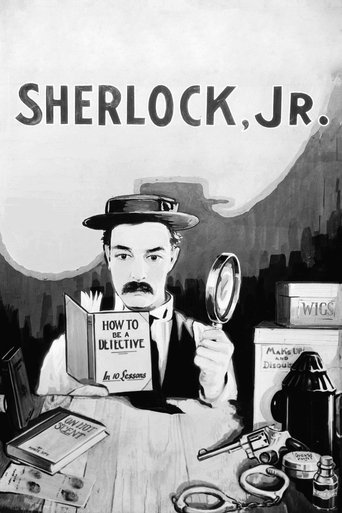
Films
1 film
About Christine Francis
Christine Francis is credited on a single production — Sherlock Jr (1924). . Though her career was notably brief, spanning only the year 1924. She is primarily remembered for her role in Buster Keaton's classic comedy 'Sherlock Jr.' where she played one of the supporting characters in the film's ensemble cast. Like many actors of the silent era, Francis entered the film industry during its golden age but did not achieve lasting fame or a substantial filmography. Her appearance in 'Sherlock Jr.' represents her sole known film credit, making her one of the many one-film actors who contributed to early cinema history. The lack of extensive documentation about her career is typical of supporting actors from this period, whose contributions were often overlooked by contemporary film historians. Despite her brief time in the spotlight, her participation in one of Keaton's most celebrated works ensures her place in cinema history.
The Craft
On Screen
As a silent film actress, Christine Francis would have employed the exaggerated facial expressions and body language typical of the era, using pantomime and physical gestures to convey emotion and narrative without dialogue.
Milestones
- Appeared in Buster Keaton's 'Sherlock Jr.' (1924)
Best Known For
Iconic Roles
Must-See Films
Working Relationships
Worked Often With
Why They Matter
Impact on Culture
Christine Francis's cultural impact is primarily through her contribution to. While her individual performance was not widely documented or celebrated, her participation in 'Sherlock Jr.' places her within the context of early Hollywood's collaborative filmmaking process. The film itself has had enormous cultural influence, being preserved in the National Film Registry and studied by film scholars for its innovative techniques. Francis represents the countless supporting actors who were essential to creating the magic of early cinema, even if their names were not preserved in popular memory.
Lasting Legacy
Christine Francis's legacy is that of a representative figure from the silent era - one of the many actors who contributed to early film history but whose names have been largely lost to time. Her appearance in 'Sherlock Jr.' ensures that she is remembered, however obscurely, as part of one of cinema's most important comedic works. She serves as a reminder of the vast number of performers who helped build the foundation of Hollywood but whose individual stories remain largely untold.
Who They Inspired
Given her extremely brief filmography, Christine Francis did not have a documented influence on other actors or filmmakers. Her influence exists only in the context of being part of the ensemble that helped create 'Sherlock Jr.,' a film that has influenced countless comedians and directors in subsequent decades.
Off Screen
Very little is documented about Christine Francis's personal life, which is common for supporting actors from the silent era who had brief careers. Like many film actors of the 1920s, her personal details were not extensively recorded in contemporary publications or film industry records.
Did You Know?
- Christine Francis appeared in only one known film during her entire career
- Her only film credit is in Buster Keaton's masterpiece 'Sherlock Jr.' (1924)
- She represents one of the many one-film actors from the silent era
- Her role in 'Sherlock Jr.' was without on-screen billing in many contemporary listings
- Like many supporting actors of the 1920s, her personal details remain largely undocumented
- Her entire known active years covered just one year, 1924
- She worked during the peak of Buster Keaton's creative period
Frequently Asked Questions
Who was Christine Francis?
Silent film actress active in 1924, known exclusively for her appearance in Buster Keaton's classic comedy 'Sherlock Jr.' She represents one of the many supporting actors from the silent era who had brief but memorable contributions to early cinema.
What films is Christine Francis best known for?
Titles linked here include Sherlock Jr. (1924).
When was Christine Francis born and when did she die?
Unfortunately, Christine Francis's birth and death dates are not documented in available historical records, which is common for supporting actors from the silent era who had very brief careers in the film industry.
What awards did Christine Francis win?
Christine Francis did not receive any documented awards or nominations during her brief career in 1924. Like many supporting actors of the silent era, her contributions were not formally recognized by the award systems that would later become established in Hollywood.
What was Christine Francis's acting style?
As a silent film actress, Christine Francis would have used the typical acting style of the era, relying on exaggerated facial expressions, body language, and pantomime to convey emotions and story elements without the benefit of synchronized dialogue.