Films
2 films
About Bruce Guerin
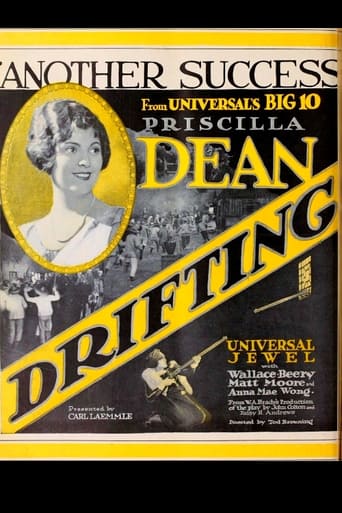
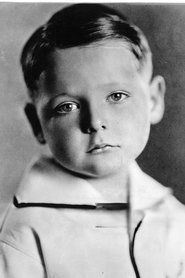
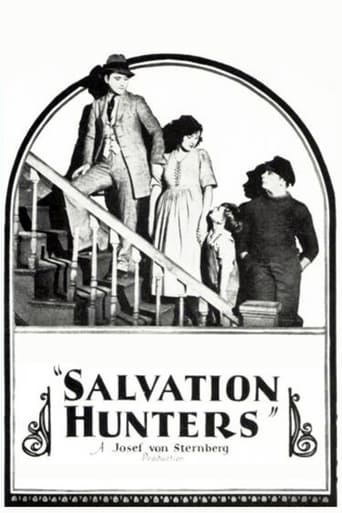
Silent film actor who had a brief but notable career during the early 1920s, appearing in two significant films of the era. His first known appearance was in the 1923 drama 'Drifting,' which starred the Anna May Wong and was directed by Tod Browning. Guerin's most significant role came in 1925 when he appeared in 'The Salvation Hunters,' the directorial debut of the renowned Josef von Sternberg, a film that would become influential despite its modest budget. Like many actors of his era, Guerin's career was relatively short-lived, spanning only from 1923 to 1925, which was common for supporting players in silent cinema who often struggled to transition to sound films. His performances, while not leading roles, contributed to important works that helped shape early American cinema. The limited filmography suggests he may have been a character actor or bit player rather than a leading man. After 1925, Guerin seemingly disappeared from the film industry, as did many silent era actors who couldn't adapt to the changing technology and audience demands of the talkies.
The Craft
Milestones
- Appeared in 'Drifting' (1923) directed by Tod Browning
- Cast in 'The Salvation Hunters' (1925), Josef von Sternberg's directorial debut
- Worked during the transition period of silent cinema
Best Known For
Must-See Films
Working Relationships
Worked Often With
Why They Matter
Impact on Culture
Bruce Guerin's contribution to cinema, while limited in scope, is part of the broader tapestry of silent film history. His appearance in 'The Salvation Hunters' connects him to. The film itself, despite its modest origins, has been recognized by film historians as an important early example of atmospheric storytelling and visual style that would characterize von Sternberg's later work. Guerin's participation in 'Drinking' also places him within the orbit of Tod Browning, another significant director who would later create 'Freaks' and the original 'Dracula.' These connections, while tangential, demonstrate how even minor actors contributed to the development of cinematic art during its formative years.
Lasting Legacy
Bruce Guerin represents the countless supporting actors and bit players who were essential to the functioning of the studio system during the silent era but whose names have largely been lost to film history. His legacy is not as an individual performer but as part of the ensemble that made significant films of the 1920s possible. The fact that his name survives at all in film databases shows the growing efforts by film historians and preservationists to document even the most minor contributors to classic cinema. His story illustrates the transient nature of fame in early Hollywood, where careers could be as brief as the flicker of a projector bulb.
Who They Inspired
As a minor actor with a very limited filmography, Bruce Guerin's direct influence on other performers or filmmakers is difficult to trace. However, his participation in films directed by filmmakers like von Sternberg and Browning means he was part of productions that would influence countless future filmmakers. The films he appeared in, particularly 'The Salvation Hunters,' have been studied by film scholars for their innovative techniques and atmospheric qualities, making Guerin a small part of cinema's evolutionary story.
Off Screen
Very little is known about Bruce Guerin's personal life, which is typical for many supporting actors from the silent era whose biographical details were not extensively documented in film industry records of the time.
Did You Know?
- Bruce Guerin's entire known filmography consists of only two films
- His most significant film, 'The Salvation Hunters,' was discovered and promoted by Charlie Chaplin
- The Salvation Hunters was made on a tiny budget of approximately $5,000 but launched Josef von Sternberg's career
- Like many silent era actors, Guerin's career ended before the transition to sound films
- The lack of biographical information about Guerin is typical for supporting actors of his era
- His appearance in 'Drifting' placed him in a film starring Anna May Wong, one of the first Chinese-American movie stars
- Both films he appeared in have survived and are accessible to modern audiences
- The Salvation Hunters was initially rejected by distributors until Chaplin's intervention
Frequently Asked Questions
Who was Bruce Guerin?
Screen credits include only two known films: 'Drifting' (1923) and 'The Salvation Hunters' (1925). He was a supporting actor during the silent era whose career was brief but included work with notable directors like Tod Browning and Josef von Sternberg.
What films is Bruce Guerin best known for?
Titles linked here include The Salvation Hunters (1925), Drifting (1923).
When was Bruce Guerin born and when did he die?
Bruce Guerin's birth and death dates are not documented in available historical records, which is common for many supporting actors from the silent era whose biographical information was not preserved.
What awards did Bruce Guerin win?
There are no records of Bruce Guerin receiving any major awards or nominations, which was typical for supporting actors during the silent era who often worked without formal recognition.
What was Bruce Guerin's acting style?
Specific details about Bruce Guerin's acting style are not documented in surviving records, as he was a minor actor whose performances were not extensively reviewed or analyzed by contemporary critics.
Why did Bruce Guerin's career end so quickly?
Bruce Guerin's career ended around 1925, which was common for many silent era actors who couldn't transition to sound films or who were unable to secure more substantial roles in the competitive studio system of the 1920s.