Films
1 film
About Vadim Ganshin
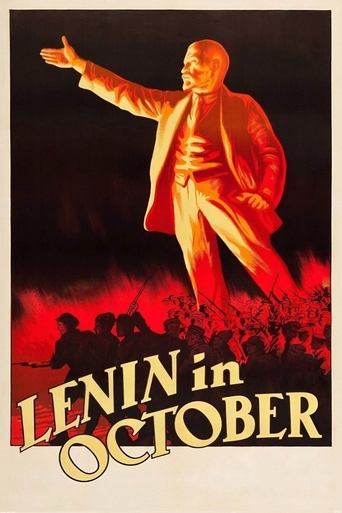
Vadim Ganshin appears once in this catalog: Lenin in October (1937). With his most notable and perhaps only known role being in the 1937 propaganda masterpiece 'Lenin in October.' This film was directed by Mikhail Romm and was cinematic works of its time, portraying the events of the Bolshevik Revolution. Ganshin's career appears to have been extremely brief, with documented activity limited to the year 1937, which was during the height of Stalin's Great Purge when many artists and intellectuals faced persecution. His role in 'Lenin in October' would have been part of a carefully cast ensemble chosen to portray historical figures from the revolutionary period. The film itself was a major Soviet production that received state approval and was widely distributed throughout the USSR. Unfortunately, detailed information about Ganshin's life, training, or other potential works remains scarce in available historical records, suggesting either a very brief career or the tragic loss of documentation during the tumultuous periods of Soviet history.
The Craft
Milestones
- Appeared in 'Lenin in October' (1937),
Best Known For
Iconic Roles
Must-See Films
Working Relationships
Worked Often With
Studios
Why They Matter
Impact on Culture
Vadim Ganshin's contribution to cinema, while limited in scope, is part of the broader cultural impact of Soviet propaganda films of the 1930s. 'Lenin in October' was a significant work in the Soviet cinematic canon, designed to reinforce the official narrative of the Bolshevik Revolution and cult of personality surrounding Lenin. Actors in such films, even in minor roles, participated in the creation of a visual mythology that shaped Soviet collective memory for generations. The film itself was part of a larger state-controlled effort to use cinema as a tool for political education and ideological reinforcement, with actors serving as vessels for the state's historical narrative.
Lasting Legacy
Vadim Ganshin's legacy is primarily tied to his participation in. While his individual contribution may have been small, 'Lenin in October' remains an important document of Soviet cinematic art and political propaganda. The film continues to be studied by film historians and political scientists as an example of how cinema was used to construct and reinforce political ideologies. Ganshin, like many actors from this period, represents the countless individuals who contributed to the Soviet film industry during one of its most politically charged and artistically constrained eras.
Who They Inspired
Given the limited documentation of Vadim Ganshin's career, his direct influence on other actors or filmmakers cannot be definitively established. However, as a participant in Soviet cinema during the 1930s, he was part of a generation of actors who worked under the strict guidelines of socialist realism and state control. This period of Soviet cinema did influence subsequent generations of filmmakers, both within and outside the Soviet Union, as a model of how cinema could be systematically employed for political purposes.
Off Screen
Very little is documented about Vadim Ganshin's personal life, which is not uncommon for minor actors from the Soviet era of the 1930s, especially those who may have had brief careers or were affected by the political turmoil of the period.
Did You Know?
- 'Lenin in October' was
- The film was directed by Mikhail Romm, one of Soviet cinema's most respected directors
- 1937 was the height of Stalin's Great Purge, making it an extremely dangerous time for artists in the Soviet Union
- The film was part of a series of Lenin-themed films produced during this period to reinforce Soviet ideology
- Actors in Soviet propaganda films of this era were often carefully selected for their physical resemblance to historical figures or their perceived ideological reliability
- The film's premiere was a major cultural event in Moscow and was attended by high-ranking Soviet officials
- Many records from this period of Soviet cinema were lost or destroyed during World War II and subsequent political upheavals
- The film was shown not only in the USSR but also in other communist countries as part of cultural exchange programs
Frequently Asked Questions
Who was Vadim Ganshin?
Soviet with credits in this catalog.' His career appears to have been very brief, with documented activity limited to this single film during the Stalinist era.
What films is Vadim Ganshin best known for?
Titles linked here include Lenin in October (1937).
When was Vadim Ganshin born and when did he die?
Specific birth and death dates for Vadim Ganshin are not available in historical records, which is not uncommon for minor Soviet actors from this period.
What awards did Vadim Ganshin win?
There are no documented awards or nominations for Vadim Ganshin in available historical records, which may reflect either the brevity of his career or the loss of documentation over time.
What was Vadim Ganshin's acting style?
Specific details about Vadim Ganshin's acting style are not documented, but actors in Soviet films of this period typically worked within the constraints of socialist realism, emphasizing clear ideological messages rather than individual artistic expression.