
Lenin in October
"Stalin’s salute to October 1917"
Keys: Space play/pause · ←/→ 10s · F fullscreen · M mute · </> speed
About this film
Commissioned by Josef Stalin to commemorate the 20th anniversary of the Soviet Revolution, Lenin in October was the first of Russian director Mikhail Romm's tributes to the Marxist visionary who helped orchestrate the insurrection of October, 1917.
Cast & crew
More films like this
More Drama films
View all →







More from Mikhail Romm
View all →
More about this film
About the production
Release dateNovember 7, 1937
Box officeNot commercially released in Western markets; massive domestic viewership in USSR with mandatory screenings
ProductionMosfilm Studio, Goskino
Filmed inMoscow, Soviet Union, Leningrad (St. Petersburg), Soviet Union
The film was made under direct supervision of Stalin's cultural apparatus, with the dictator personally reviewing and approving key scenes. Boris Shchukin prepared extensively for the role of Lenin, studying photographs, recordings, and meeting with people who knew him personally. The production team had unprecedented access to historical locations and documents, including the actual Smolny Institute where Lenin directed the revolution. The storming of the Winter Palace sequence involved thousands of extras and was meticulously choreographed to match historical accounts.
Themes
Revolutionary leadership and sacrificeHistorical determinism and inevitabilityThe power of the masses in social changeThe struggle against oppressionThe burden of revolutionary responsibility
Themes & topics
Russian RevolutionBolshevikVladimir LeninPolitical propagandaHistorical epicRevolutionCommunismPolitical leadershipInsurrectionSocial changeWorking classPolitical struggleHistorical dramaSoviet Union
Historical background
Made in 1937, Lenin in October reflects production norms of the studio-system peak and early sound decades—shorter runtimes, regional audiences, and limited preservation infrastructure.
Why this film matters
Historians reference Lenin in October (1937) when discussing 1937 Soviet film.
Making of
The production of Lenin in October was a monumental undertaking that represented the pinnacle of Soviet Socialist Realist cinema. Mikhail Romm, though relatively young at the time, was chosen by Stalin himself to direct this crucial propaganda piece. The casting of Boris Shchukin as Lenin was particularly significant - Shchukin was already a renowned stage actor at the Moscow Art Theatre and underwent an intensive transformation process, including studying Lenin's handwriting, voice recordings, and mannerisms. The film's production coincided with the height of Stalin's Great Purge, creating an atmosphere of intense pressure on the cast and crew. Stalin took personal interest in the project, viewing early cuts and providing detailed feedback. The storming of the Winter Palace sequence was filmed over several weeks using thousands of extras, many of whom were actual Red Army veterans of the revolution. The production team had access to previously restricted historical archives and locations, allowing for unprecedented authenticity in depicting the revolutionary events.
What critics said
Modern write-ups on Lenin in October (1937) tend to focus on preservation status, stylistic choices, and placement within director or studio filmographies.
Did you know?
- Boris Shchukin died shortly after completing the film, making this his final and most iconic performance
- Stalin personally screened the film multiple times and reportedly made suggestions for changes, particularly in scenes depicting his own role
- The film was mandatory viewing for all Soviet citizens upon its release and was shown in schools, factories, and collective farms
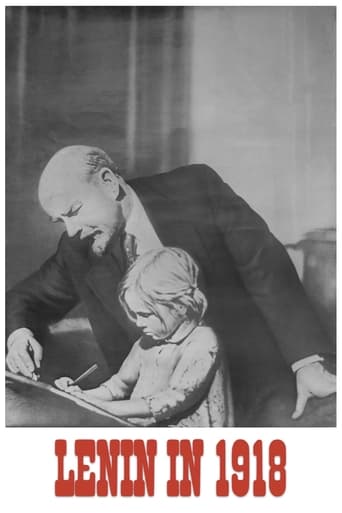
- Director Mikhail Romm later made two sequels: 'Lenin in 1918' (1939) and 'The Vow' (1946), completing what became known as the Lenin trilogy
- The film's portrayal of Lenin became the definitive image of the revolutionary leader for generations of Soviet citizens
- Despite being propaganda, the film was praised internationally for its cinematic technique and won awards at film festivals
- The original negative was preserved during World War II by being evacuated from Moscow along with other cultural treasures
- The film's score composer, Dmitri Shostakovich, later faced criticism for his association with Stalin-era propaganda films
- Many of the supporting actors were actual participants in the 1917 Revolution, adding authenticity to crowd scenes
- The film was re-released multiple times in the Soviet Union, particularly on anniversaries of the Revolution
Awards & recognition
- Stalin Prize (1941) - First Class
- Order of Lenin awarded to director Mikhail Romm
- Venice Film Festival - Special Mention (1937)
- People's Artist of the USSR awarded posthumously to Boris Shchukin
Visual style
The cinematography by Boris Volchek and Vladimir Nikolaev was groundbreaking for its time, employing innovative techniques to create both historical authenticity and dramatic tension. The film used extensive location shooting at actual historical sites, including the Smolny Institute and the Winter Palace, lending it unprecedented realism. The camera work featured dynamic tracking shots through crowded revolutionary meetings, dramatic close-ups of Lenin in moments of decision, and sweeping panoramic views of Petrograd during the uprising. The cinematographers pioneered techniques for filming large crowd scenes, using multiple cameras and carefully choreographed movements to create the illusion of thousands of people in revolutionary action. The lighting design contrasted the dark, conspiratorial atmosphere of underground meetings with the bright, triumphant scenes of the revolution's success. The film's visual style influenced historical epics worldwide and established new standards for depicting revolutionary cinema.
Innovations
Lenin in October represented several technical innovations in Soviet cinema, particularly in the realm of historical reconstruction and crowd scene management. The production pioneered new techniques for coordinating thousands of extras in complex battle sequences, using a system of colored flags and whistles to synchronize movements across multiple locations. The film's editing, supervised by Esfir Tobak, introduced rapid-cut techniques for building tension during revolutionary action sequences. The sound recording team developed new methods for capturing clear dialogue in large, reverberant spaces like the Smolny Institute. The film also featured innovative special effects for its time, including carefully staged explosions and gunfire that appeared remarkably realistic. The production team created detailed historical reconstructions of 1917 Petrograd, with attention to period-accurate costumes, props, and architectural details that set new standards for historical films.
Music
The musical score for Lenin in October was composed by Dmitri Shostakovich, one of the Soviet Union's most prominent composers, in collaboration with Vissarion Shebalin. The soundtrack combines revolutionary songs of the period with original orchestral compositions that enhance the film's dramatic moments. Shostakovich incorporated themes from 'The Internationale' and other revolutionary anthems, weaving them into the fabric of the score to create emotional resonance with Soviet audiences. The music ranges from tense, dissonant passages during scenes of conspiracy and danger to triumphant, sweeping orchestral arrangements during the revolution's climactic moments. The soundtrack also features diegetic music, including workers' songs and military marches that add historical authenticity. Shostakovich's score was praised for its ability to support the narrative without overwhelming the dramatic performances, though the composer later faced criticism for his association with Stalin-era propaganda projects.
Famous quotes
There are decades where nothing happens; and there are weeks where decades happen. - Lenin
History will not forgive us if we hesitate now! - Lenin
The revolution is not a dinner party! - Lenin
Power must be taken! - Lenin addressing the Bolshevik Committee
Better fewer, but better. - Lenin on party organization
The struggle is our teacher. - Lenin to his comrades
We must act with the courage of our convictions. - Lenin
The future belongs to those who prepare for it today. - Lenin
Memorable scenes
- Lenin's dramatic arrival at the Finland Station, greeted by thousands of workers and soldiers
- The tense Bolshevik Committee meeting where Lenin passionately argues for immediate armed insurrection
- The storming of the Winter Palace sequence with thousands of revolutionary soldiers
- Lenin's secret meeting with Stalin in the underground printing press
- The final scene showing Lenin addressing the victorious revolutionaries from the balcony
What audiences thought
Lenin in October was enormously popular with Soviet audiences upon its release, becoming among the leading-watched films in Soviet cinema history. The film's dramatic portrayal of revolutionary events resonated deeply with viewers who had lived through or heard stories of the 1917 Revolution. Many audience members were moved to tears by Shchukin's performance and the film's patriotic themes. The film was shown repeatedly in theaters, factories, collective farms, and schools, with attendance often mandatory. Veterans of the October Revolution praised its authenticity and emotional power. In later years, the film became a traditional viewing experience on Revolution Day holidays, with multiple generations of Soviet citizens growing up watching it annually. Despite changing political attitudes in later decades, the film retained a special place in Soviet cultural memory and continued to evoke strong emotional responses from viewers.
Film connections
Influenced by
- Sergei Eisenstein's 'October: Ten Days That Shook the World' (1928)
- Vsevolod Pudovkin's 'The End of St. Petersburg' (1927)
- Classical Soviet montage theory
- Socialist Realist artistic principles
- Historical paintings of revolutionary scenes
- Lenin's own writings and speeches
This film influenced
- Lenin in 1918 (1939)
- The Vow (1946)
- The Fall of Berlin (1949)
- The Unforgettable Year 1919 (1951)
- Lenin in Poland (1966)
- Numerous Soviet historical epics of the 1940s-1960s
Film restoration
The film is well-preserved in the Gosfilmofond Russian State Archive of Film and Photo Documents. Multiple high-quality copies exist, including the original camera negative which survived World War II evacuation. The film has been digitally restored several times, most recently in 2015 for the 70th anniversary of Victory Day. The restored versions are available in both Russian and with various subtitle options for international distribution.
Where to watch
- Available on Soviet film streaming platforms like Mosfilm's official YouTube channel
- Included in various DVD collections of Soviet cinema
- Available through academic film archives and university libraries
- Occasionally screened at film festivals specializing in classic cinema
- Accessible through some specialized streaming services focusing on international cinema