Carlo Keil-Möller
Actor
- Active
- 1918-1918
Films 1
About Carlo Keil-Möller
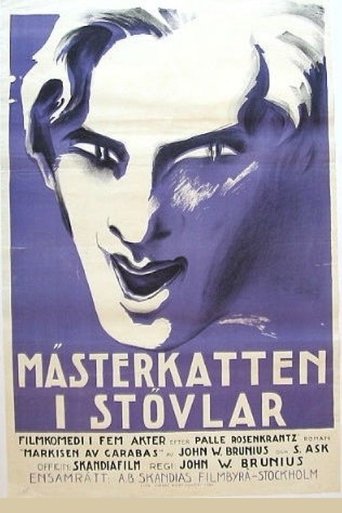
Carlo Keil-Möller is a largely obscure figure of the silent-era screen whose surviving credit trail is extremely limited. He is documented as an actor in the 1918 film Puss in Boots, a period fairy-tale adaptation that places him within the European silent cinema milieu of the late 1910s. Beyond that single surviving film reference, readily accessible records provide very little verified information about his life, training, or later career, which suggests either a brief screen career or fragmentary archival survival. Because of the scarcity of dependable documentation, it is not possible to reconstruct a full biography without risking speculation. His name nevertheless remains of interest to film historians and database researchers because many early cinema participants are known only through isolated credits preserved in filmographies and archival indexes. In that sense, Keil-Möller represents the countless performers whose work helped build silent cinema even though their personal histories have largely been lost to time.
More about Carlo Keil-Möller
In film history
Carlo Keil-Möller's cultural impact lies less in documented fame than in his place within the larger history of silent cinema, where many performers contributed to productions that survive only partially in the historical record. His presence in Puss in Boots (1918) links him to the tradition of European literary and fairy-tale adaptations that were popular in the silent era. Although his individual star profile does not appear to have endured, his surviving credit helps reconstruct the broader personnel networks of early film production. For researchers, names like his are important because they demonstrate how much of early cinema history depends on fragmentary evidence and surviving filmographies.
Later reputation
Keil-Möller's lasting legacy is archival rather than celebrity-based: he is remembered mainly because his name survives in connection with a 1918 silent film credit. That kind of documentation is valuable to historians working to restore the labor history of early cinema, especially for performers whose careers did not generate extensive publicity. His record underscores how many contributors to silent film remain underrecognized despite participating in the medium's formative years. As databases and restoration projects continue to expand, such names become increasingly important reference points for film scholars tracing cast lists, production histories, and regional cinema traditions.
Influence
There is no verifiable evidence that Carlo Keil-Möller directly influenced later actors or directors in a documented way. His importance is therefore indirect, contributing to the collective body of early screen performance rather than leaving a clearly traceable artistic lineage. In the broader sense, actors like him helped establish the visual storytelling conventions of silent cinema, where expression, gesture, and physical presence carried much of the narrative weight. His surviving credit can be used by historians as a small but useful data point in mapping the ecology of early European film production.
Off screen
No reliable biographical details about Carlo Keil-Möller's personal life have been verified in widely accessible film reference sources. Information about marriages, family background, residences, or post-film career activity is not currently established from the available evidence. As with many minor silent-era performers, surviving documentation may be sparse, incomplete, or dispersed across archival materials that are not yet digitized.
Credits
- Appeared in the silent-era film Puss in Boots (1918)
- Is documented in surviving filmographic records as a screen actor from the late silent period
- Represents the category of early cinema performers whose careers are known primarily through archival film credits
Roles
- Role in Puss in Boots (1918)
Films
- Puss in Boots (1918)
Notes
- He is credited in connection with Puss in Boots (1918), a silent-era fairy-tale adaptation.
- His surviving screen record appears to be extremely brief, with no widely verified additional film credits readily available.
- He is an example of a silent-era performer whose history is preserved mainly through cast lists rather than biography.
- Because of the scarcity of records, he is more readily discussed in filmographic research than in popular film histories.
- His name includes an umlauted surname spelling, which can complicate archival searches and database indexing.
- He may have worked in a European film context, but this is not securely documented from the available evidence.
- No confirmed photographs, interviews, or personal memoir material are readily associated with his name in standard reference sources.
Questions
Who was Carlo Keil-Möller?
Carlo Keil-Möller was a silent-era actor best known from surviving film credit records, including Puss in Boots (1918). Very little verified biographical information about him has survived in widely accessible sources, so he is primarily remembered as an archival figure in early cinema history.
What films is Carlo Keil-Möller best known for?
He is best known for Puss in Boots (1918), the only widely documented screen credit currently associated with him in accessible reference material. No additional filmography can be stated confidently without risking error.
When was Carlo Keil-Möller born and when did he die?
His birth date and death date are not currently verified in readily accessible film reference sources. Likewise, his birthplace and other vital statistics remain unavailable from the information that survives publicly.
What awards did Carlo Keil-Möller win?
No awards or formal honors are currently documented for Carlo Keil-Möller in the available historical record. This is not unusual for many minor silent-era performers whose careers were not widely publicized or preserved.
What was Carlo Keil-Möller's acting style?
His acting style cannot be described with confidence because no detailed critical commentary or surviving performance analysis is readily available. As a silent-era performer, he would have worked within the visual, gesture-driven conventions of the period, but specific stylistic traits are not securely documented.
What is Carlo Keil-Möller's legacy in film history?
His legacy is primarily archival: he is one of many early film performers whose name survives in cast records even when personal details have been lost. That makes him important to historians studying the breadth of silent cinema and the many lesser-known contributors behind it.