Puss in Boots
Plot
Young Jörgen Steenfeld is the financially strained heir to the estate of Steensgaard, a property burdened by debt and difficult family obligations. He is watched over and assisted by his old friend Karl Konstantin Kattrup, nicknamed "Mästerkatten," a resourceful and charming former university man who has been pulled into practical management at the estate. Their already precarious situation becomes more complicated when County Governor Markdanner and her daughter Rose arrive, with the governor intent on arranging a socially advantageous match between Rose and Jörgen. Jörgen, however, is secretly in love with the orphan Helga Anthon, known as Pips, and his divided loyalties create both romantic and comic tension. As Kattrup continues to meddle, scheme, and help hold the household together, the film builds around tangled finances, class expectations, and overlapping affections that gradually sort themselves into a more favorable resolution.
About the Production
This 1918 adaptation was made during the late silent era by one of Sweden's most important early production companies, Svenska Biografteatern, under director John W. Brunius. The film belongs to the wave of prestige literary and theatrical adaptations produced in Sweden before the industry's consolidation around a few major studios, and it appears to have been mounted as a costume comedy-drama with strong attention to aristocratic interiors, estate life, and character comedy. Like many Scandinavian silent productions of the period, it was shaped by practical constraints of the First World War era, when access to materials, distribution routes, and international markets were uneven, although the Swedish industry remained more stable than many continental European film industries. Surviving documentation on exact budget, box office, and detailed location data is limited, but the film is known to have been produced in Sweden and to have drawn on established stage and literary traditions.
Historical Background
This film was made in 1918, during the final year of World War I, a moment when Europe was undergoing profound political, social, and cultural upheaval. Sweden remained neutral, which allowed its film industry to continue functioning more consistently than those of many belligerent nations, and Stockholm-based studios became important centers for refined silent filmmaking. Swedish cinema in this period was internationally respected for its naturalistic acting, literary adaptations, and elegant visual style, with directors and actors contributing to a national film culture that could travel abroad. Puss in Boots belongs to that environment: a light comic property rooted in social hierarchy, inheritance, and courtship, yet made in a society where questions of class stability and modernity were increasingly relevant. The film also reflects the late-silent-era preference for stories that could be read visually and understood across borders, even as the industry was about to be transformed by postwar changes in distribution, technology, and audience taste.
Why This Film Matters
Although not among the most internationally famous Swedish silent films, Puss in Boots is significant as part of the broader body of work that established Sweden as a serious cinematic nation before the advent of synchronized sound. Its value lies in how it demonstrates the reach of prestige comedy-drama in early Scandinavian filmmaking: a story of money, inheritance, marriage, and social negotiation presented with an emphasis on character, atmosphere, and literary refinement. The film also contributes to the screen histories of important Swedish performers and to the study of how fairy-tale-inflected titles were sometimes used for stories that were more socially grounded than fantastical. For historians, it helps illustrate the breadth of early Swedish production beyond the better-known rural dramas and historical epics, showing that studio filmmakers were equally invested in sophisticated comic material.
Making Of
Puss in Boots was produced in the context of Swedish silent cinema's strong adaptation culture, when filmmakers regularly turned to novels, plays, and popular stories to create respectable commercial attractions. John W. Brunius was adept at balancing theatrical performance styles with cinematic storytelling, and the film likely relied heavily on expressive acting, careful framing, and polished sets to communicate both comedy and class distinctions. The production would have required period costumes and domestic interiors that supported the story's aristocratic estate setting, while the silent format demanded visual clarity in the romantic and financial complications that drive the plot. As with many Scandinavian films from this era, the surviving record does not preserve exhaustive production notes, but the film fits the pattern of early Swedish features made with professional craft, literary ambition, and strong ensemble casting.
Visual Style
As a late-1910s Swedish silent film, Puss in Boots would have relied on composed tableaux, clear staging, and expressive close or medium shots to carry the story without dialogue. Swedish silent cinematography of the period often emphasized depth within interiors, naturalistic performance placement, and a measured rhythm that allowed actors' gestures and facial expressions to register fully. The film likely uses visually legible blocking to separate the romantic pairings, the comic meddling of Kattrup, and the social authority of the county governor's household. Its visual style would have been shaped by the era's preference for polished, theatrical realism rather than overt montage experimentation.
Innovations
The film's main technical achievement lies in its competent late-silent storytelling rather than in any known groundbreaking special effect or camera innovation. It reflects the mature craftsmanship of Swedish studio production in the 1910s, where careful staging, costume detail, and readable visual narrative were central. The production demonstrates how filmmakers could convey layered social relationships and romantic entanglements without dialogue through gesture, composition, and editing. As a period comedy-drama, its achievement is in balancing tone: keeping the material light while still making the financial and emotional stakes comprehensible.
Music
No original synchronized soundtrack survives, since the film was produced as a silent feature in 1918. Like most silent films, it would originally have been accompanied in theaters by live music, which could have ranged from a pianist to a small ensemble depending on venue and exhibition practice. Any modern screenings would use a newly prepared accompaniment or archival compilation score rather than an historically fixed original recording. Specific surviving cue sheets or commissioned score information are not generally documented for this title.
Memorable Scenes
- The repeated interventions of Kattrup, whose wit and practical intelligence keep the estate's troubles from collapsing completely into chaos.
- The arrival of County Governor Markdanner and her daughter Rose, which shifts the estate from private financial concern into a socially charged matchmaking situation.
- The moments in which Jörgen's concealed love for Helga Anthon clashes with the outside pressure to pair him with Rose.
- The comedic interplay around household management at Steensgaard, where money problems and romance become inseparable.
Did You Know?
- This film is a Swedish silent comedy from 1918, not to be confused with later sound-era or international versions of Puss in Boots.
- Director John W. Brunius was one of the notable Swedish filmmakers of the silent period and later became known for large-scale historical productions.
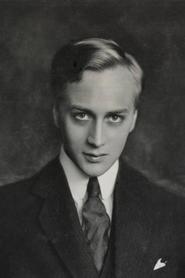
- Gösta Ekman appears in an early screen role in a film period that helped build his reputation in Swedish stage and screen acting.
- The title refers to "Mästerkatten" or "Master Cat," a clever trickster figure associated with wit, social agility, and comic intervention rather than the literal fairy tale cat.
- The story centers on estate management and class maneuvering, a common concern in Scandinavian literature and cinema of the era.
- The film is associated with the prestige adaptation culture of early Swedish cinema, which often mined novels, plays, and popular literary material for screens.
- Because it is a silent film from 1918, any music heard today would depend on modern accompaniment choices rather than an original surviving soundtrack recording.
- Documentation on many silent Swedish films is fragmentary, so preserved information about this title is more limited than for later sound films.
- The presence of both romantic misunderstanding and financial distress places the film between social comedy and domestic melodrama.
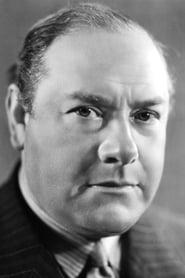
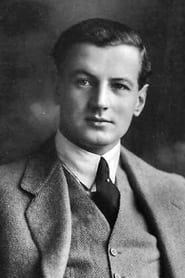
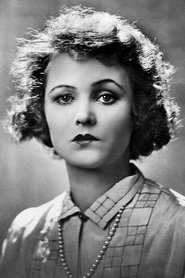
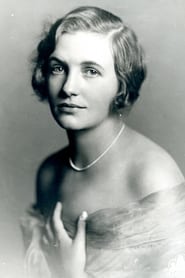
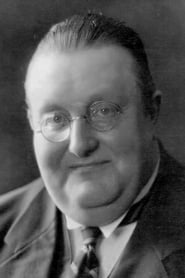
- The cast includes Carlo Keil-Möller, Gösta Ekman, and Mary Johnson, performers whose careers connect to the broader golden age of Swedish silent cinema.
What Critics Said
Contemporary reviews are not widely preserved in easily accessible form, so a full picture of the film's original critical reception is difficult to reconstruct. Within the larger context of Swedish silent cinema, however, films of this type were generally evaluated on their performances, pictorial composition, and adaptation quality rather than on plot novelty alone. Modern critical attention tends to focus less on this title as an isolated masterpiece and more on its place in John W. Brunius's career and in the broader development of Swedish silent feature filmmaking. Scholars and archivists regard it as a useful example of the era's popular literary-comedy productions and as an artifact of a nationally distinctive film culture.
What Audiences Thought
Specific audience records from 1918 are scarce, but the film was made to appeal to contemporary moviegoers who enjoyed light romance, social comedy, and recognizable literary or theatrical material. The combination of an aristocratic setting, a clever companion figure, and a romantic triangle would have been accessible to broad audiences, especially in urban Swedish cinemas. As with many silent-era titles, long-term audience awareness depends heavily on preservation status and archival circulation rather than on mass familiarity. Today, its audience is largely limited to researchers, silent-film enthusiasts, and viewers encountering it through archival programs or database research.
Film Connections
Influenced By
- Swedish literary and stage comedy traditions
- Late 19th-century estate and inheritance fiction
- Fairy-tale trickster motifs associated with Puss in Boots
- Contemporary Scandinavian domestic melodramas and comic dramas
This Film Influenced
- Later Swedish costume comedies centered on estates and marriage arrangements
- Silent-era Scandinavian domestic comedies with aristocratic settings
- Screen adaptations that use trickster-like companion figures to steer romantic plots
You Might Also Like
More Comedy Films
View allMore from John W. Brunius
View allFilm Restoration
Preservation status is uncertain in readily available references; this title is not widely circulated in contemporary commercial releases, and accessible archival availability appears limited. If extant, it is primarily of interest through film archives, database records, and specialist silent-cinema research rather than mainstream home-video distribution.