Gustaf Fredrikson
Actor
- Active
- 1918-1918
Films 1
About Gustaf Fredrikson
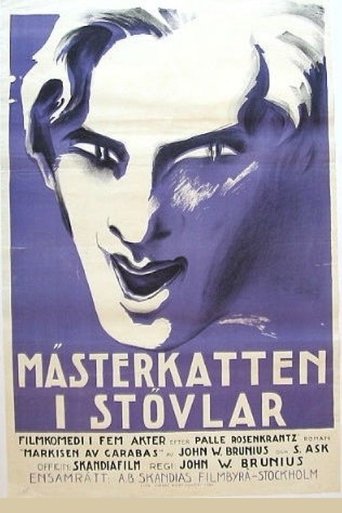
Gustaf Fredrikson is a sparsely documented early Swedish screen actor whose surviving film record places him in the silent-era production Puss in Boots (1918). Because the available historical record is extremely limited, little can be stated with confidence about his broader life, training, or career outside this single known screen credit. His name appears in filmographic references connected to the 1918 film, suggesting that he worked in the Scandinavian silent-cinema milieu during the final years of the First World War. No reliable evidence has surfaced in the standard film-historical sources used here to establish a longer acting career, additional screen appearances, or later transition into sound film. As a result, Fredrikson is best understood as a minor but real participant in early Nordic cinema whose trace remains primarily through film credits rather than surviving biography. His case also reflects a common challenge in silent-era scholarship: many performers are known only through scattered archival records, printed casts, or contemporary listings. Until further archival material is uncovered, his full life story, personal background, and complete filmography remain largely undocumented.
More about Gustaf Fredrikson
In film history
Gustaf Fredrikson's cultural impact is difficult to measure because of the scarcity of surviving information and the likelihood that his screen career was brief. Even so, his presence in a 1918 Swedish silent film places him within a formative period of Nordic cinema, when filmmakers were developing visual storytelling methods that would influence international film art. Performers like Fredrikson contributed to the pool of acting talent that sustained these productions, even when their names later faded from public memory. His surviving credit underscores how many silent-era contributors remain important to film history despite not achieving lasting fame.
Later reputation
Fredrikson's legacy lies primarily in archival memory rather than popular recognition. He is part of the large body of early film workers whose names survive in credits, databases, and print sources even when their biographies do not. For historians of silent cinema, such figures are valuable because they help reconstruct production networks, casting practices, and the broader cultural ecosystem of early film. His documented association with Puss in Boots (1918) ensures that he remains part of Sweden's silent-film heritage, even if only in a limited way.
Influence
There is no evidence that Gustaf Fredrikson had a documented influence on later actors or directors in the form of mentorship, teaching, or widely recognized stylistic innovation. Any influence he may have had would have been local and contextual, contributing to the performance culture of Swedish silent film rather than to a clearly traceable lineage. Because his career is so lightly documented, it is not possible to attribute specific artistic impact with confidence.
Off screen
No reliable biographical information has been located regarding Gustaf Fredrikson's personal life, including family background, marriages, children, residence, or activities outside film. Standard reference sources available for classic cinema do not presently supply enough detail to reconstruct his private life with confidence. He appears in the historical record primarily as a credited screen performer rather than as a public celebrity whose personal affairs were widely reported.
Credits
- Appeared in the 1918 silent film Puss in Boots, the only firmly documented screen credit currently associated with him.
- Worked during the late silent-film era in Sweden, a period of important artistic development for Scandinavian cinema.
- Represents one of many lesser-known performers whose contributions are preserved mainly through surviving filmographies and cast listings.
Roles
- Performer in Puss in Boots (1918)
Films
- Puss in Boots (1918)
Notes
- He is currently known to film historians mainly through a single surviving screen credit.
- His known film, Puss in Boots (1918), belongs to the silent era in Sweden.
- The historical record available for him is unusually thin, even by the standards of many early film performers.
- He should not be confused with later or similarly named individuals in other professions.
- His case illustrates how many silent-era actors were credited in films yet left very little biographical trace.
- Because of limited documentation, his birth and death details remain unverified.
Questions
Who was Gustaf Fredrikson?
Gustaf Fredrikson was a Swedish silent-era actor known from the film record as a performer in Puss in Boots (1918). Beyond that credit, very little reliable biographical information has survived in accessible reference sources. He is one of many early cinema figures whose names remain known primarily through archival film listings.
What films is Gustaf Fredrikson best known for?
He is best known for Puss in Boots (1918), which is currently the only firmly documented film credit associated with him in the available record. No additional confirmed film appearances have been established with confidence.
When was Gustaf Fredrikson born and when did he die?
His birth date and death date are not presently verified in the accessible sources used for classic cinema research. Likewise, his birthplace and death place are not currently documented with confidence.
What awards did Gustaf Fredrikson win?
No awards or formal honors are known to be associated with Gustaf Fredrikson. The available record does not show nominations or major industry recognition.
What was Gustaf Fredrikson's acting style?
A specific description of his acting style cannot be responsibly given because his surviving screen record is too limited. As a silent-era actor, he would have worked within the expressive visual conventions of the period, but no detailed contemporary criticism has been located for him.
What is Gustaf Fredrikson's legacy in film history?
His legacy is primarily archival: he remains part of the historical cast record of Swedish silent cinema. Even though he is not a widely known star, his credit helps preserve the broader production history of early Scandinavian film.