
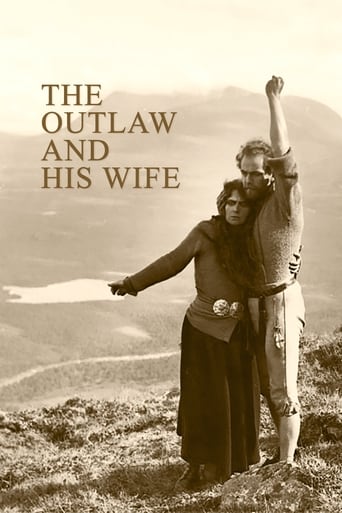
The Girl from the Marsh Croft
"1917 film by Victor Sjöström"
Keys: Space play/pause · ←/→ 10s · F fullscreen · M mute · </> speed
About this film
It is based on the 1908 novella with the same title by Swedish author Selma Lagerlöf, the first woman to win the Nobel Prize in Literature. It was the first in a series of successful Lagerlöf adaptions by Sjöström, made possible by a deal between Lagerlöf and A-B Svenska Biografteatern to adapt at least one Lagerlöf novel each year. Lagerlöf had for many years denied any proposal to let her novels be adapted for film, but after seeing Sjöström's Terje Vigen she finally decided to give her consent. It was originally released in the US as The Girl from the March Croft and the UK as The Woman He…
Cast & crew
More films like this

More Drama films
View all →







More from Victor Sjöström
View all →
More about this film
About the production
Release dateJanuary 15, 1917
Box officeUnknown
ProductionA-B Svenska Biografteatern, AB Svensk Filmindustri
Filmed inSweden
This was the first film in Victor Sjöström's celebrated series of Selma Lagerlöf adaptations, made possible by a groundbreaking deal between the Nobel Prize-winning author and Svenska Biografteatern. Lagerlöf had previously refused all film adaptation requests for years, but was so impressed by Sjöström's 1917 film 'Terje Vigen' that she agreed to allow adaptations of her works. The film was shot during the golden age of Swedish cinema, when the country was producing some of the most artistically sophisticated films in the world. The marsh croft setting was carefully recreated to authentically represent rural Swedish life of the period.
Themes
Themes & topics
unwed mothercourtroom dramamoral dilemmapaternity disputerural Swedensocial condemnationmoral choiceredemptionclass conflictreligious values
Historical background
The Girl from the Marsh Croft (1917) circulated in the silent era. It is based on the 1908 novella with the same title by Swedish author Selma Lagerlöf, the first woman to win the Nobel Prize in Literature. Contemporary trade papers and later preservation notes document its place among nickelodeon and cinema-club programs.
Why this film matters
The Girl from the Marsh Croft remains accessible to researchers and viewers as a screen title in museum, archive, and streaming collections. It is based on the 1908 novella with the same title by Swedish author Selma Lagerlöf, the first woman to win the Nobel Prize in Literature.
Making of
The making of 'The Girl from the Marsh Croft' marked a turning point in the relationship between literature and cinema in Sweden. Victor Sjöström had to convince the notoriously protective Selma Lagerlöf that her literary work could be faithfully adapted to the screen. After she watched his film 'Terje Vigen,' Lagerlöf was moved to tears and agreed to the collaboration. The production team worked closely with Lagerlöf to ensure the adaptation remained true to the novel's themes of morality, redemption, and social justice. The casting of Greta Almroth as Helga was particularly significant, as her naturalistic acting style perfectly embodied the character's quiet strength and moral courage. The film was shot on location in rural Sweden to capture the authentic atmosphere of the marsh croft setting, with cinematographer Julius Jaenzon employing innovative lighting techniques to create the moody, atmospheric quality that became characteristic of Swedish cinema of this period.
What critics said
Day-one reviews for The Girl from the Marsh Croft are sparse in digitized press archives; later criticism treats it as a reference point for 1917 cinema programming and preservation.
Did you know?
- This was the first of seven Selma Lagerlöf adaptations that Victor Sjöström would direct, establishing a collaboration between director and author.
- Selma Lagerlöf, who won the Nobel Prize in Literature in 1909, had previously refused all film adaptation requests for years before seeing Sjöström's work.
- The film's success helped establish Swedish cinema's international reputation for artistic quality and psychological depth.
- Greta Almroth, who played Helga, became one of Sweden's most prominent silent film actresses of the 1910s.
- The courtroom scene was considered particularly innovative for its time, using close-ups and dramatic pacing to build tension.
- The film was part of what film historians now call the 'Golden Age of Swedish Cinema' (1917-1924).
- Lars Hanson, who played the male lead, would later have a successful career in Hollywood during the late silent era.
- The original novel 'Tösen från Stormyrtorpet' was one of Lagerlöf's more socially conscious works, addressing themes of morality and class.
- The film was distributed internationally, helping introduce Swedish cinema to audiences beyond Scandinavia.
- Sjöström's naturalistic directing style in this film influenced many contemporary filmmakers across Europe.
Visual style
The cinematography by Julius Jaenzon was groundbreaking for its time, employing natural lighting and location shooting to create an authentic Swedish atmosphere. Jaenzon used innovative techniques such as soft focus lighting for emotional scenes and careful composition to emphasize the psychological states of the characters. The marsh croft setting was captured with a poetic realism that balanced the harshness of rural life with moments of visual beauty. The courtroom scenes featured dramatic lighting contrasts to emphasize the moral tension, while close-ups were used judiciously to highlight emotional moments. The cinematography helped establish the visual style that would become characteristic of the Swedish Golden Age of cinema.
Innovations
The film showcased several technical innovations for its time, particularly in its use of location shooting rather than relying entirely on studio sets. The production employed natural lighting techniques that were advanced for 1917, creating more realistic and atmospheric images. The film's editing, particularly in the courtroom sequence, demonstrated sophisticated understanding of pacing and dramatic tension building. The use of close-ups for emotional emphasis was more restrained and purposeful than in many contemporary films, showing Sjöström's understanding of their psychological impact. The film's preservation of visual quality in exterior scenes was notable for the period, demonstrating the technical expertise of the Swedish film industry.
Music
As a silent film, 'The Girl from the Marsh Croft' would have been accompanied by live musical performance in theaters. Original scores were typically not standardized, with each theater providing their own musical accompaniment based on cue sheets provided by the studio. The music would have ranged from classical pieces to original compositions designed to enhance the emotional impact of key scenes. For modern restorations, new scores have been composed by contemporary musicians specializing in silent film accompaniment, often using a combination of period-appropriate instruments and modern sensibilities to create an appropriate emotional atmosphere.
Famous quotes
While the film is silent and contains no spoken dialogue, the intertitles convey key moral messages including Helga's statement: 'I cannot let him swear a false oath on God's holy book, even though he has wronged me.'
Memorable scenes
- The climactic courtroom scene where Helga dramatically withdraws her case to prevent the father of her child from committing perjury, demonstrating her moral superiority despite his betrayal. The scene is built with careful pacing, using close-ups to capture the emotional intensity and moral weight of Helga's decision.
What audiences thought
The film was enormously popular with Swedish audiences upon its release, drawing large crowds and generating significant discussion about its moral themes. Audiences were particularly moved by Helga's moral courage in the courtroom scene, which became among the leading talked-about moments in Swedish cinema of 1917. The film's success at the box office helped establish Svenska Biografteatern as a major force in European cinema. International audiences also responded positively when the film was exported, with many viewers noting the distinctive Scandinavian atmosphere and emotional authenticity. The film's themes of redemption and moral strength resonated strongly with audiences dealing with the uncertainties of the wartime period.
Film connections
Influenced by
- Selma Lagerlöf's novel 'Tösen från Stormyrtorpet' (1913)
- Swedish literary tradition of social realism
- Contemporary Scandinavian cinema movement
- Victor Sjöström's earlier work 'Terje Vigen'
This film influenced
- Subsequent Selma Lagerlöf adaptations by Sjöström
- Swedish films of the Golden Age
- International art cinema of the 1920s
- Later courtroom drama films
Film restoration
The film has been preserved and restored by the Swedish Film Institute. While some deterioration occurred over the decades, a complete version exists and has been made available for modern viewing. The restoration work has helped maintain the visual quality of this important early Swedish film, ensuring its place in cinema history remains accessible to scholars and enthusiasts.
Where to watch
- The film is available through various archival and specialty streaming services specializing in classic cinema
- Swedish Film Institute's online platform
- Criterion Channel (occasionally featured in silent film collections)
- Museum of Modern Art's film collection screenings
- Various DVD/Blu-ray releases from specialty distributors of classic films