
Hjalmar Selander
Actor
Born: July 2, 1859 in Stockholm, Sweden Died: November 9, 1928 Active: 1880s-1928
Films
3 films


About Hjalmar Selander
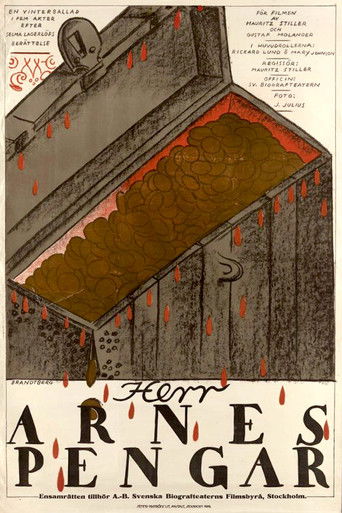
Made significant contributions to both stage and screen during the late 19th and early 20th centuries. Born into a theatrical family, he began his career on the stage in the 1880s and quickly established himself as one of Sweden's most respected character actors. Selander transitioned successfully into the emerging medium of cinema during the silent era, appearing in several landmark Swedish films that gained international recognition. His performances in Mauritz Stiller's 'Sir Arne's Treasure' (1919) and Victor Sjöström's 'The Girl from the Marsh Croft' (1917) showcased his remarkable ability to convey deep emotion through subtle gestures and expressions. Beyond acting, Selander also served as a theater director, managing several prominent Swedish theaters and mentoring younger performers. His film career, though relatively brief, coincided with the golden age of Swedish cinema, and his work helped establish the country's reputation for producing sophisticated, artistically ambitious films. Selander's multiple decades and artistic mediums, making him a pivotal figure in Swedish cultural history.
The Craft
On Screen
Selander was known for his naturalistic and understated acting style, which was particularly well-suited for the silent film era. He possessed a remarkable ability to convey complex emotions through subtle facial expressions and controlled physical movements, avoiding the exaggerated gestures common among many of his contemporaries. His theatrical background gave him a commanding presence on screen, yet he adapted his stage technique effectively for the intimacy of cinema, creating performances that felt both grand and deeply human.
Milestones
- Stage debut at the Royal Dramatic Theatre in Stockholm (1880s)
- Leading role in 'The Girl from the Marsh Croft' (1917)
- Memorable performance in 'Sir Arne's Treasure' (1919)
- Portrayal of historical figure in 'Gustaf Wasa, Part One' (1928)
- Director of multiple Swedish theaters including the Swedish Theatre
- Pioneer of Swedish silent cinema
- Mentor to younger generation of Swedish actors
Best Known For
Iconic Roles
Must-See Films
Accolades
Won
- Royal Medal Litteris et Artibus (1917)
Special Recognition
- Member of the Royal Swedish Academy of Arts
- Named one of Sweden's National Actors
- Theater named in his honor in Stockholm
Working Relationships
Worked Often With
Studios
Why They Matter
Impact on Culture
Hjalmar Selander played a crucial role in establishing Sweden's reputation as a producer of sophisticated, artistically ambitious films during the silent era. His work in films like 'Sir Arne's Treasure' helped demonstrate that cinema could be a medium for serious artistic expression, influencing the development of narrative film techniques worldwide. Selander's transition from stage to screen represented a bridge between traditional theatrical arts and emerging cinematic art forms, helping to legitimize film as a worthy artistic medium. His performances contributed to the international recognition of Swedish cinema during what many consider its golden age, influencing filmmakers and actors across Europe and eventually Hollywood.
Lasting Legacy
Selander's legacy endures through his contributions to both Swedish theater and cinema, representing a crucial period of artistic development in Swedish cultural history. He is remembered as a figure who helped establish the foundations of modern Swedish film acting, emphasizing psychological depth and naturalistic performance. His work continues to be studied by film scholars and theater historians as exemplary of the transition from 19th-century theatrical traditions to 20th-century performance techniques. The theaters he directed and the actors he mentored continued to shape Swedish cultural life for decades after his death.
Who They Inspired
Selander influenced generations of Swedish actors through his teaching and directorial work, emphasizing the importance of psychological realism and emotional authenticity. His film performances demonstrated how theatrical techniques could be adapted for the camera, influencing the development of film acting methods. Many prominent Swedish actors of the 1920s and 1930s, including those who went on to international careers, cited Selander as an important influence on their artistic development. His work also influenced international filmmakers who studied Swedish cinema's achievements during the silent era.
Off Screen
Hjalmar Selander was deeply embedded in Sweden's cultural elite, maintaining relationships with many of the country's leading artists and intellectuals. He was known for his dedication to the arts and his role in promoting Swedish theater both domestically and internationally. Selander was married to actress Concordia Selander, with whom he frequently collaborated both on stage and in films. Their partnership was.
Education
Royal Dramatic Theatre Acting School, Stockholm
Family
- Concordia Selander (1888-1928)
Did You Know?
- He came from a family of actors; his brother was also a prominent theater figure
- Selander was one of the first established stage actors to embrace cinema as a serious art form
- He appeared in over 20 films during his career, though many are now lost
- His theater company toured extensively throughout Sweden, bringing professional theater to rural areas
- He was known for his photographic memory and ability to memorize entire plays quickly
- Selander spoke multiple languages, which helped in international theater collaborations
- He was a founding member of the Swedish Actors' Union
- His final film appearance was in 'Gustaf Wasa, Part One' (1928), the year of his death
- He maintained a lifelong friendship with playwright August Strindberg
- Selander's home in Stockholm became a gathering place for Sweden's artistic community
In Their Own Words
The stage is our temple, but cinema is our new cathedral - we must learn to worship in both.
Acting is not about showing emotion, but about allowing truth to emerge through the character's soul.
The camera sees what the heart feels; our task is to make them one.
Frequently Asked Questions
Who was Hjalmar Selander?
Renowned Swedish actor and theater on YTB.my. He was a pivotal figure in both Swedish theater and silent cinema, known for his naturalistic acting style and his role in mentoring younger performers during Sweden's cultural golden age.
What films is Hjalmar Selander best known for?
Titles linked here include The Girl from the Marsh Croft (1917), Sir Arne's Treasure (1919).
When was Hjalmar Selander born and when did he die?
Born July 2, 1859; died November 9, 1928.
What awards did Hjalmar Selander win?
Selander received the Royal Medal Litteris et Artibus in 1917, one of Sweden's highest honors for contributions to arts and sciences. He was also named a member of the Royal Swedish Academy of Arts and was recognized as one of Sweden's National Actors for his contributions to cultural life.
What was Hjalmar Selander's acting style?
Selander was known for his naturalistic and understated acting style, which was particularly effective in silent films. He conveyed complex emotions through subtle facial expressions and controlled movements, avoiding the exaggerated gestures common in his era. His approach blended theatrical gravitas with cinematic intimacy.