



Sir Arne's Treasure
"Sir Arne's Treasure — Three Scottish officers"
Keys: Space play/pause · ←/→ 10s · F fullscreen · M mute · </> speed
About this film
Three Scottish officers, including Sir Archi, murder Sir Arne and his household for a coffin filled with gold. The only survivor is Elsalill, who moves to relatives in Marstrand. There she meets a charming young officer- Sir Archi- and she soon understands that he was one of the.
Cast & crew
More films like this
More History films
View all →


More from Mauritz Stiller
View all →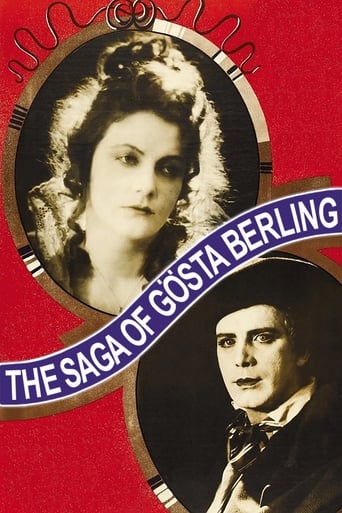
More about this film
About the production
Release dateMarch 10, 1919
BudgetExact budget figures are not documented for this 1919 Swedish production, though it was considered among the costliest Swedish films of its time due to its elaborate sets and extensive location shooting
Box officeBox office records from 1919 Sweden are not preserved in detail, but the film was commercially successful both domestically and internationally, helping establish Swedish cinema's reputation abroad
ProductionSvenska Biografteatern
Filmed inStockholm Studios, Marstrand, Sweden, Various coastal locations in Sweden, Studio sets for winter scenes
The film faced significant challenges during production, particularly in creating convincing winter scenes. Director Mauritz Stiller insisted on authentic atmosphere, leading to innovative techniques for simulating ice and snow. The production used salt and gypsum to create snow effects, and ice was manufactured in studio tanks. The famous ice floe sequence required elaborate mechanical setups and careful timing. The film's production took nearly six months, unusually long for the era, due to Stiller's perfectionism and the complex technical requirements of the winter sequences.
Themes
Guilt and redemptionSupernatural justiceThe conflict between love and dutyThe inexorability of fateThe corruption of greed
Themes & topics
murderrevengeghoststreasurelove trianglesupernaturalhistorical dramatragedysacrificewinterjusticebetrayalfamilymercenaries17th century
Historical background
Silent-era production in 1919 relied on intertitles, live accompaniment, and studio systems that were rapidly consolidating into national industries.
Why this film matters
Early works like Sir Arne's Treasure help map how filmmakers, exhibitors, and viewers developed the visual language of cinema during the medium's first decades. Later revivals, archive screenings, and digitization have kept such titles accessible to researchers and dedicated viewers long after their first commercial runs.
Making of
The production of 'Sir Arne's Treasure' was marked by Mauritz Stiller's meticulous attention to detail and his innovative approach to visual storytelling. Stiller worked closely with cinematographer Julius Jaenzon to develop new techniques for capturing the bleak, beautiful winter landscapes that form the film's visual backbone. The famous ghost sequences required pioneering use of multiple exposure photography, with Jaenzon experimenting with various lighting and filter combinations to achieve the ethereal effects. The cast underwent extensive preparation, with Stiller insisting on method-like performances unusual for the silent era. The production design was equally ambitious, with full-scale sets built to replicate 17th century Swedish architecture. The ice floe sequence, where Elsalill's body is carried away, was particularly challenging, requiring a complex system of underwater tracks and carefully timed releases. The film's score, composed for live accompaniment, was created by Swedish musician Oskar Merikanto and became as famous as the film itself.
What critics said
Trade and newspaper reviews from the silent period for Sir Arne's Treasure survive only in fragments, making precise reception history difficult to reconstruct. Modern assessment tends to emphasize historical value, craft, and cultural context rather than box-office performance.
Did you know?
- Based on the 1904 novel 'Herr Arnes pengar' by Nobel Prize-winning author Selma Lagerlöf, who was heavily involved in the adaptation process
- The film's winter cinematography was so realistic that many contemporary viewers believed it was actually filmed during winter, though most was shot using special effects
- Director Mauritz Stiller discovered and mentored Greta Garbo, casting her in his next film 'The Saga of Gosta Berling' after seeing her screen test
- The film was one of the first Swedish productions to achieve major international success, particularly in Germany and France
- The ghost effects were achieved using double exposure techniques that were groundbreaking for the time
- The original negative was thought lost for decades until a complete print was discovered in the 1970s in a German archive
- The film's success helped establish the 'Golden Age of Swedish Cinema' (1917-1924)
- Cinematographer Julius Jaenzon used specially modified cameras to capture the stark winter landscapes
- The film was banned in several countries for its violent content and supernatural themes
- Selma Lagerlöf was reportedly so pleased with the adaptation that she attended the premiere and praised Stiller's vision
Awards & recognition
- Best Foreign Film - Photoplay Magazine (1920)
- Best Artistic Production - Swedish Film Institute (retrospective award, 1949)
Visual style
Julius Jaenzon's cinematography in 'Sir Arne's Treasure' is considered groundbreaking for its time and remains influential. The film's visual style is characterized by its stark, high-contrast lighting that creates dramatic shadows and highlights, anticipating the German Expressionist movement. Jaenzon employed innovative techniques for capturing winter landscapes, including specialized filters and exposure methods that emphasized the bleak beauty of snow and ice. The ghost sequences used pioneering double exposure techniques that created ethereal, translucent figures without visible technical artifacts. The cinematography makes extensive use of deep focus and careful composition to create layers of meaning within each frame. Jaenzon also developed new methods for shooting water and ice reflections, creating haunting visual motifs throughout the film. The camera work is remarkably fluid for the period, with tracking shots and movement that enhance the narrative's emotional impact.
Innovations
The film pioneered several technical innovations that would influence cinema for decades. The winter effects, created using a combination of salt, gypsum, and painted backdrops, were so convincing they set new standards for atmospheric cinematography. The ghost sequences featured some of the earliest successful uses of multiple exposure techniques for supernatural effects, creating seamless apparitions without visible matte lines. The production developed new methods for simulating ice and water movement, including mechanical systems that created realistic ice floe movement. The film's lighting techniques, particularly the use of high-contrast illumination to create psychological tension, anticipated the German Expressionist movement. The camera work included innovative tracking shots and unusual angles that enhanced the narrative's emotional impact. The production also experimented with color tinting, using blue tones for night scenes and amber for interior sequences to enhance mood and atmosphere.
Music
As a silent film, 'Sir Arne's Treasure' was originally accompanied by live musical performance. The official score was composed by Finnish-Swedish composer Oskar Merikanto, who created a romantic, atmospheric piece that emphasized the film's Nordic setting and emotional themes. The score utilized traditional Swedish folk melodies alongside original compositions, creating a distinctive musical identity. Different theaters employed various approaches to accompaniment, from full orchestras in major cinemas to single pianists in smaller venues. The music was carefully synchronized with the film's dramatic beats, with specific leitmotifs for characters and themes. Modern restorations have included newly commissioned scores by contemporary composers who have drawn on Merikanto's original themes while incorporating modern sensibilities. These new scores have helped introduce the film to modern audiences while maintaining its historical integrity.
Famous quotes
The dead do not rest until justice is done" (intertitle)
Gold can buy many things, but not a clear conscience" (intertitle)
Love knows no boundaries, not even between life and death" (intertitle)
In the cold of winter, truth burns brightest" (intertitle)
Some treasures are worth more than gold" (intertitle)
Memorable scenes
- The opening murder sequence where the three Scottish mercenaries kill Sir Arne's household, shot with dramatic shadows and sudden violence that shocked 1919 audiences
- The first appearance of Elsalill's sister's ghost, achieved through revolutionary double exposure techniques that created an ethereal, translucent figure
- The winter landscape sequences with their stark, beautiful cinematography that established the film's atmospheric tone
- The confrontation scene where Elsalill discovers Sir Archi's true identity, featuring powerful close-ups and emotional intertitles
- The final ice floe sequence where Elsalill's body is carried away across the frozen sea, creating a haunting visual metaphor for the film's themes
- The ghost procession scene where multiple apparitions appear, showcasing the film's technical innovation in special effects
What audiences thought
The film was enormously popular with audiences upon its release, breaking box office records in Sweden and achieving significant success in international markets. Swedish audiences were particularly moved by the adaptation of Lagerlöf's beloved novel, with many attending multiple screenings. The film's emotional power and visual spectacle created word-of-mouth buzz that sustained its theatrical run for months. In Germany, where it was released as 'Herr Arnes Schatz,' it became especially popular foreign films of 1920. American audiences, though less familiar with the source material, responded to its universal themes and striking visuals. The film's success led to increased demand for Swedish films internationally and helped create a market for foreign art cinema in the United States. Even today, at revival screenings and film festivals, audiences respond strongly to its emotional intensity and visual beauty.
Film connections
Influenced by
- Selma Lagerlöf's novel 'Herr Arnes pengar'
- Swedish folklore and ghost stories
- German Romantic literature
- Nordic mythology
- Theatrical melodrama traditions
- Danish silent film aesthetics
- Literary naturalism
This film influenced
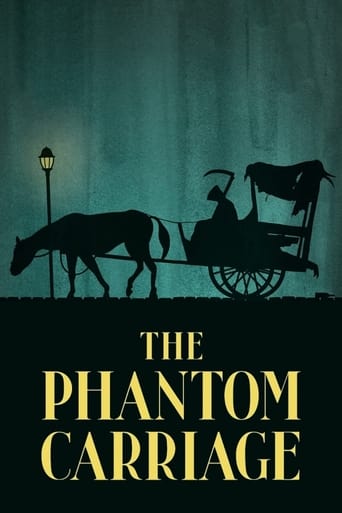
- The Phantom Carriage (1921)
- Nosferatu (1922)
- The Last Laugh (1924)
- Napoleon (1927)
- The Seventh Seal (1957)
- The Virgin Spring (1960)
- The Exorcist (1973)
- The Shining (1980)
- Let the Right One In (2008)
Film restoration
The film was believed lost for decades until a complete nitrate print was discovered in the German Federal Archives in the 1970s. This print underwent extensive restoration by the Swedish Film Institute in the 1990s, with digital restoration completed in 2015. The restored version preserves the original tinting and includes reconstructed intertitles based on surviving scripts and censorship records. The film is now preserved in the archives of the Swedish Film Institute, the Museum of Modern Art in New York, and the British Film Institute. The restoration revealed details and visual effects that had been obscured in previous copies, leading to renewed appreciation of the film's technical achievements.
Where to watch
- The Criterion Collection (Blu-ray/DVD)
- Kino Lorber (DVD/Blu-ray)
- The Criterion Channel (streaming)
- MUBI (streaming)
- Kanopy (streaming via participating libraries)
- Swedish Film Institute archive screenings
- Film forum screenings at art house cinemas
- Museum of Modern Art film screenings