A Man There Was
"Victor Sjöström's Terje Vigen chooses mercy over revenge."
Keys: Space play/pause · ←/→ 10s · F fullscreen · M mute · </> speed
About this film
Terje Vigen, a sailor, suffers the loss of his family through the inflexibility of another man. Years later, when his enemy's family finds itself dependent on his benevolence, Terje must decide whether to avenge himself.
Cast & crew
More films like this



More Drama films
View all →






More from Victor Sjöström
View all →


More about this film
About the production
Release dateJanuary 29, 1917 (Sweden)
BudgetExact budget figures are not documented, as financial records from 1917 Swedish film productions are scarce
Box officeBox office records from this era are not reliably documented, though the film was reported to be commercially successful both domestically and internationally
ProductionSvenska Biografteatern
Filmed inStockholm archipelago, Sweden, Swedish coastal waters for maritime sequences
The film was notable for its extensive use of location shooting, particularly the dramatic sea sequences filmed in actual rough waters. The storm scenes were achieved by filming during genuine storms at sea, creating unprecedented realism for the time. The production utilized natural lighting to enhance the atmospheric quality of the coastal scenes, a relatively innovative technique for 1917. The shipwreck sequence required dangerous practical effects with the cast and crew filming in challenging maritime conditions.
Themes
Revenge and forgivenessHuman endurance in the face of sufferingThe moral consequences of warThe relationship between humanity and natureRedemption through mercy
Themes & topics
sailorblockadeimprisonmentfamily lossshipwreckrevengemercymoral dilemmaNapoleonic Warssurvivalredemptionforgiveness
Historical background
A Man There Was (1917) reached screens through Svenska Biografteatern. Exhibitors of the time built silent-era bills that mixed shorts, features, and live acts, so a clear premise helped A Man There Was travel between cities and exchange markets.
Why this film matters
Archivists and revival programmers still cite A Man There Was (1917) when tracing studio habits, casting pools, and the visual rhetoric audiences once took for granted. Even modest surviving prints help map how A Man There Was fit beside competing releases of its day.
Making of
The production of 'A Man There Was' was groundbreaking for its time, with Sjöström insisting on authentic location shooting rather than relying on studio sets. The crew faced significant challenges filming the maritime sequences, often working in dangerous weather conditions to achieve the desired realism. Sjöström, a former theater actor, brought a new level of psychological depth to his performance, using subtle facial expressions and body language to convey Terje's emotional journey. The film's cinematographer, Julius Jaenzon, developed innovative techniques for capturing the harsh beauty of the Scandinavian coastline, including the use of natural light to create dramatic contrasts between the sea and sky. The production team built full-scale boats for the filming, which were deliberately damaged for the shipwreck sequence, requiring extensive planning and coordination.
What critics said
Trade coverage around 1917 discussed A Man There Was for pacing, clarity, and program fit rather than blockbuster grosses. Later writers value it as evidence of period style and as a reference point beside other films from the same era.
Did you know?
- The film is based on Henrik Ibsen's 1862 poem 'Terje Vigen,' one of Norway's most famous literary works
- Victor Sjöström both directed and starred in the film, establishing his reputation as one of cinema's early auteurs
- The storm sequences were so realistically filmed that some contemporary viewers believed they were documentary footage
- The film was one of the first Swedish productions to achieve major international success, particularly in the United States
- The English title 'A Man There Was' was chosen to make the film more accessible to international audiences
- The film's success helped launch the 'Golden Age' of Swedish cinema (1917-1924)
- Sjöström performed his own stunts in the dangerous sea sequences, including swimming in the cold, rough waters
- The film was restored by the Swedish Film Institute in the 1970s, preserving it for future generations
- It was among the first films to use close-ups as a primary tool for conveying emotional depth
- The film's visual poetry influenced directors worldwide, including Ingmar Bergman who cited Sjöström as a major influence
Visual style
The cinematography, by Julius Jaenzon, was revolutionary for its time, featuring extensive location shooting in the harsh Scandinavian coastal environment. Jaenzon employed natural lighting techniques to create dramatic contrasts between sea and sky, enhancing the film's emotional impact. The camera work included innovative use of close-ups to capture the psychological states of the characters, particularly Terje's suffering and moral conflict. The maritime sequences utilized dynamic camera movements and compositions to convey the power and danger of the sea. The visual style emphasized the relationship between human characters and the overwhelming forces of nature, using landscape as an active participant in the narrative.
Innovations
The film pioneered several technical innovations that would become standard in cinema. The extensive use of location shooting, particularly the dangerous maritime sequences, set new standards for realism in film production. The film's sophisticated use of natural lighting and outdoor photography influenced cinematography techniques worldwide. The editing techniques, particularly the cross-cutting between Terje's past and present, demonstrated advanced narrative capabilities for the time. The film also featured innovative special effects for the storm and shipwreck sequences, achieved through practical means rather than in-camera tricks. These technical achievements contributed to the film's lasting influence on cinematic language and technique.
Music
As a silent film, 'A Man There Was' would have been accompanied by live musical performance during its original theatrical run. The score would typically have been provided by a theater organist or small orchestra, often using classical pieces adapted to match the film's emotional tone. Modern screenings of the restored version often feature newly composed scores by contemporary silent film composers. The original musical cues would have emphasized the film's dramatic moments, particularly during the storm sequences and emotional confrontations. The absence of recorded dialogue allowed the visual storytelling to take precedence, with music serving to enhance rather than dominate the narrative.
Famous quotes
As a silent film, the dialogue was conveyed through intertitles. Key intertitles included: 'Five years in prison... five years of torment', 'The sea gives and the sea takes away', 'Vengeance is a cold companion', 'In mercy, we find our true humanity'
Memorable scenes
- The dramatic opening sequence of Terje attempting to break the naval blockade in his small boat, filmed in actual rough seas
- The heartbreaking moment when Terje returns home to find his family has perished
- The powerful shipwreck sequence where the English officer's family struggles against the storm
- The climactic confrontation scene where Terje must choose between revenge and mercy
- The final scene of Terje walking alone on the beach, having made his moral choice
What audiences thought
The film was enormously popular with audiences both in Sweden and internationally, particularly in the United States where it was distributed by Paramount Pictures. Contemporary audiences were reportedly moved to tears by the emotional story and impressed by the realistic maritime sequences. The film's success helped establish a market for sophisticated European art cinema in America. Modern audiences who have seen the restored version continue to be impressed by its emotional power and visual beauty, with many noting how effectively the film conveys complex emotions through purely visual means. The film remains a favorite among silent film enthusiasts and is frequently screened at classic film festivals and cinematheques.
Film connections
Influenced by
- Henrik Ibsen's 1862 poem 'Terje Vigen'
- Norwegian literary tradition
- Scandinavian folklore
- Romantic literature
- Contemporary war experiences of WWI
This film influenced
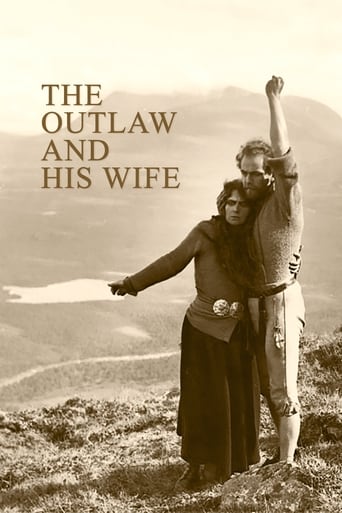
- The Outlaw and His Wife (1921)
- The Wind (1928)
- The Saga of Gosta Berling (1924)
- The Seventh Seal (1957)
- The Virgin Spring (1960)
- Persona (1966)
Film restoration
The film has been preserved and restored by the Swedish Film Institute. A restoration was completed in the 1970s, and further digital restoration work has been done in recent years. The film is considered to be in good preservation condition, with most of the original footage intact. It is held in the archives of the Swedish Film Institute and has been made available for scholarly study and public screenings through various film archives and classic film distributors.
Where to watch
- The Criterion Collection (Blu-ray/DVD)
- Kino Lorber (DVD/Blu-ray)
- The Criterion Channel (streaming)
- Mubi (streaming)
- Film Movement Classics (DVD)
- Various public domain streaming platforms
- Film archives and cinematheques that screen classic films
- Educational institutions with film studies programs