Films
1 film
About Jeny Metaxa-Doro
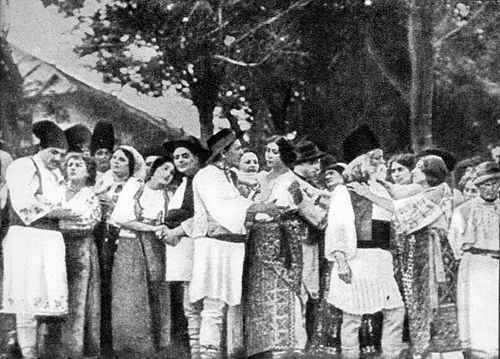
This archive lists one role for Jeny Metaxa-Doro: The Independence of Romania (1912). A period when the nation was just beginning to establish its own film industry. Her entire known film career consists of a single, yet historically significant, role in the 1912 film 'The Independence of Romania,' a landmark production that was among the first feature-length narrative films created in the country. This film was a patriotic epic depicting the Romanian War of Independence from 1877-1878, a subject of immense national pride, and her participation placed her at the very forefront of Romania's cinematic history. Details about her life before and after this role are scarce, which was common for many performers from this nascent era of filmmaking where records were not meticulously kept. Her work represents the silent era's reliance on theatrical gestures and expressive pantomime to convey emotion and narrative to audiences without synchronized sound. While her filmography is brief, her contribution is immortalized as part of the foundational cast of Romania's first major motion picture. She stands as a representative of the first generation of Romanian film actors who helped translate national stories onto the silver screen.
The Craft
On Screen
As a performer in the silent era, Jeny Metaxa-Doro's acting style would have been characterized by exaggerated physical gestures and dramatic facial expressions to convey emotion and narrative without dialogue. This theatrical approach was standard for the period, requiring actors to project feelings such as patriotism, sorrow, and joy clearly to the audience. Her performance would have relied on pantomime and body language to embody her character within the film's historical and patriotic context.
Milestones
- Starred in 'The Independence of Romania' (1912), one of the first feature films made in Romania
Best Known For
Iconic Roles
Must-See Films
Working Relationships
Worked Often With
Studios
Why They Matter
Impact on Culture
Jeny Metaxa-Doro's cultural impact is intrinsically linked to her role in 'The Independence of Romania,' a film of immense national significance. By participating in this early cinematic portrayal of a foundational Romanian historical event, she contributed to the nascent art form of Romanian cinema and its use as a tool for nation-building and cultural expression. The film itself served to educate and inspire audiences about their national heritage, and as one of its visible faces, she was part of this important cultural moment. Her work, along with that of her castmates, helped establish a precedent for future Romanian historical epics and demonstrated the power of film to capture and preserve national identity.
Lasting Legacy
The legacy of Jeny Metaxa-Doro is that of a cinematic pioneer, one of the first women to appear on screen in a Romanian feature film. While her name is not widely known today, she is immortalized in film history as a key contributor to 'The Independence of Romania' (1912), a movie that is studied as a cornerstone of the country's cinematic output. Her legacy is not one of a long and varied career, but of a single, significant contribution during the birth of a national film industry. She represents the countless early actors whose work was foundational but whose personal stories have faded, leaving only their artistic contributions behind.
Who They Inspired
Given her brief career and the scarcity of information, it is difficult to trace a direct line of influence from Jeny Metaxa-Doro to later generations of Romanian actors. Her primary influence is historical; she and her colleagues in 'The Independence of Romania' set an early example for screen performance in a Romanian context. They were among the first to adapt theatrical acting techniques for the new medium of film, a challenge that every subsequent generation of actors would face, especially in the transition from silent to sound films. Her work serves as an archival reference point for the evolution of acting styles in Romanian cinema.
Off Screen
Very little is documented about the personal life of Jeny Metaxa-Doro. Like many actors from the earliest days of cinema, especially in regions outside the major Hollywood studios, biographical details were often not recorded or have been lost to time. Information regarding her family, life outside of her single film appearance, and later years remains unknown, making her a somewhat mysterious figure from Romanian film history.
Did You Know?
- Her entire known filmography consists of just one film, 'The Independence of Romania' (1912).
- The film she starred in is considered one of the very first feature-length narrative films ever produced in Romania.
- The original negatives of 'The Independence of Romania' are believed to be lost, though fragments or copies may still exist in archives.
- Like many early film actors, she likely had a background in stage theater, which was the primary training ground for performers at the time.
- Her role was in a silent film, meaning her performance relied entirely on physical expression and intertitles for dialogue.
- The film was a patriotic war epic, a popular genre in early national cinemas designed to foster a sense of shared identity.
- Information about her life outside of this single film role is virtually non-existent, making her a mysterious figure.
- She worked with director Grigore Brezeanu, a pivotal figure in early Romanian theatre and film.
Frequently Asked Questions
Who was Jeny Metaxa-Doro?
Early Romanian actress from the silent era, known exclusively for her role in the 1912 film 'The Independence of Romania.' She was one of the performers in the very first wave of Romanian feature filmmaking.
What films is Jeny Metaxa-Doro best known for?
Titles linked here include The Independence of Romania (1912).
When was Jeny Metaxa-Doro born and when did she die?
Unfortunately, the birth and death dates of Jeny Metaxa-Doro are not known, as is common for many actors from this very early period of cinema in Eastern Europe.
What awards did Jeny Metaxa-Doro win?
There are no records of Jeny Metaxa-Doro receiving any awards or nominations. The film industry in Romania was in its infancy in 1912, and formal award systems had not yet been established.
What was Jeny Metaxa-Doro's acting style?
Her acting style would have been typical of the silent era, relying on broad gestures, dramatic facial expressions, and pantomime to convey her character's emotions and story to the audience without spoken dialogue.
Why is Jeny Metaxa-Doro significant to film history?
She is significant because she was one of the first actors in a Romanian feature film, participating in a landmark production that helped establish the country's national cinema. Her work is a valuable artifact from the dawn of filmmaking in Romania.