Nathaniel Sack
Actor
- Active
- 1916-1916
Films 1
About Nathaniel Sack
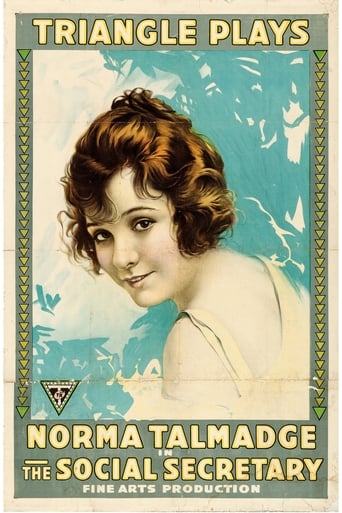
Nathaniel Sack is a very obscure silent-era screen actor whose surviving film credit links him to the 1916 comedy-drama The Social Secretary. Beyond that single on-screen credit, there is little reliably documented information readily available in standard film references, and he appears to have been one of the many performers whose careers were briefly captured in the early studio era but not extensively preserved in later publicity records. Like many minor players from the silent period, he may have worked in short films, supporting roles, or uncredited parts, but the surviving record is too thin to reconstruct a confident full career arc. No verified biographical data such as birth date, birthplace, family background, or death date is consistently documented in widely accessible sources. Because of this, Nathaniel Sack remains a name of archival interest more than a publicly celebrated figure. His significance today lies mainly in his presence in early American cinema and in the historical record surrounding The Social Secretary and the silent film industry of the 1910s.
More about Nathaniel Sack
In film history
Nathaniel Sack does not appear to have had a widely documented cultural impact in the sense of major stardom, publicity influence, or a recognized body of work that shaped mainstream film history. His importance is archival and historical: he is part of the large population of early screen performers whose names survived in cast lists even when their careers did not leave a substantial public record. For researchers of silent cinema, figures like Sack help illustrate how incomplete the historical record can be and how many contributors to early motion pictures remain difficult to identify beyond a single title or trade listing. His appearance in The Social Secretary also situates him within the formative years of American film comedy-drama, an era that helped define screen acting conventions and studio production practices.
Later reputation
Nathaniel Sack's legacy is that of an obscure but documented participant in silent-era filmmaking whose surviving credit preserves his place in film history. While he is not known to have left behind a recognized body of work, his name endures as part of the cast record for The Social Secretary and as evidence of the many small roles and brief careers that made up early Hollywood. In a broader historical sense, performers like Sack remind modern audiences and scholars that the silent film era was built not only by stars but also by countless lesser-known actors whose contributions were essential to production. His legacy is therefore primarily one of historical documentation rather than celebrity.
Influence
There is no verifiable evidence that Nathaniel Sack exerted a documented influence on other actors or directors. Any influence he may have had would have been limited to his immediate performances in the studio environment of the 1910s, and no surviving sources attribute stylistic innovations or mentorship relationships to him. His name is best understood as part of the broader fabric of early screen performance rather than as a distinctive force on later cinematic practice.
Off screen
No reliable public information has been found regarding Nathaniel Sack's personal life, including marriages, family background, or residence history. Surviving references do not currently establish whether he used a stage name, had relatives in the business, or continued a career outside film. As with many minor silent-era performers, personal records may exist in archival materials, but they are not widely accessible or conclusively tied to him in standard film databases.
Credits
- Appeared in the silent film The Social Secretary (1916), the only surviving screen credit readily associated with his name
- Represents the many lesser-documented performers who worked in the American silent film industry during the mid-1910s
- His filmography places him within the early studio system era when many actors’ careers were recorded only sparsely in trade papers and cast listings
Films
- The Social Secretary (1916)
Notes
- Nathaniel Sack is associated with only one readily documented film credit in surviving reference sources: The Social Secretary (1916).
- He is an example of a silent-era performer whose biography has largely disappeared from mainstream reference works.
- Because his record is so limited, he is often of interest mainly to film historians and archival researchers.
- His surviving credit places him in the American cinema of the 1910s, during a period when many actors worked briefly and moved between stage, film, and other occupations.
- No widely verified birth or death information is currently established for him in standard public film references.
- The scarcity of information about him highlights how incomplete documentation can be for early motion-picture personnel.
- He may have appeared in additional productions that have not been securely indexed or that survive only in fragmented archival records, but no such credits are confidently verified here.
Questions
Who was Nathaniel Sack?
Nathaniel Sack was a very obscure silent-era actor known from the 1916 film The Social Secretary. Beyond that credit, little reliable biographical information has survived in widely accessible film references. He is best understood as one of many lesser-documented performers who contributed to early American cinema.
What films is Nathaniel Sack best known for?
He is best known for The Social Secretary (1916), which is the principal surviving screen credit associated with his name. No additional major titles are confidently established in standard public references. His known film presence is therefore extremely limited.
When was Nathaniel Sack born and when did he die?
His birth and death dates are not currently verified in widely available sources. The surviving record does not provide enough biographical detail to establish his lifespan with confidence. He remains an identified but sparsely documented silent-era performer.
What awards did Nathaniel Sack win?
No awards or nominations are currently known for Nathaniel Sack. There is no evidence in the surviving record of major industry honors or formal recognition. This is not unusual for many early silent-film actors whose careers were brief or poorly documented.
What was Nathaniel Sack's acting style?
His specific acting style cannot be reliably described because no detailed reviews, interviews, or performance analyses are readily available for him. As a silent-era actor, he would have worked within the expressive physical and visual conventions of early film acting. Beyond that general context, any precise stylistic description would be speculative.
What is Nathaniel Sack's legacy in film history?
Nathaniel Sack's legacy is primarily archival: he remains part of the historical record of silent cinema through his credit in The Social Secretary. While he was not a major star, his name helps document the many performers who made early filmmaking possible. His presence in film databases preserves a small but meaningful trace of the industry's formative years.