Elmer Grandin
Actor
- Active
- 1919-1919
Films 1
About Elmer Grandin
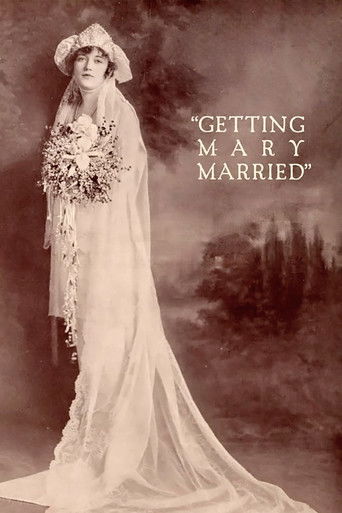
Elmer Grandin was a silent-era film actor whose screen career, as currently documented in surviving film references, appears to have been brief and concentrated in 1919. He is credited in the comedy feature Getting Mary Married (1919), a late-silent period production that places him among the many performers who worked in the fast-moving, studio-driven environment of early American cinema. Beyond that credit, readily verifiable biographical information about Grandin is scarce, which suggests either a very limited filmography, incomplete archival survival, or the use of a name that was not widely publicized in contemporary press materials. Like many supporting players of the era, he seems to have been part of the broad pool of stage-trained or locally recruited actors who contributed to silent features without necessarily becoming marquee names. No reliable, widely cited record has survived to establish his birth details, family background, or later life with confidence. His importance to film history lies primarily in his presence within the silent-era production record and in the ongoing efforts of film historians and databases to identify and preserve the careers of lesser-known performers. Because available evidence is limited, any fuller reconstruction of his life would require consultation of trade papers, studio records, censuses, or surviving cast listings from the period.
More about Elmer Grandin
In film history
Elmer Grandin's cultural impact is primarily archival and historical rather than celebrity-driven. He is representative of the large group of early cinema performers whose names survive in cast lists even when their individual biographies have not yet been reconstructed, reminding researchers that silent-film production depended on many actors beyond the stars remembered in popular histories. In that sense, he contributes to the broader understanding of how the silent film industry operated: through ensembles, supporting players, and brief screen careers that nevertheless became part of the medium's development. His credited appearance in a 1919 feature also places him within a pivotal year for American film, when the industry was consolidating studio practices and building the star system that would soon define the 1920s.
Later reputation
Grandin's legacy is that of a documented but obscure silent-era performer whose name remains attached to an extant film credit. For modern film historians and database compilers, such figures are important because they help complete the historical record and illuminate the many participants who shaped early Hollywood beyond the leading players. Even when personal details are lost, the survival of a screen credit preserves his place in the chronology of American cinema. His presence in Getting Mary Married ensures that he remains part of the verifiable cast history of late-silent film production.
Influence
There is no evidence that Elmer Grandin exerted a documented direct influence on major stars or filmmakers, and no preserved record of a teaching, mentoring, or pioneering role in the industry. His influence is therefore indirect: he stands as one of the many performers whose work helped establish the texture, pacing, and ensemble nature of silent feature films. In a broader historiographic sense, names like his influence later scholarship by underscoring how incomplete our knowledge of early cinema can be and how much of the era's workforce still remains under-researched.
Off screen
No reliable public biographical details about Elmer Grandin's personal life have been verified in standard film-reference sources available from surviving records. His marriage history, family connections, residence, and post-film career are not presently documented with confidence. As with many minor silent-era players, the historical record may be fragmentary, and he may only be recoverable through deeper archival research in newspapers, studio files, or civil records.
Credits
- Appeared in the silent comedy feature Getting Mary Married (1919)
- Represents the working ranks of lesser-documented silent-era performers whose contributions supported early Hollywood production
- Is preserved in surviving cast documentation, which allows his name to remain part of film history records despite limited biographical data
Roles
- Role in Getting Mary Married (1919)
Films
- Getting Mary Married (1919)
Notes
- Elmer Grandin is currently documented with a very short filmography, at least in readily accessible surviving references.
- His known screen credit places him in the silent-film era, specifically in 1919.
- He is associated with Getting Mary Married, a comedy feature from the late silent period.
- Because his biographical details are sparse, he is a good example of how many early film workers are known more from cast lists than from personal histories.
- No dependable record of awards, nominations, or major studio stardom has been identified for him.
- He may have been a supporting or bit player rather than a headlining star, though surviving evidence is too limited to state this definitively.
Questions
Who was Elmer Grandin?
Elmer Grandin was a silent-era film actor known from surviving film credit records, including Getting Mary Married (1919). Very little biographical information has survived, so he is best understood as one of the many lesser-known performers who worked in early Hollywood.
What films is Elmer Grandin best known for?
He is currently best known for Getting Mary Married (1919), which is the principal surviving screen credit associated with his name. Additional film work may have existed, but it has not been reliably documented in accessible reference sources.
When was Elmer Grandin born and when did he die?
His birth and death dates are not currently verified in accessible standard film-reference sources. Because of the limited surviving record, both his birth and death details remain uncertain.
What awards did Elmer Grandin win?
No awards or major nominations have been identified for Elmer Grandin in the available record. His historical significance comes from his participation in early silent cinema rather than from documented honors.
What was Elmer Grandin's acting style?
His acting style is not described in surviving critical sources, so it cannot be characterized with confidence. As a silent-era performer, he would have worked in a visual, gesture-based performance tradition typical of the period, but specific details about his technique are unavailable.
What is Elmer Grandin's legacy in film history?
His legacy is primarily archival: he remains a documented participant in silent-era filmmaking, even though his personal story is largely lost. For film historians, names like his are important because they help reconstruct the full human network behind early Hollywood production.